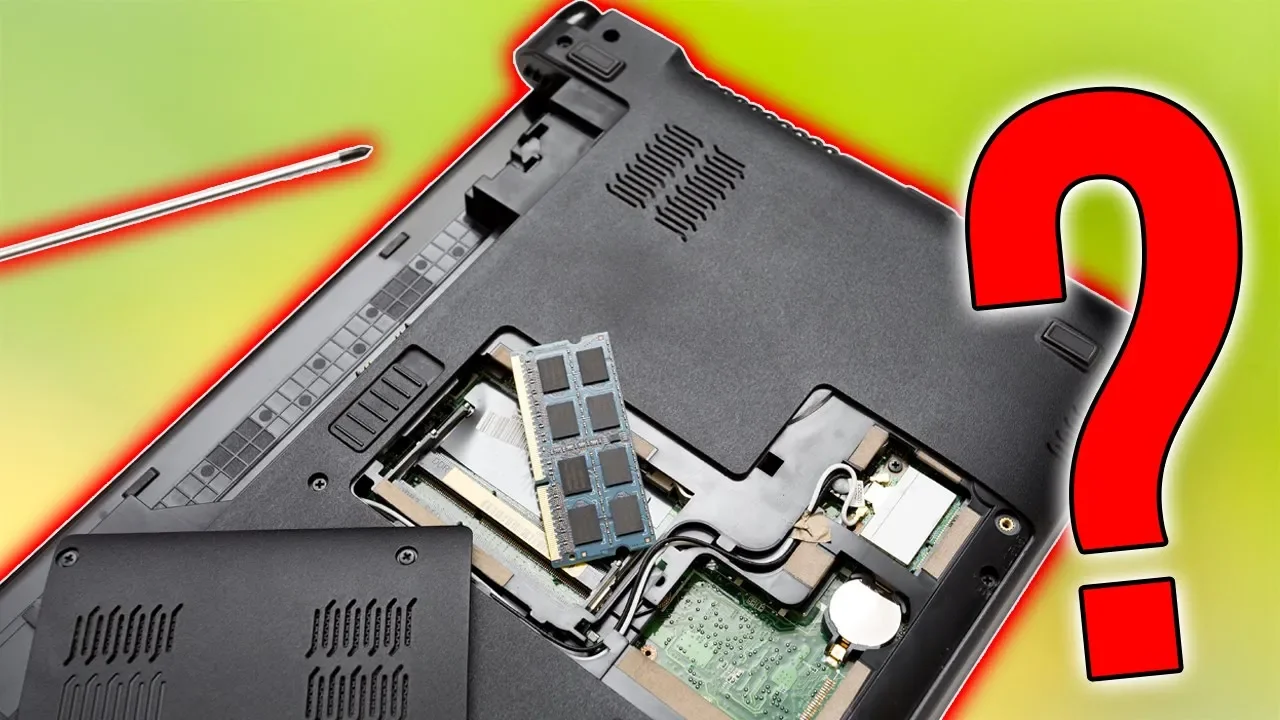
Why Can't You Build Your Own Laptop?
0 up · 0 down · 0 ratings
Promos
Freshbooks message: Head over to freshbooks.com and don’t forget to enter Tech Quickie in the “How Did You Hear About Us” section when signing up for your free trial. Building your own desktop PC is a rite of passage for many gamers and tech enthusiasts - but why is putting together a DIY laptop next to impossible? Techquickie Merch Store: designbyhumans.com Techquickie Movie Poster: shop.crowdmade.com Follow: twitter.com Leave a reply with your requests for future episodes, or tweet them here: twitter.com Join the community: linustechtips.com Intro Theme: Showdown by F.O.O.L from Monstercat - Best of 2016 Video Link: youtube.com iTunes Download Link: itunes.apple.com Listen on Spotify: open.spotify.com License for image used: creativecommons.org
The video investigates why building a laptop from scratch is far more challenging than assembling a desktop PC. It explains that laptops rely on highly integrated, custom components and tight tolerances, where standard desktop parts and sockets simply do not fit or function reliably in a portable form factor. The host walks through the realities of cooling, power delivery, and thermal management, including how heat has to be managed within a compact chassis and the implications for performance and longevity. He discusses the lack of universal modular interfaces in laptops, contrasting them with desktop PC standards such as PCIe, DIMM, and power supplies, and he highlights how nearly every major component is either soldered or uniquely barcoded to a specific model. The episode also touches on existing niche solutions like barebones and modular systems, noting their limitations in performance, compatibility, and upgrade potential. In conclusion, the host argues that while some high end or boutique configurations exist, building a practical, affordable, upgradable laptop from off the shelf parts is not feasible for most users. The discussion helps viewers understand where the bottlenecks lie and why the laptop ecosystem prioritizes compact engineering over complete user servibility.
Topics · technology · computing · hardware · laptops · integration · thermal-management · modular-design