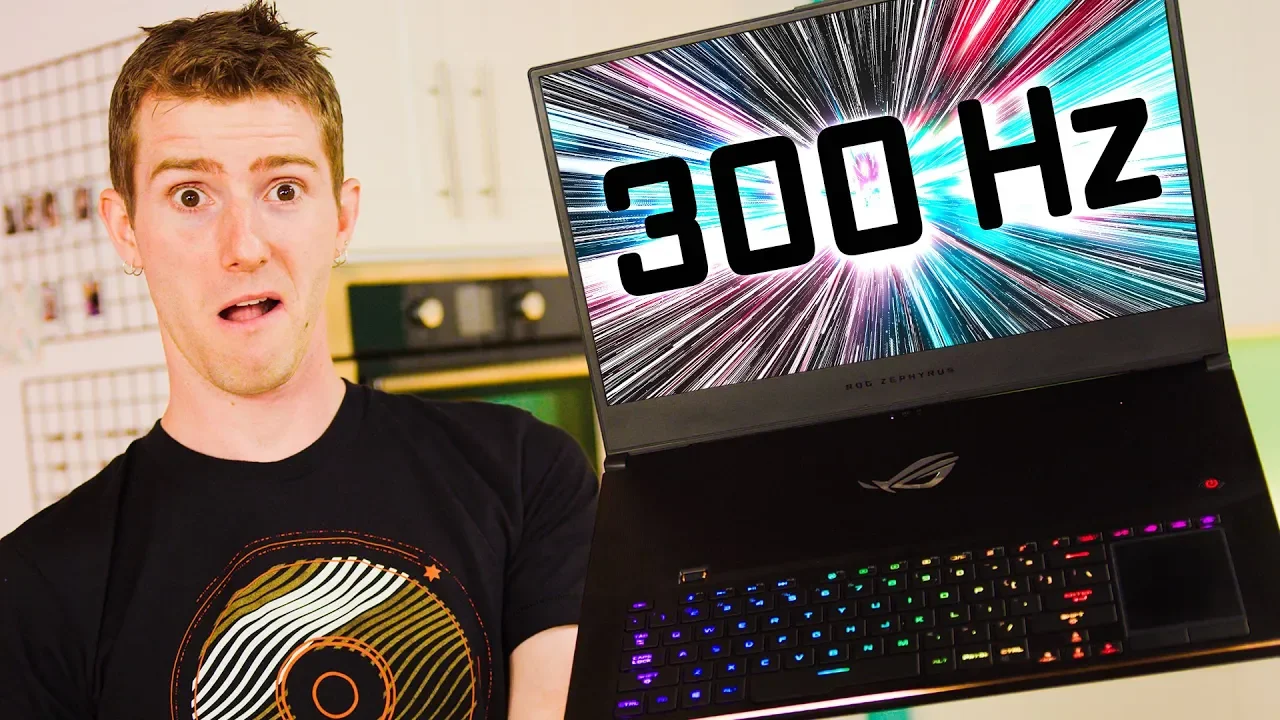
World's First 300Hz GAMING Display
0 up · 0 down · 0 ratings
Description
Thanks, ASUS ROG for sponsoring this video!
Promos
Check out their gaming laptops at lmg.gg RGB can sometimes make you a better gamer, but faster frames mean better performance, right? ASUS ROG wants to do both with their new prototype Gaming Laptop they unveiled to us to show you! Buy ASUS ROG Gaming Laptops On Amazon: geni.us On Newegg: lmg.gg Purchases made through some store links may provide some compensation to Linus Media Group. Discuss on the forum: linustechtips.com Our Affiliates, Referral Programs, and Sponsors: linustechtips.com Get Private Internet Access today at geni.us Displate metal posters: lmg.gg Linus Tech Tips merchandise at lttstore.com Linus Tech Tips posters at crowdmade.com Our Test Benches on Amazon: amazon.com Our production gear: geni.us Twitter - twitter.com Facebook - @LinusTech Instagram - @linustech Twitch - twitch.tv Intro Screen Music Credit: Title: Laszlo - Supernova Video Link: youtube.com iTunes Download Link: itunes.apple.com Artist Link: soundcloud.com Outro Screen Music Credit: Approaching Nirvana - Sugar High youtube.com
The video introduces ASUS ROG's Zephyrus prototype laptop featuring what they claim is the world's first 300 Hz gaming display. The host explains the engineering challenges behind achieving such a high refresh rate on a laptop panel, including bandwidth considerations via DisplayPort 1.4 and the need for faster gray-to-gray pixel response. The discussion covers the trade-offs involved, such as color fidelity, brightness, and panel structure, and whether a 300 Hz panel can truly benefit gaming beyond existing 240 Hz displays. Real-world testing is described with games like Doom, Overwatch, and Rocket League to illustrate how higher refresh rates translate into smoother motion, reduced motion blur, and potential bottlenecks from drivers, engines, or even the player's hardware. The overall takeaway is nuanced: 300 Hz offers a smoother experience for certain games and players, but not every title or system will realize the full benefit, and the price impact should be considered. The video also situates 300 Hz as part of a broader trend toward higher refresh rates driven by competitive gaming and developer interest, while acknowledging that most players may not notice dramatic differences in all scenarios. Viewers are encouraged to watch related content and stay tuned for further insights from NVIDIA collaborations and pro-gaming tests.
Topics · technology · gaming · hardware · display technology
Questions answered
- What is the significance of a 300 Hz gaming display in laptops, and does it guarantee better gameplay?
- A 300 Hz display provides smoother motion and reduced blur when games run at very high frame rates, enhancing perceived responsiveness in some titles. However, the benefits are not universal; many games and systems cannot consistently reach 300 fps due to engine limits, hardware constraints, or API bottlenecks, so the advantage depends on the game and setup.
- What trade-offs come with adopting a 300 Hz laptop display according to the video?
- Trade-offs include potential compromises in color fidelity and brightness, the complexity of adapting LCD crystal structures for faster switching, and the need to balance panel brightness and uniformity. The panel still aims to maintain strong color accuracy comparable to 240 Hz, but achieving 300 Hz involves tuning that may affect other visual characteristics.