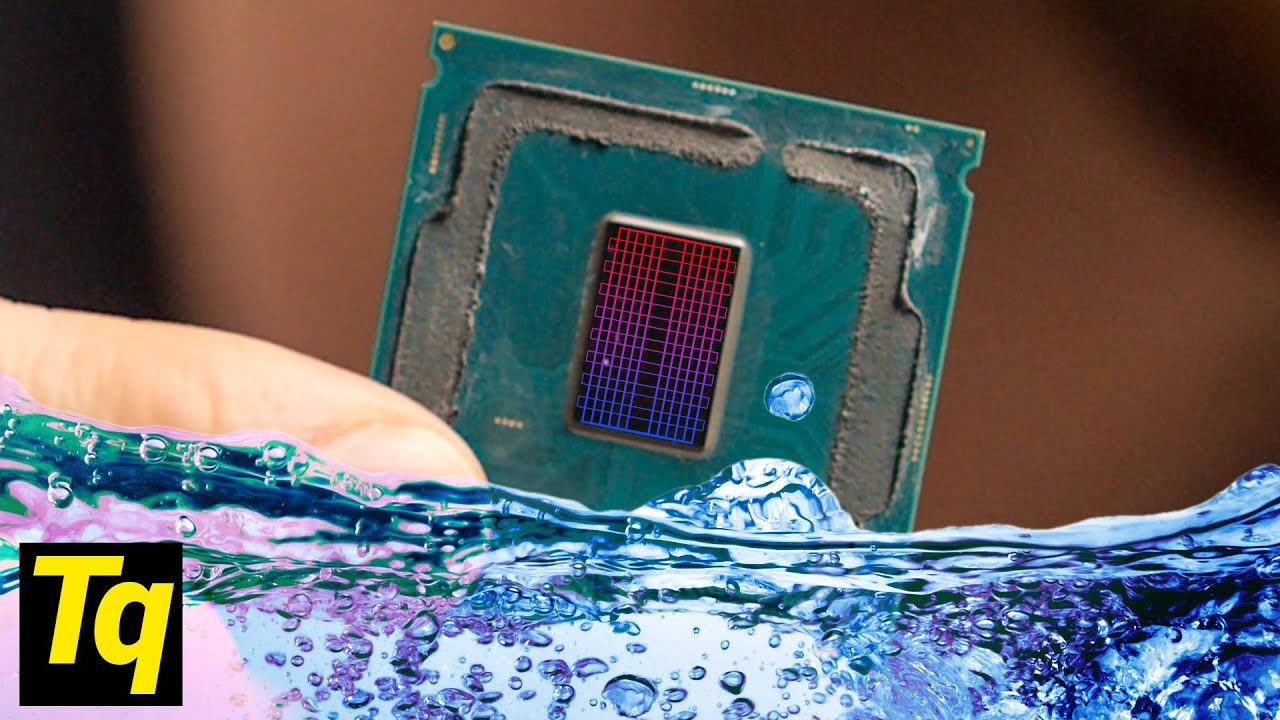
Water Cooling INSIDE A CPU
0 up · 0 down · 0 ratings
Description
Learn through problem solving, and the first 200 people can save 20% today on Brilliant at brilliant.org
Promos
Check out the POWERlab at Ecole Polytechnique Fédérale de Lausanne, who performed the research featured in this video: epfl.ch Learn about a new in-chip water cooling method that might make its way into processors sooner than you think! Leave a reply with your requests for future episodes, or tweet them here: twitter.com ►GET MERCH: lttstore.com ►SUPPORT US ON FLOATPLANE: floatplane.com ►LTX EXPO: ltxexpo.com AFFILIATES & REFERRALS --------------------------------------------------- ►Affiliates, Sponsors & Referrals: lmg.gg ►Private Internet Access VPN: lmg.gg ►MK Keyboards: lmg.gg ►Nerd or Die Stream Overlays: lmg.gg ►NEEDforSEAT Gaming Chairs: lmg.gg ►Displate Metal Prints: lmg.gg ►Epic Games Store (LINUSMEDIAGROUP): lmg.gg ►Official Game Store: nexus.gg ►Amazon Prime: lmg.gg ►Audible Free Trial: lmg.gg ►Our Gear on Amazon: geni.us FOLLOW US ELSEWHERE --------------------------------------------------- Twitter: twitter.com Facebook: @LinusTech Instagram: @linustech Twitch: twitch.tv FOLLOW OUR OTHER CHANNELS --------------------------------------------------- Linus Tech Tips: lmg.gg TechLinked: lmg.gg ShortCircuit: lmg.gg LMG Clips: lmg.gg Channel Super Fun: lmg.gg Carpool Critics: lmg.gg
Water cooling inside a CPU is explored as an integrated chip cooling approach that designs the thermal management together with the circuitry itself. The video explains why conventional cooling blocks, heat spreaders, and paste introduce inefficiencies, and then demonstrates an in-chip cooling concept developed by Elison Matioli and his team at EPFL. They etched microchannels directly below a gallium nitride power converter die to create tiny cooling passages, with small capillaries near hotspots and larger channels acting as inflow and outflow pipes. The result is a dramatic reduction in peak temperatures compared to traditional cooling, achieving about 60 degrees Celsius versus potential 250 degrees without this approach. The researchers claim the method could realistically be implemented in standard clean rooms by major chip makers, suggesting scalable adoption for servers and data centers. The discussion also points to potential consumer implications, including improved overclocking headroom for enthusiasts and possible future applications in laptops or small form factor PCs. The segment closes by noting the technology does not require as much liquid as traditional loops, enabling a more compact and efficient cooling solution. The host plugs the idea of future devices like water-cooled wearables and then pivots to a sponsor message for Brilliant.org, emphasizing problem solving and hands-on learning. The overall takeaway is that in-chip cooling could redefine how heat is managed in high-performance electronics, aligning device design with thermal needs from the ground up and potentially transforming both industrial and consumer computing landscapes.
Topics · hardware · technology · cooling · semiconductors · data centre
Questions answered
- What is the core idea of in-chip cooling as presented in this video?
- The core idea is to integrate cooling channels directly into the chip die, etching microchannels beneath the heat-generating area so heat is removed more efficiently, reducing reliance on separate heat sinks and paste.
- How much cooling performance do the researchers claim, and what is the pumping power need?
- They claim the system can extract about 1.7 kilowatts per square centimeter using roughly half a watt of pumping power.