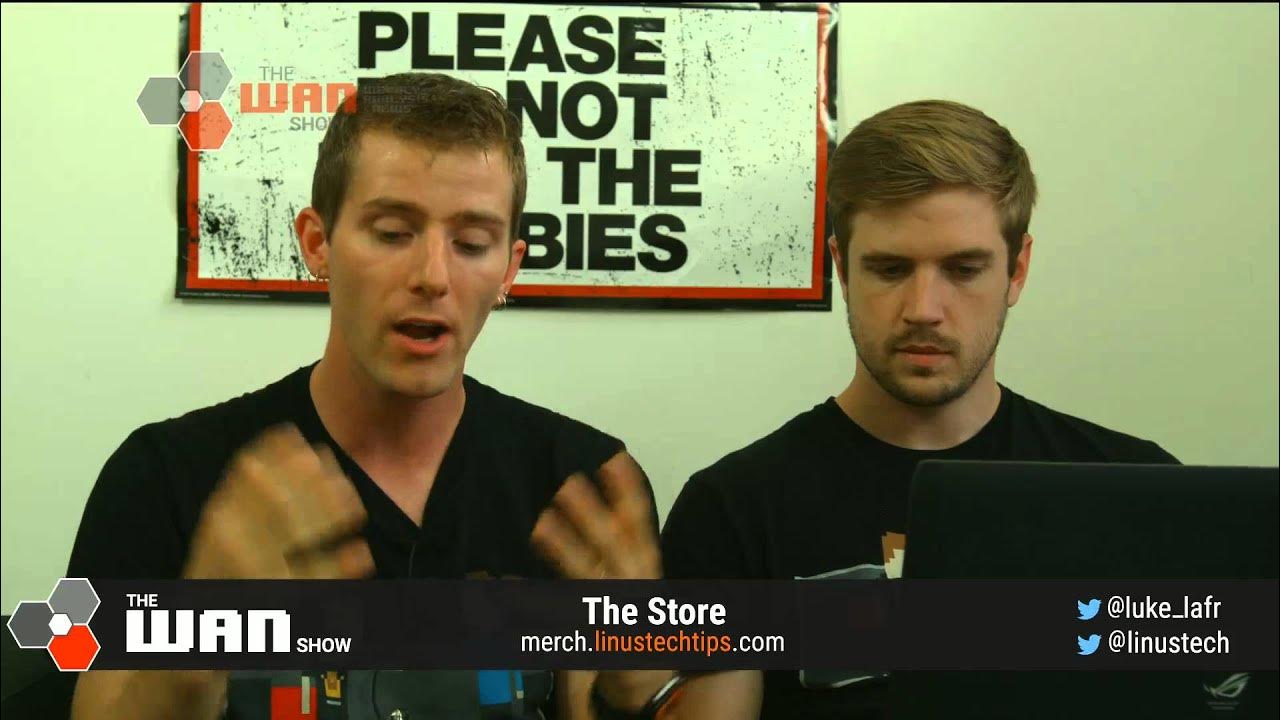
The WAN Show - Adultery Site Ashley Madison HACKED! Jeep Cherokee HACKED! - July 24, 2015
0 up · 0 down · 0 ratings
Promos
linustechtips.com Get the Vote For Turnip shirt at teespring.com Sponsors! Phantom Glass: store.phantom.glass iFixIt link: ifixit.com - Offer code WANSHOW Soundcloud Link: soundcloud.com Timestamps courtesy of JJMC89 00:02:47 - Right to kill drones 00:10:50 - Toshiba CEO resigns over $1.2 billion accounting scandal 00:15:35 - Have you bought anything form Toshiba in the last year? (strawpoll.me 00:16:28 - ESL preparing new anti-doping rules following Katowice Adderall controversy 00:27:37 - E-sports doping (strawpoll.me 00:31:06 - Should excess caffeine be a "performance enhancing drug"? (strawpoll.me 00:35:35 - iOS 8 hits 85 percent adoption as Google goes dark on Lollipop figures 00:39:39 - Hackers Remotely Kill a Jeep on the Highway 00:52:00 - Does this news affect the way you'll shop for a tech-heavy car? (strawpoll.me 00:56:10 - Chrysler recalls 1.4 million cars at risk of being remotely hijacked 01:01:08 - Sponsor - iFixit 01:03:03 - Sponsor - Phantom Glass 01:05:08 - John MacAfee: Ashley Madison hack may 'destabilise society' 01:24:49 - Apple stops beta testers from reviewing apps
The WAN Show episode from July 24, 2015 covers a broad mix of technology, security, and automotive topics, with Linus and the crew unpacking a string of news items and listener questions. The hosts kick off with a lighthearted opener and quickly transition to a set of serious and timely topics, starting with wireless car hacking and the implications for consumer vehicles. They reference a Wired article about Jeep Cherokee vulnerabilities that allow remote control over dashboard functions and even braking under certain conditions, highlighting the potential safety risks. The discussion then broadens to the issue of cybersecurity in connected cars, noting the difference between physical access hacks and wireless exploits, and the challenges manufacturers face in updating complex vehicle architectures. Throughout, the tone blends humor with caution as they consider how to mitigate risks while recognizing the slower, more conservative cadence of the automotive industry. They emphasize that the ability to remotely manipulate vehicle systems is not just a theoretical concern but a real-world threat with potential to affect thousands of cars on the road. The panel also critiques corporate responsiveness and recalls, asking why automakers often take longer to acknowledge and address vulnerabilities compared with consumer tech firms. They conclude that consumer safety depends on better design, rapid disclosure, and coordinated industry responses rather than isolated fixes. The show then pivots to a discussion of the Ashley Madison data breach, noting the broad social and ethical implications of a high-profile exposure that touches privacy, security, and personal conduct in modern digital life. The host banter shifts to broader security culture, suggesting that high-profile hacks create teachable moments for developers and users alike, and urging more transparent security practices across industries. The episode moves to the topic of doping in esports, where the hosts question the prevalence and visibility of performance-enhancing drugs, as well as the fairness implications for online and LAN tournaments. They review quotes from players about Adderall and similar substances, and debate whether esports should implement formal drug testing or adopt a more gradual, industry-driven approach to policy. The show continues with a rapid-fire segment about iOS and Android adoption rates, comparing platform fragmentation, user inertia, and the impact of software updates on end-user experience. They analyze how quickly iOS 8 and Android updates spread across devices, noting the impact on app performance and the broader software ecosystem. In their characteristic style, the hosts probe the economics of software lifecycle, hardware refresh, and support strategies that shape consumer expectations for phones and tablets. The Jeep hacking segment then returns in greater depth, with Linus and team detailing the Wired demonstration of remote control over a Jeep Cherokee via its Uconnect system, including the ability to modify air conditioning, windshield wipers, and even engage or impede the engine. They discuss the broader implications for vehicle safety, insurance, and regulatory action, including how many vehicles might be susceptible given the use of connected infotainment units. A key takeaway is that the automotive industry tends to operate on longer development cycles, which complicates rapid patching and recalls in the face of evolving security threats. The hosts critique the notion that automakers will easily and quickly fix vulnerabilities, arguing that present incentives and risk assessments lag behind the realities of modern cyber threats. They highlight the importance of independent security researchers, responsible disclosure, and the need for standardized ETSI/IEEE-style cybersecurity practices within the automotive sector. The show also considers potential defense strategies ranging from onboard software isolation to external monitoring and industry-wide information sharing, cautioning against solutions that would cripple critical communications during emergencies. They entertain outlandish but thought-provoking ideas, such as deploying nets or other physical countermeasures for drones, while weighing feasibility and safety concerns. The discussion ends with a broader meditation on media coverage, public perception, and the role of tech media in translating complex security stories into accessible warnings and actionable guidance for viewers. Overall, the episode blends humor with rigorous analysis, aiming to educate its audience about real risks while keeping the conversation approachable and entertaining. The show leaves viewers with a sense of urgency about cybersecurity, a call for smarter industry collaboration, and a reminder that technology’s benefits depend on thoughtful safeguards and responsible management of risk.
Topics · technology · cars · security · esports
Questions answered
- What exactly happened in the Jeep Cherokee hack demonstrated by Wired, and what systems were affected?
- Wired demonstrated a zero day exploit that allowed hackers to wirelessly interact with a 2014 Jeep Cherokee's dashboard, air conditioning, radio, wipers, and transmission through the Uconnect infotainment system from about 10 meters away; they could also potentially cut the engine and disrupt braking under certain conditions.
- Why is wireless hacking considered more dangerous than physical access hacks in cars?
- Wireless hacks can affect many vehicles remotely without the need for physical tampering, enabling a rapid, mass impact that is harder to predict and mitigate compared with localized, physical access risks.
- What stance did the hosts express on government or regulatory responses to automotive cybersecurity?
- They suggested that automakers tend to move slowly due to long product cycles and argued for stronger industry collaboration, responsible disclosure, and more proactive security practices rather than relying on post hoc recalls alone.
- Should esports adopt formal drug testing for performance-enhancing substances?
- The hosts debated the issue, noting that some players acknowledge using stimulants like Adderall, while acknowledging the complexity of enforcement and the potential for cultural change; they suggested gradually exploring testing with input from authorities and event organizers.