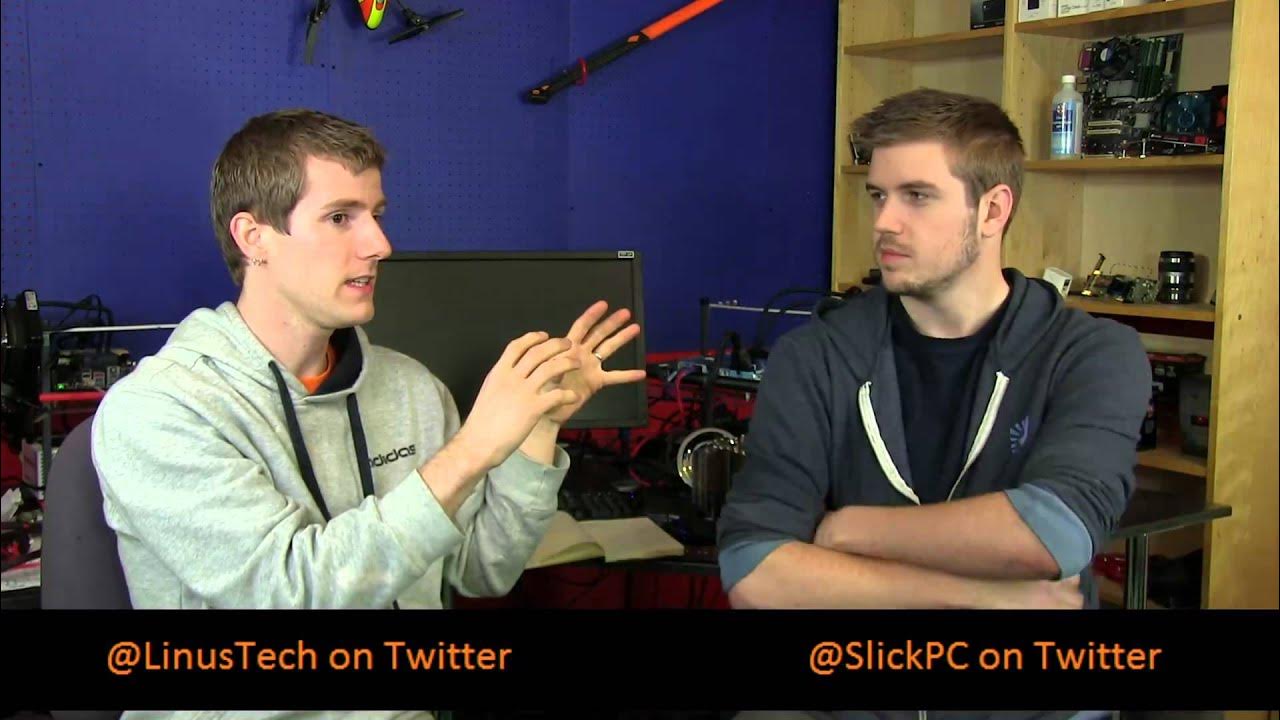
Linus Tech Tips Live Show Archive - February 1, 2013
0 up · 0 down · 0 ratings
Description
4:45 SSD Update 6:58 Our favorite pieces of software 26:28 Linus Personal Rig Update - Info From Mountain Mods! 33:40 Product Naming Consistency 39:16 Linus Using Windows Phone 8 43:35 3570K vs FX8350 showdown Ft. Logan's video 51:10 Cool stuff that arrived today 55:58 Slick's Surprise Gear Unboxing 1:05:45 Patent trolls and Newegg standing up to the pressure 1:07:35 Essential or non-essential internet 1:17:56 Shrinkage of Storage 1:22:08 Windows 8 Giveaway
Linus Tech Tips Live Show Archive from February 1, 2013 is a long, multi-topic live stream that blends hardware talk, software demonstrations, personal rig updates, and community interaction. The hosts begin by addressing a recent streaming hiccup, explaining that they were not actually live for a portion of the broadcast and that Twitch/Xplit indicators gave a misleading impression. They acknowledge the delay and apologize for the confusion, then pivot to technical content and ongoing projects. The SSD segment centers on the Samsung 840 and 840 Pro, detailing performance characteristics, five-year warranties, and the value proposition of TLC flash in consumer devices, including expected read and write behavior and typical usage scenarios for gamers and desktop users. The conversation then moves to software preferences, with Linus and Slick debating the nature of “piece of software” versus “script,” and they reminisce about Windows Home Server as a flexible, remote-access storage solution built on inexpensive drives. They compare old storage architectures, such as IDE via SATA bridges and ATA-133, to modern SSDs and SATA interfaces, illustrating how storage technology has evolved and what it means for day-to-day use and performance. A parallel thread discusses personal hardware, including Linus’s Mountain Mods powder-coated TJ07 case, concerns about tolerances after coating, and the possibility of upgrading to a TJ11 if needed, framed by broader talk about cosmetic finishes and the durability of aluminum finishes. The hosts unveil a forthcoming personal rig update featuring gold-plated blocks and an ambitious reservoir project from Phobia, highlighting the visual appeal and heft of premium cooling components, while naturally balancing the discussion with practical considerations like weight and mounting hardware. The show continues with product naming debates, contrasting Samsung 830, 840, and 840 Pro labels to illustrate why consistent naming matters for consumer clarity, and they extend the argument to GPUs and other products that historically suffer from confusing branding. They touch on Windows Phone 8 experiences and the differing priorities they encounter as non-enthusiast reviewers, including the 8X versus 8S form factors, screen sizes, microSD expansion, and software UX concerns, while acknowledging that the platform’s evolution has implications for everyday usability and app ecosystems. The panel also covers the ongoing topic of Nvidia and AMD product strategies, including references to reference board designs and overclocking considerations, with opinions about company directions, cooling form factors, and the balance between performance and practical, usable hardware. There is a recurring focus on community infrastructure, including forum reliability, moderation workflows, and upcoming improvements to the BVulletin-based forum software, as well as the group’s approach to handling downtime, bugs, and user feedback. The chat segment provides live reactions to topics like kernel/module inspection in Firefox developer tools, 3D view of DOM elements, and practical demonstrations that tie into web development workflows, illustrating how software tools can help diagnose layout and dependency issues on complex pages. The show also branches into hardware ecosystems, such as SCSI/SAS versus consumer SATA, backplanes, enterprise-level storage concepts, and the differences in error correction and reliability that matter for server-grade deployments. The discussion on streaming infrastructure returns, with commentary about audio/video quality, echo, and the importance of reliable broadcasting pipelines, including adjustments to Xsplit configurations and multi-camera setups, underscoring how streaming has evolved alongside hardware capabilities. The hosts revisit the essential topic of essential versus non-essential internet concepts and discuss how information access, privacy, and user expectations have shifted since early 2010s streaming culture, culminating in a broader reflection on why certain tech trends persist and how communities form around hardware and software choices. Throughout the session, the hosts weave in personal anecdotes, technical specifics, and forward-looking ideas, balancing practical guidance for building and maintaining systems with light-hearted banter and audience engagement. The live format is a constant undercurrent, with moments of improvisation and troubleshooting interspersed with structured segments, teasing future hardware reveals, software demonstrations, and potential collaborations with industry partners. The archival nature of the video adds a historical lens on early 2010s PC culture, offering insights into the evolution of consumer SSDs, NAS solutions, PC case design, and the role of long-form live streams in building an engaged tech community. In summary, the video is a snapshot of Linus Tech Tips at a particular moment in time, pairing hands-on hardware testing with candid discussions about branding, platform choices, and the logistics of maintaining a large, live online show. The narrative arc moves from a technical mishap to a broad spectrum of hardware and software topics, ending with hints of future projects and ongoing community initiatives that would continue to shape the channel’s identity in the years to come.
Topics · science_technology · lifestyle · technology_news · hardware_reviews
Questions answered
- Wat is de verhouding tussen de Samsung 840 en 840 Pro in termen van prestaties en prijs, zoals besproken in de livestream?
- De 840 Pro biedt topklasse prestaties met sterke lees- en schrijfsnelheden en een lange garantie van vijf jaar, terwijl de 840 een mainstream SSD is die TLC-flash gebruikt, wat lagere schrijfsnelheden kan betekenen maar een lagere prijs en betere capaciteit per euro biedt.
- Welke issues hadden de streamers met de uitzending en hoe werd dit opgelost?
- Ze merkten dat ze aanvankelijk niet live waren terwijl ze streamden, waarna ze de situatie vertelden en de stream opnieuw opstarten en Twitter-communicatie herstelden, terwijl ze later technical difficulties besproken en excuses aanboden.
- Wat was de centrale discussie over Windows Home Server en opslagbeheer?
- Windows Home Server werd geprezen als een gemakkelijke manier om verschillende schijven te combineren, remotely te beheren en bestanden via een webportaal toegankelijk te maken, wat het eenvoudiger maakte dan traditionele NAS-systemen.