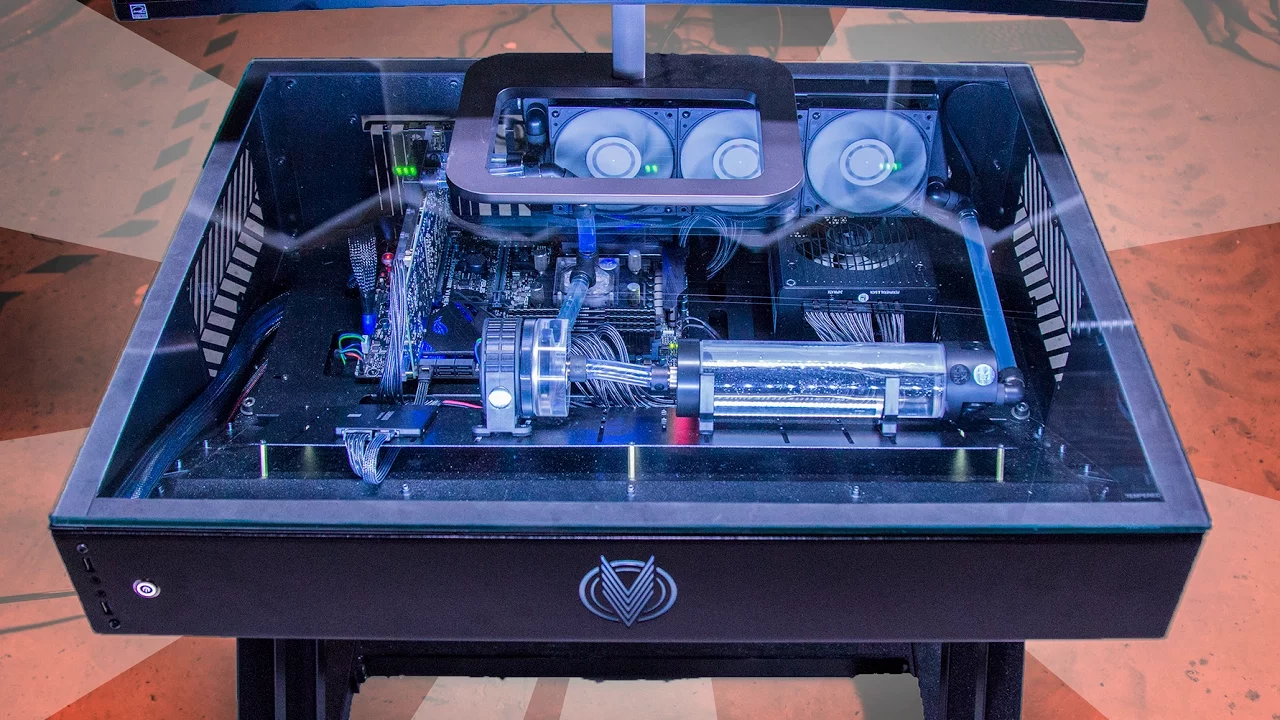
Smallest Desk PC Yet!! - Vector Desk Mini Review
0 up · 0 down · 0 ratings
Description
Desk PCs are pretty darn cool - but is the Vector Desk Mini too small to be functional? Ting sponsor link: linus.ting.com Cooler Master sponsor link:
Promos
Check out Coolermaster’s Masterkeys keyboard lineup at geni.us Buy Ryzen 1800x on Amazon: geni.us Buy Vector Desk (full-size, the mini isn't publicly available yet): geni.us Discuss on the forum: linustechtips.com Our Affiliates, Referral Programs, and Sponsors: linustechtips.com Linus Tech Tips Merchandise: designbyhumans.com Linus Tech Tips Posters: crowdmade.com twitter.com @LinusTech Intro Screen Music Credit: Title: Laszlo - Supernova Video Link: youtube.com iTunes Download Link: itunes.apple.com Artist Link: soundcloud.com Outro Screen Music Credit: Approaching Nirvana - Sugar High youtube.com Sound effects provided by freesfx.co.uk
The video opens with Linus introducing the Vector Desk Mini as a compact, visually appealing desk PC case and teases the goal of fitting a full custom water cooling loop inside a small footprint. The hosts explain that the desk is designed for air cooling or all-in-one liquid cooling, but they push beyond a basic build by assembling a high-performance, multi-core gaming and content-creation machine without water cooling initially to hit a rough budget target. They describe selecting an AMD Ryzen 7 1800x, an Asus Crosshair VI Hero motherboard, and a powerful combination of components to maximize CPU performance, multi-GPU readiness, and fast NVMe storage, all while maintaining a quieter operation. They detail the process of fitting components into the compact chassis, noting the challenges of motherboard mounting, PCIe covers, and the need for careful cable management. The build evolves into a visually cohesive, monochrome aesthetic with custom sleeving, a modular EK water cooling setup, and a see-through GPU block, all aimed at keeping temps reasonable while preserving the desk’s footprint. Throughout, the hosts assess balance between size, performance, and noise, concluding that the Vector Desk Mini excels at being space-saving and visually impressive, yet its small size limits luxury gaming ergonomics and certain keyboard configurations. The video ends with a reflection on the product’s value, acknowledging its fair price given the alternative of a full PC case and separate desk, while hinting at future desk PC iterations that might push the boundaries further. The presenters emphasize the design philosophy behind the Vector Desk Mini, highlighting its lightweight yet rigid build once the hardware is installed, and they showcase how a compact form factor can house a capable, aesthetics-focused setup. They walk through critical build decisions, such as selecting a high-end GPU option, choosing a powerful but efficient PSU to avoid audible fan activity, and integrating an extensive water cooling loop from EK to achieve low noise levels. The video also covers practical build tweaks, including drive mounting, cable routing, and the decision to go with a bold yet clean black-and-gray cable appearance. In the closing analysis, they acknowledge the desk’s standout appeal and reasonable pricing but caution that the form factor compromises for gamers who require larger keyboards or more expansive mouse pads, suggesting that viewers might want to wait for improved iterations if they need more space for peripherals or future upgrades.
Topics · technology · hardware · product_review · gaming
Questions answered
- What components were used to maximize performance in the Vector Desk Mini build?
- The build used an AMD Ryzen 7 1800x CPU, an Asus Crosshair 6 Hero motherboard, 32 GB DDR4 memory, a GTX 1080 GPU with EK water cooling blocks, a Samsung 850 Evo SSD, and a Corsair RM1000x power supply, all configured for strong multi-core performance and efficient cooling.
- Why did the builders choose a high-end PSU despite the desk's compact form?
- They chose a high-end PSU to ensure the fans would stay quiet under load and to provide ample headroom for the water cooling loop and future upgrades without risking heat or noise.