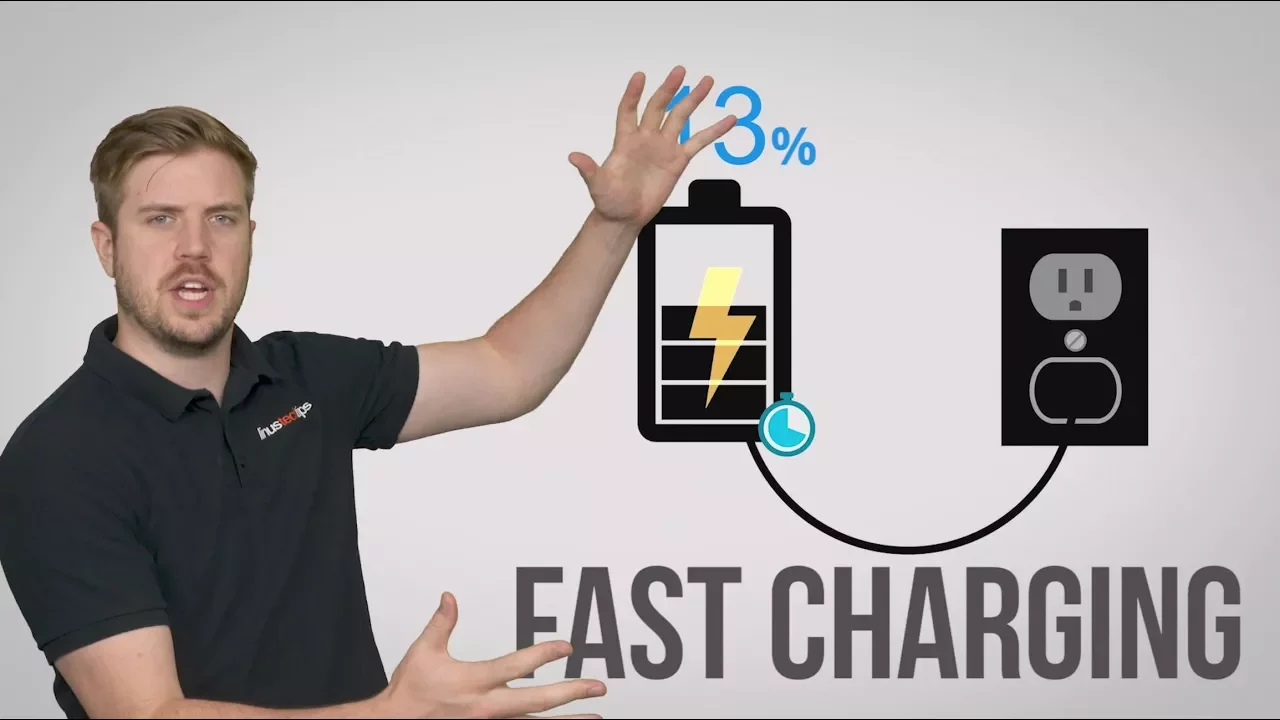
How Does Fast Charging Work?
0 up · 0 down · 0 ratings
Promos
How do new standards like Qualcomm Quick Charge power up our devices so rapidly? Visit tunnelbear.com and start your 7-day free trial today! Techquickie Merch Store: designbyhumans.com Techquickie Movie Poster: shop.crowdmade.com Follow: twitter.com Leave a reply with your requests for future episodes, or tweet them here: twitter.com
Fast charging is explained by contrasting it with traditional charging, which typically delivers around 5 watts of power and can be slow for modern devices with bigger batteries. The video explains that fast charging works by adjusting either or both voltage and current to push more power into the battery, with devices capable of handling up to 20 watts or more depending on the standard. A key point is that higher power generates more heat, which can harm the battery if there isn’t sufficient space or proper engineering to manage expansion and temperature. To mitigate this, manufacturers implement a handshaking process between the charger and the device to certify compatibility for the extra power, ensuring safe operation. The most widely adopted standard is Qualcomm Quick Charge, though others like Samsung’s fast charge and OnePlus Dash Charge are also discussed as popular protocols. The video also notes practical caveats: not all chargers or cables can sustain the higher current, and fast charging tends to taper off as the battery nears full, so it is especially useful when the battery is significantly depleted. Finally, the host emphasizes that while fast charging is convenient, it is not a miracle solution for filling a battery from empty to full, and replacement and longevity considerations should be kept in mind alongside the benefits of rapid top-ups.
Topics · technology · electronics · power · batteries
Questions answered
- What makes fast charging different from normal charging in practical terms?
- Fast charging increases the power delivered to the battery by adjusting voltage, current, or both, enabling higher wattage than typical chargers. This speeds up charging but requires compatible devices and cables, and can generate more heat.
- Why does fast charging generate more heat, and is it safe for the battery?
- Higher power levels produce more heat, which can stress the battery. Manufacturers use safety handshakes and internal protections to ensure the battery handles the increased current safely, but excessive heat can affect longevity if not managed properly.
- Does having a charger that supports fast charging guarantee a rapid charge on any device?
- Not necessarily. The device must support fast charging and be compatible with the charger’s protocol, and the cable must handle the higher current. Even with compatibility, charging speed tapers as the battery approaches full.