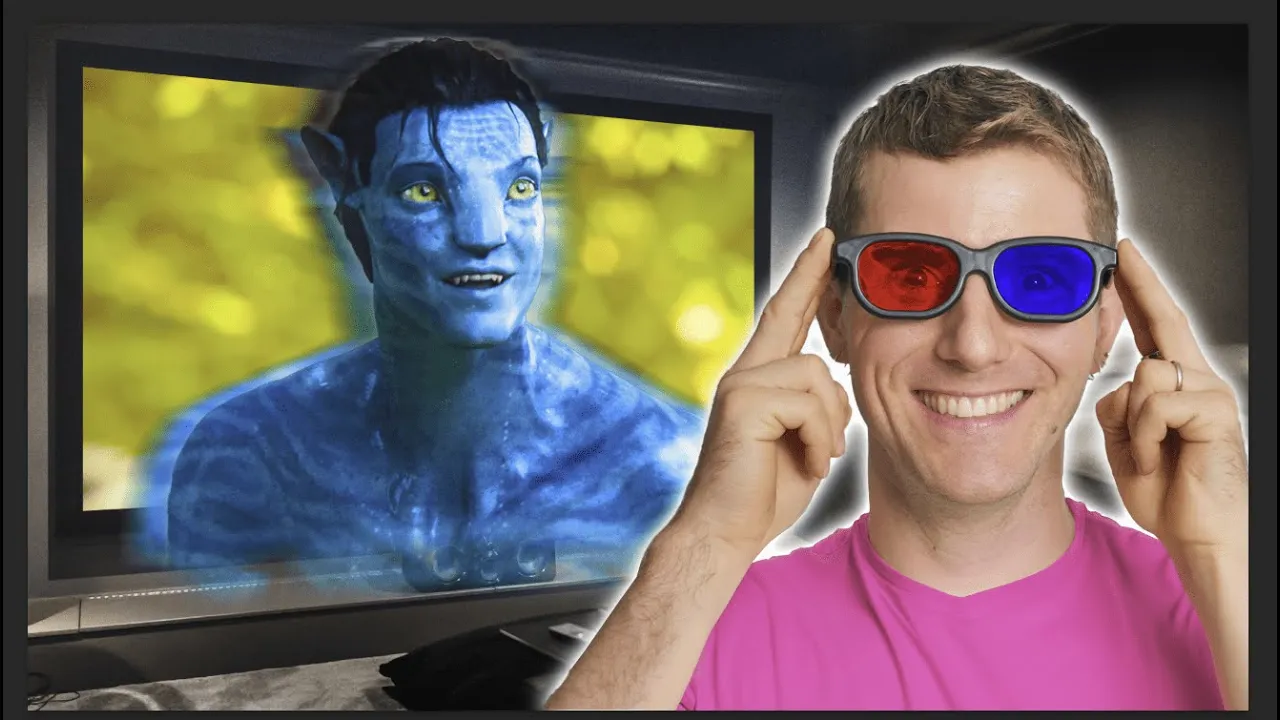
My Most Unnecessary Home Project in YEARS - Home 3D Movie Projector Setup!
0 up · 0 down · 0 ratings
Description
Say no to wet socks with Vessi’s Black Friday Sale! Stay dry in style with Vessi at vessi.com. Don’t wait—grab yours before they’re gone! Linus has fallen back in love with 3D. So we set a home theater up worthy of being in a theater. Using 2 Projectors, 2 polarizing filters, and JANK we watched Avatar 2 in glorious 3D! Discuss on the forum: linustechtips.com Guide on r/Vive: reddit.com Buy an Optoma UHD30 Projector on eBay: ebay.us Buy RENIAN Polarized Film Sheets: geni.us
Check out American Polarizers Inc.: apioptics.com
Promos
Check out the Stewart Silver 5D Film Screen: lmg.gg ► GET OUR MERCH: lttstore.com ► GET EXCLUSIVE CONTENT ON FLOATPLANE: lmg.gg ► GET A VPN: piavpn.com ► SPONSORS, AFFILIATES, AND PARTNERS: lmg.gg Purchases made through some store links may provide some compensation to Linus Media Group. CHAPTERS --------------------------------------------------- 0:00 Intro 1:39 Why are you doing this? 2:31 All the Hardware needed! 7:24 Will it work? 8:45 Why didn't it work before? 10:10 How do we even get 3D to work with 2 projectors? 11:42 WE HAVE A 3D MOVIE! 12:38 Setting it all up in the Theater 15:05 Final Impressions 18:15 Outro
The video documents a long running home theater project that pivots from a standard setup to an ambitious 3D movie experience using two projectors, polarizing filters, and a fair amount of improvisation. The narrator lays out the core challenge: most home 3D solutions rely on outdated shutter glasses or expensive gear, so the path chosen is a passive 3D system similar to commercial theaters, leveraging dual projectors and carefully filtered light. Early sections detail the hardware hunt, including the attempt to polarize with a laser-based Epson LS2000 and the decision to switch to two Optoma UHD30 projectors due to brightness and lens shift limitations. The video emphasizes the dependency on polarizing filters and a tuned projection surface, with a focus on achieving solid polarization through a bulky but effective setup. The team then tests various screen surfaces, discovering that a specialized silver 5D screen offers superior polarization retention and viewing angles, albeit with a hefty price tag and hard mounting constraints. The build narrative evolves through a sequence of tense trials and small victories, culminating in a working 3D playback that finally delivers a convincing Avatar 2 experience at home, complete with reduced cross talk and clear separation of stereo images. The conclusion reflects on the substantial effort required, the unusual mounting solution, and the sense of achievement at watching a modern 3D film in a home theater, while also teasing potential future improvements and a playful nod to the sponsor integrations. Overall, the video blends technical almost-obsessive detail with entertaining storytelling and fan-pleasing moments as the family witnesses the result of years of tinkering.
Topics · home theater · diy electronics · a/v technology · film and cinema technology
Questions answered
- What is the core goal of the home theater upgrade?
- To create a passive 3D home theater using dual projectors and polarized filters to watch 3D Blu-ray content with stable polarization and minimal cross talk.
- Which hardware choices enabled the 3D projection?
- Two projectors (Optoma UHD30), specialized circular polarized filters, a Stewart silver 5D screen, and professional polarizers from American Polarizers Inc.
- What was the major milestone that confirmed 3D worked?
- The moment when the 3D playback could be demonstrated as truly 3D with reduced cross talk and convincing depth, notably during the Avatar 2 viewing sequence.