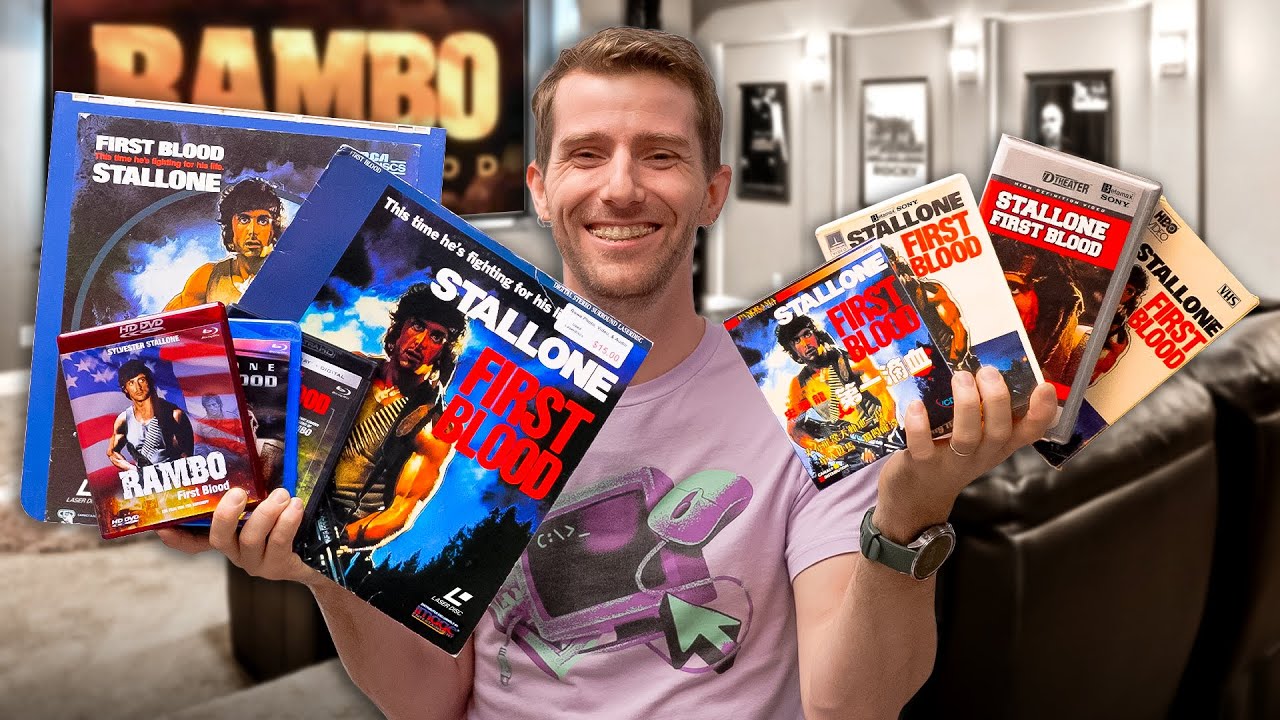
I Watched This Movie on 10 Different Formats
0 up · 0 down · 0 ratings
Promos
Click this link boot.dev and use my code LTT to get 25% off your first payment for boot.dev. After making videos about old media formats like LaserDisc and DVHS, we came to the natural conclusion that we had to watch one movie across as many formats as we could get our hands on. Fortunately for us, one of the few movies available on everything from Betamax to 4K Blu-ray is the one and only Rambo: First Blood. Discuss on the forum: linustechtips.com
Check out our Channel Partners: Secretlab - Get up to $249 off during their Black Friday/Cyber Monday sale (ends Dec. 5 2025): lmg.gg PIA - Get the VPN of our choice: piavpn.com dbrand - Buy a "Circuit" series skin for your device: dbrand.com ► GET OUR MERCH: lttstore.com ► GET EXCLUSIVE CONTENT ON FLOATPLANE: lmg.gg ► SPONSORS, AFFILIATES, AND PARTNERS: lmg.gg Purchases made through some store links may provide some compensation to Linus Media Group. Affiliate links powered in part by affilimate.com Linus Sebastian is an investor in Framework Computer, Inc CHAPTERS --------------------------------------------------- 0:00 Intro 1:15 Betamax 3:02 VHS 5:55 LaserDisc 8:52 CED VideoDisc 11:15 Video CD 14:10 DVHS 17:05 DVD 21:05 HD DVD 23:02 Blu-ray 26:25 4K Blu-ray 28:30 Conclusion 30:22 Outro
I Watched This Movie on 10 Different Formats takes the viewer on a chronological tour through home video history, using the Rambo: First Blood film as the through-line. The hosts begin with Betamax, noting its early market presence and the fact that it offered higher quality per tape but suffered from shorter recording times. They compare Betamax to VHS, highlighting how VHS ultimately won the format war due to practicality and wider distribution, even while acknowledging Betamax’s image quality advantages. The discussion then moves to LaserDisc, where they marvel at its potential for better video, particularly in modern displays, yet acknowledge its high cost and limited content per side which hindered mass adoption. They explain CED VideoDisc as an even more fragile and quirky alternative, underscoring how this era featured a wide spectrum of experimentation with disc and tape technologies. Video CD is introduced as a durable, lower-resolution option that could fit films on two discs, with commentary on how Hollywood briefly experimented with this format before streaming and digital discs dominated. DVHS, a high-definition tape format, is presented as a notable bridge between analog tape and true digital HD, with enthusiasm about its potential while acknowledging practical costs and reliability concerns. The narrative then ascends to DVD, praised for dramatic improvements in image and audio quality, compactness, and the introduction of features like chapter stops and extras, marking a pivotal shift in consumer home entertainment. HD DVD and Blu-ray are examined in parallel, with HD DVD framed as a strong competitor that ultimately lost to Blu-ray due to market dynamics and ecosystem support, despite both delivering 1080p or better. The roundup culminates with 4K Blu-ray, detailing even higher capacity disks, advanced audio formats, and enhanced color depth, while reflecting on the broader industry trajectory toward streaming and the role of physical media as a collector’s and archival format. Throughout, the hosts inject humor, nostalgia, and practical reflections on how each format affected viewing experiences, screen size, and home theater setups, ultimately concluding that the evolution of formats is as much about technology as it is about personal habit and the changing ways we access media.
Topics · technology · media-history · home-entertainment · film-history
Questions answered
- What is the main film used to illustrate the ten formats and why was it chosen?
- Rambo: First Blood was chosen because it is available across nearly every home video format, making it ideal for a cross-format comparison.
- Which format is described as the bridge between analog and digital in the video?
- DVHS is described as a high-definition tape format that represents a bridge between analog tape and digital HD.
- Why did Blu-ray ultimately win the format war against HD DVD according to the video?
- Blu-ray won due to a combination of greater storage capacity, ecosystem support, and alignment with later industry standards and players.
- What feature of DVD significantly changed how people used home video compared to earlier formats?
- DVD introduced chapters and bonus content, which substantially improved navigation and extended the home viewing experience.