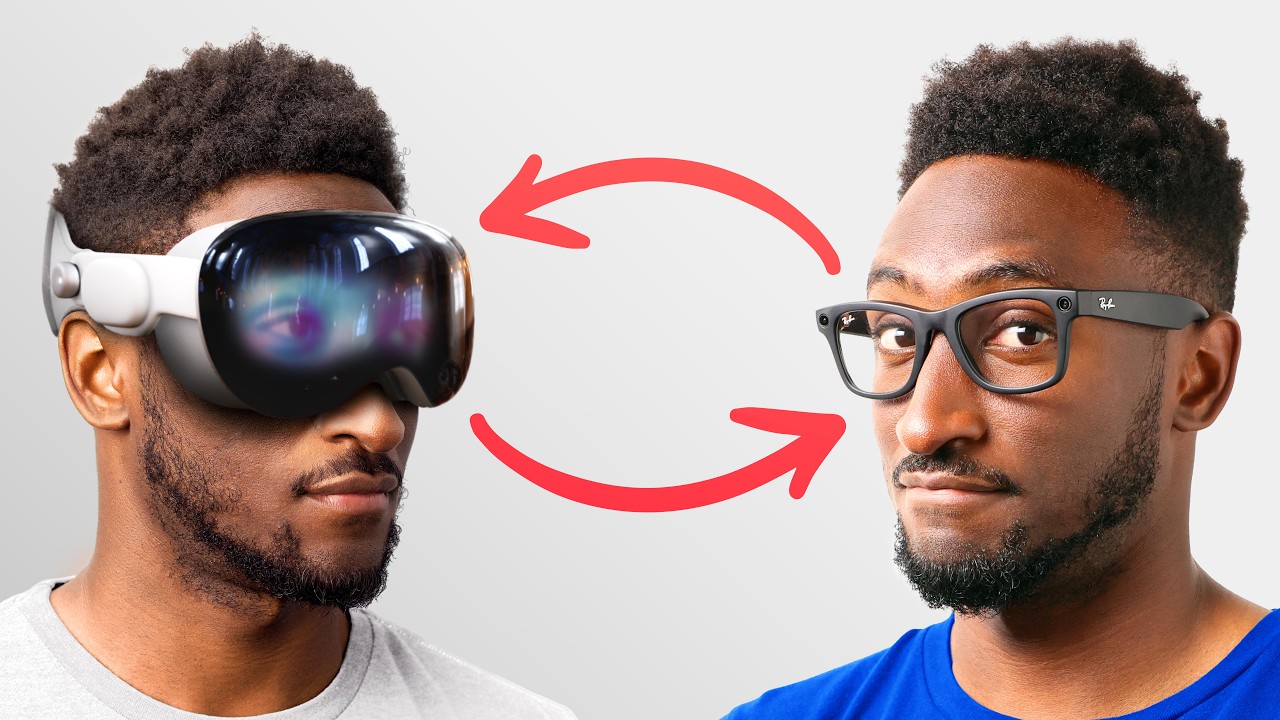
The Vision for Mixed Reality: Now vs The Future!
0 up · 0 down · 0 ratings
Description
Quest 3. Meta Smart Glasses. Apple Vision Pro.
Check out the Meta Quest 3 at geni.us
Promos
Check out the Ray-Ban Metal Headliner at geni.us Apple Vision Pro Impressions: youtu.be MKBHD Merch: shop.mkbhd.com Tech I'm using right now: amazon.com Playlist of MKBHD Intro music: goo.gl Headset and glasses provided by Meta for review. ~ twitter.com @MKBHD @MKBHD
The video lays out a clear framework for how mixed reality devices might evolve from today’s VR-centric models toward everyday glasses that blend digital content with the real world. It begins by acknowledging the current limitations of headset form factors, the discomfort of heavy hardware, and the long road to compact, stylish wearables. The presenter then dives into the Quest 3 as a pivotal step, detailing its improved pass-through capabilities that deliver color, stereo, and low latency visuals, enabled by a ring of external sensors and an integrated LiDAR system. He explains how these improvements translate into more intuitive setup, room mapping, and a sense of spatial presence that was previously missing in VR. Throughout, the comparison to Apple Vision Pro remains a touchstone, highlighting that while Quest 3 excels in price and gaming experiences, Vision Pro leads in pass-through fidelity, creating a spectrum of trade-offs shaping the path to mass adoption. In the middle section, the focus shifts to the smart glasses trajectory, using Meta’s Ray-Ban Stories as a baseline. The talk considers future scenarios where glasses become the main daily computer, with cameras, compact processors, and audio delivery designed for ambient use. The discussion emphasizes miniaturization, power efficiency, and sensor fusion as key drivers that will push smart glasses from niche wearables to everyday tools. The presenter demonstrates how hand tracking, voice interaction, and ambient audio can reduce the need for traditional controllers, while also noting the current limits such as battery life and the absence of tactile feedback. This segment underscores a long-term strategy where software, AI, and sensors converge to make glasses capable of more tasks without drawing attention or compromising comfort. In the final portion, the host offers pragmatic takeaways and forward-looking bets. He weighs which path,continuing to shrink VR headsets or advancing smart glasses,may achieve broader adoption first, acknowledging that both tracks are being heavily funded and aggressively developed. The video closes by encouraging subscriptions for future coverage, including a forthcoming Vision Pro review, and by painting a optimistic, long-range view where computer-on-face technology becomes mainstream within a decade or two. Throughout, the emphasis remains on practical usability, gaming appeal, and the inevitability of more immersive, less obtrusive wearable computing in daily life, rather than on hype alone.
Topics · technology · wearable computing · virtual reality · augmented reality · consumer electronics
Questions answered
- What are the primary improvements of the Quest 3 compared to earlier models?
- The Quest 3 adds enhanced pass-through with color, stereo, and low latency visuals, facilitated by new external sensors and LiDAR, improving room mapping and spatial awareness.
- How do smart glasses fit into the long-term wearable computing vision?
- Smart glasses are envisioned to gradually gain more processing power and miniaturization, enabling more tasks without looking conspicuous, eventually blending with daily activities and communication.
- What is the speaker’s view on mass adoption timing for these technologies?
- The speaker suggests both VR headsets and smart glasses are racing toward wider adoption, with mass adoption likely taking years as hardware shrinks and AI features mature.