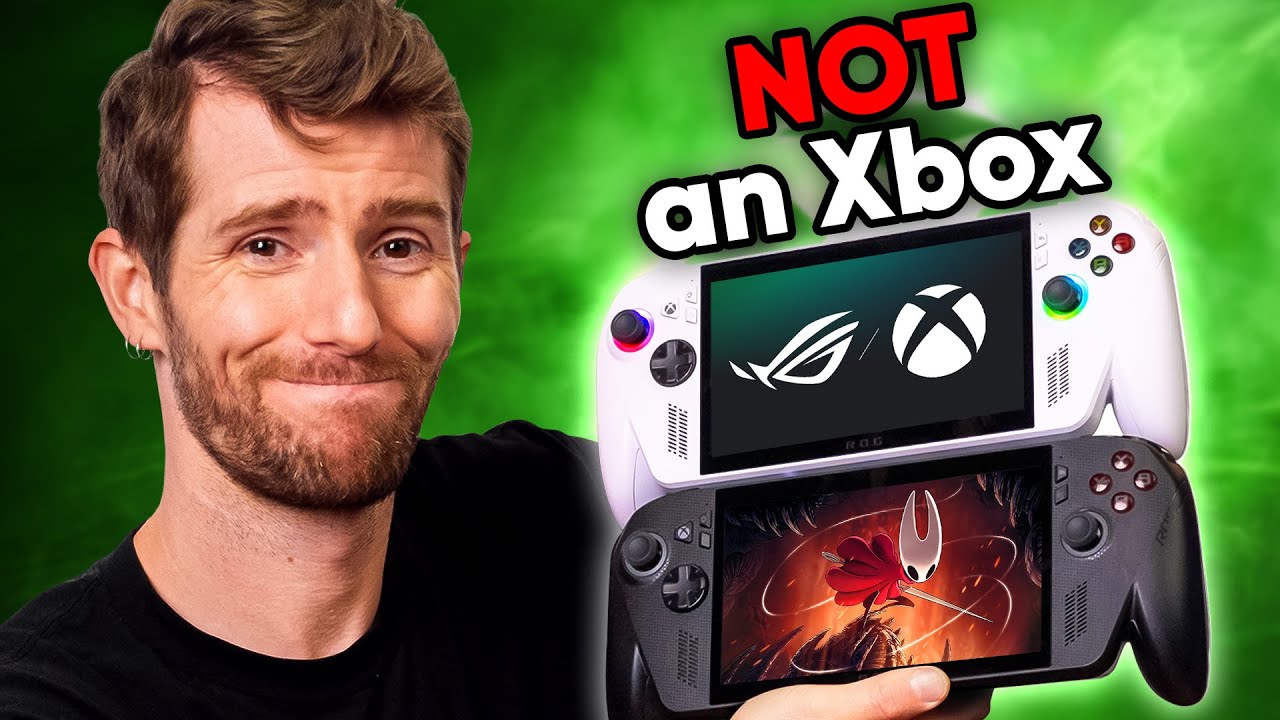
ROG Xbox Ally X - a PC Gamer’s Perspective
0 up · 0 down · 0 ratings
Promos
Get your dbrand Killswitch at shortlinus.com We're not entirely sure what makes the new Asus handheld an Xbox, but here we are. Thanks Microsoft. At least we finally get Windows Handheld mode and the X model - while expensive - is priced relatively competitively. Buy an ROG Xbox Ally: geni.us Buy an ROG Xbox Ally X: geni.us The Phawx channel: @ThePhawx Discuss on the forum: linustechtips.com ► GET OUR MERCH: lttstore.com ► GET EXCLUSIVE CONTENT ON FLOATPLANE: lmg.gg ► GET A VPN: piavpn.com ► SPONSORS, AFFILIATES, AND PARTNERS: lmg.gg Purchases made through some store links may provide some compensation to Linus Media Group. Affiliate links powered in part by affilimate.com Linus Sebastian is an investor in Framework Computer, Inc CHAPTERS --------------------------------------------------- 0:00 Intro 3:03 Software 6:55 Hardware 9:05 Teardown 13:00 Benchmarks 16:35 Battery Life 18:25 Conclusion 20:54 Outro
Paragraph 1 about the concept and software experience (0:00 - 5:00). The video begins by addressing the unusual branding mix of the ROG Xbox Ally X, noting that Microsoft calls it an Xbox while the device itself is heavily labeled with ROG. The host explains that the device cannot run most of the older Xbox library in a straightforward way, and the Xbox full screen experience appears to be more like an overlay over Windows than a true standalone Xbox. He positions the product as a potential fusion between Windows handheld versatility and an Xbox-like console experience, acknowledging that the promise is not fully delivered by this model. The host emphasizes that while the concept is exciting, the execution diverges from the original vision, and he frames this as a necessary reality check rather than a condemnation. He also teases that the software and hardware interplay will be explored in depth later in the video, setting expectations for a detailed evaluation. Paragraph 2 about software and Windows handheld mode (3:03 - 8:00). The discussion shifts to software: Windows handheld mode provides Windows app and game compatibility, multitasking, and features like co-pilot. The host highlights the efficiency improvements, including memory savings that free up VRAM, and explains how this matters for devices with limited RAM. He notes some quirks, like occasional Windows UI quirks and wake-up behavior, but calls the overall Windows handheld experience polished and usable even for testing the Xbox full screen experience without a purchase. He points out that many features work out of the box and that Microsoft’s approach is to unify your games across a single location, albeit without native support for all modern Xbox titles. The segment stresses that the software is surprisingly complete for a launch, with built-in performance monitoring and cross-platform features, even as certain modern Xbox titles remain inaccessible. Paragraph 3 about hardware design and teardown (6:55 - 11:00). The host moves to hardware, comparing the Ally X to the non-X model and outlining the major changes like the ergonomics and the angled screen. The teardown reveals essential similarities and differences, including a full-length 80mm NVMe slot and space for upgrades, with the X version packing a high-end Ryzen Z2 Extreme CPU, 24 GB of RAM, and a 1 TB SSD, plus Thunderbolt 4. He contrasts this with the NonX, which uses a different, less powerful AMD chip. The discussion includes the camera-like take on the case, the grip quality, and the inclusion of impulse triggers and Hall effect triggers in the X model, along with the improved thumbsticks. The host praises the Ergo grips and notes the lower, more comfortable form factor, even as he critiques some button placements and the new Armory Crate button relocation. Paragraph 4 about performance and benchmarks (12:14 - 15:23). The tests reveal a 22% performance uplift for the Xbox Ally X over the previous model in Cyberpunk at 720p, with a 10% uplift at 15 watts for other games, though the absolute FPS gains are modest. The host explains that the resolution targets remain 1080p, and the testing results show that the Ally X excels at maintaining console-like performance in demanding titles, unlike many handhelds. He notes that the X’s extra power comes with higher energy draw, and real-world performance depends on power profiles; under lower power, results converge with older devices. The discussion also touches on how the X fares against competitors like the Steam Deck and MSI Claw, with the Ally X maintaining advantages in certain benchmarks while the NonX lags behind due to its CPU/GPU limitations. The segment concludes that the Ally X provides a meaningful but not revolutionary step up for Windows handheld gaming, with strong battery life potential if used at 1080p. Paragraph 5 about battery life, price, and final verdict (16:35 - 20:54). Battery life is analyzed across power profiles, showing similar endurance between the Ally X and its predecessor, with the Xbox version delivering longer life at higher performance. The host compares charging times and notes the significantly faster charge on the Ally X versus the Steam Deck OLED. He offers a practical verdict: this is a solid upgrade for PC gamers who want a portable Windows device with Xbox features, but it is not a pure Xbox console and the price remains a major sticking point. The discussion concludes that the NonX model’s price and lack of storage are hard to swallow, while the X is priced steeply at around $999-$1600 AUD depending on region, lacking certain expected features for that price. He humorously acknowledges the naming confusion and ends with a balanced recommendation: the device excels as a handheld PC with Xbox software integration, but potential buyers should weigh the premium against the Steam Deck and other handhelds, and consider whether cloud gaming or local performance best fits their needs. The host credits the software polish, ergonomic improvements, and long-term potential while noting that this is not a groundbreaking revolution but a meaningful upgrade for enthusiasts.
Topics · hardware · gaming · handheld_pc · windows_handheld_mode · benchmarking · consumer_electronics
Questions answered
- What is the main contrast between the ROG Xbox Ally X and a traditional Xbox console?
- The Ally X combines Windows handheld mode with Xbox features, offering a Windows-based handheld experience rather than a traditional standalone Xbox console, and it emphasizes software integration over native Xbox game compatibility.
- Which hardware configuration distinguishes the Ally X from the NonX?
- The Ally X uses AMD Ryzen Z2 Extreme with 24 GB RAM and 1 TB SSD, plus Thunderbolt 4, while the NonX uses a different, less powerful CPU/GPU configuration and lower RAM, with different performance characteristics.
- How does battery life compare between devices in 1080p gaming?
- In practical terms, the Ally X and Ally X non-X variants show similar battery life under similar power profiles, with better endurance when gaming at 1080p and using efficient settings.
- Are modern Xbox titles fully playable on the Ally X?
- No, many modern Xbox titles are not compatible due to licensing and platform constraints, although the Xbox full screen experience is available as a Windows feature.
- Is the Ally X worth the price compared to a Steam Deck or other handhelds?
- Value depends on the user: the Ally X offers strong Windows handheld performance and Xbox features, but its price is high, especially for the NonX model, and competitors like Steam Deck may offer better cost-to-performance in some scenarios.