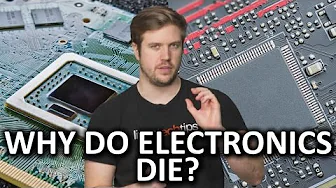
Why Do Electronics Die?
0 up · 0 down · 0 ratings
Promos
Why do our electronics seem to have a limited lifespan, even if they don't contain moving parts? TunnelBear message: TunnelBear is the easy-to-use VPN app for mobile and desktop. Visit tunnelbear.com to try it free and save 10% when you sign up for unlimited TunnelBear data. Follow: twitter.com Join the community: linustechtips.com Licenses for images used: creativecommons.org creativecommons.org
Electronics are not truly immortal, even though many have no moving parts. The video explains that devices fail for several reasons, starting with capacitors which can leak or burst, especially cheap liquid-electrolyte types, leading to widespread failures during the early 2000s capacitor plague. Heat and thermal cycling are highlighted as major culprits, causing materials to expand and contract, stressing solder joints and circuit traces. These stresses can raise resistance, loosen connections, or cause micro-scale changes in silicon, accelerating phenomena like electromigration in nanoscale copper traces. The discussion also covers how read/write cycles wear out SSDs, with electrons building up in transistors that store data and eventually trap data or reduce reliability. Beyond hardware, the video notes user error and normal wear on connectors and mechanical parts as common failure points, and it touches on planned obsolescence where firms may design products to fail after warranty periods or via software updates that reduce usefulness. The speaker then pivots to practical takeaways and a light-hearted plug for TunnelBear VPN, but returns to reinforce that while electronics can die, most failures are not immediate and result from a combination of material limits, design choices, and usage patterns, suggesting gradual replacement and maintenance as sensible strategies.
Topics · Technology · Electronics · Durability · Hardware · Data storage
Questions answered
- What is the primary hardware failure mechanism discussed for capacitors in electronics?
- Capacitors fail when their electrolytes leak or burst, especially cheaper liquid-electrolyte types, which can lead to widespread device failures as seen in the capacitor plague.
- How does heat contribute to electronic device aging apart from capacitors?
- Heat causes materials to expand and contract, stressing solder joints and circuit traces, which can weaken connections, increase resistance, and accelerate electromigration in nanoscale copper paths.