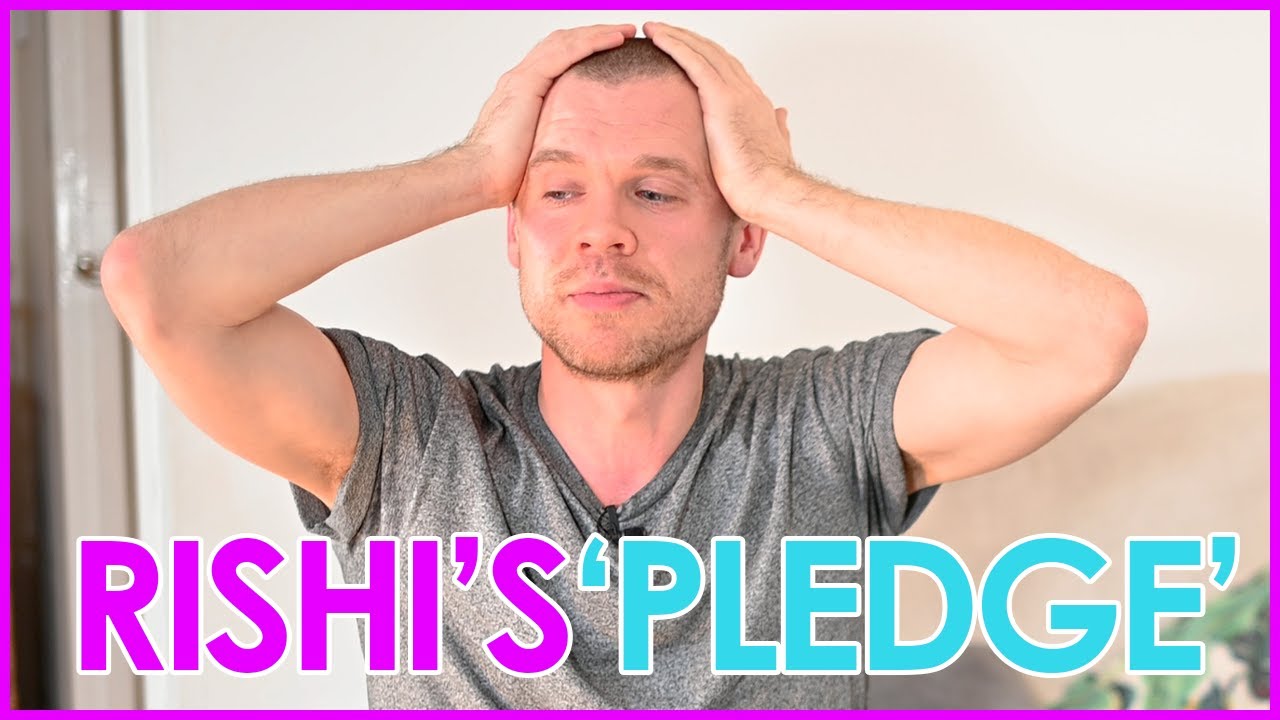
Rishi Sunak's Nonsense "Pledge"
0 up · 0 down · 0 ratings
Channels and socials
Watch Rishi's Announcement - youtube.com "we know inflation will come down because every month you have inflation and then the number they show on the news is the Annual Inflation so it's the last 12 months right and the big inflation months last year were I think like March, April, May - big big inflation months right - so we know that in six months time those massive months will drop out of the data so we know with almost certainty that inflation is going to come down really quickly" SUBSCRIBE, SHARE & START A CONVERSATION SOCIAL MEDIA: WEBSITE - wealtheconomics.org TWITTER - @garyseconomics - twitter.com FACEBOOK - @garyseconomics - @garyseconomics INSTAGRAM - @garyseconomics - @garyseconomics TIKTOK - @garyseconomics - @garyseconomics YOUTUBE - @garyseconomics - youtube.com Performed by Gary Stevenson GARYSECONOMICS Produced by Simran Mohan MOHAN MEDIA TIMESTAMPS
The video opens with a sharp, skeptical reception to Rishi Sunak’s public pledge to cut inflation, framing the announcement as performative rather than substantive. The host argues that inflation is a rate of price increases rather than absolute prices, and notes that the claimed pledge to bring inflation down may be less about real outcomes and more about messaging in a political moment. As the discussion unfolds, the video debunks the rhetorical device of promising a predictable economic trend, highlighting how public data on inflation often reflect past months and may not guarantee future relief for households. The speaker then pivots to a broader critique of economic policy, asserting that a relentless rise in wealth inequality compounds living standards declines across the middle class and the working poor. The analysis connects Sunak’s pledge to a larger pattern in which government support appears to flow to the wealthy, potentially at the expense of public services like the NHS and education. The host emphasizes the ethical dimension of wealth concentration, arguing that without policy changes the middle class will erode and social cohesion will suffer, while urging viewers to demand concrete reductions in inequality. The segment closes by considering political dynamics and the risk of a political replacement if austerity deepens, underscoring the international nature of the problem and the idea that effective reform requires cross-party, systemic wealth redistribution. The overall message is that rhetoric about inflation must be weighed against real-world consequences for housing, healthcare, and opportunity, and that meaningful change hinges on addressing wealth inequality rather than simply forecasting temporary improvements in inflation rates.
Topics · politics · economy · public_policy · media_and_politics
Questions answered
- What is the main critique of Sunak's inflation pledge in the video?
- The critique is that promising to bring down inflation may be more about political messaging than delivering real relief, since inflation measures the rate of price increases, not the actual cost of living, and the pledge may mask ongoing affordability challenges.
- How does the video relate wealth inequality to public services?
- It argues that unchecked wealth inequality erodes the middle class and makes public services like the NHS and education unaffordable, suggesting that policy change is needed to reduce inequality or risk long-term declines in public welfare.
- What actions do viewers suggest to address inequality?
- Viewers advocate contacting MPs, pressing parties to commit to reducing wealth inequality, and building broad coalitions across social groups to pressure for systemic economic reform.