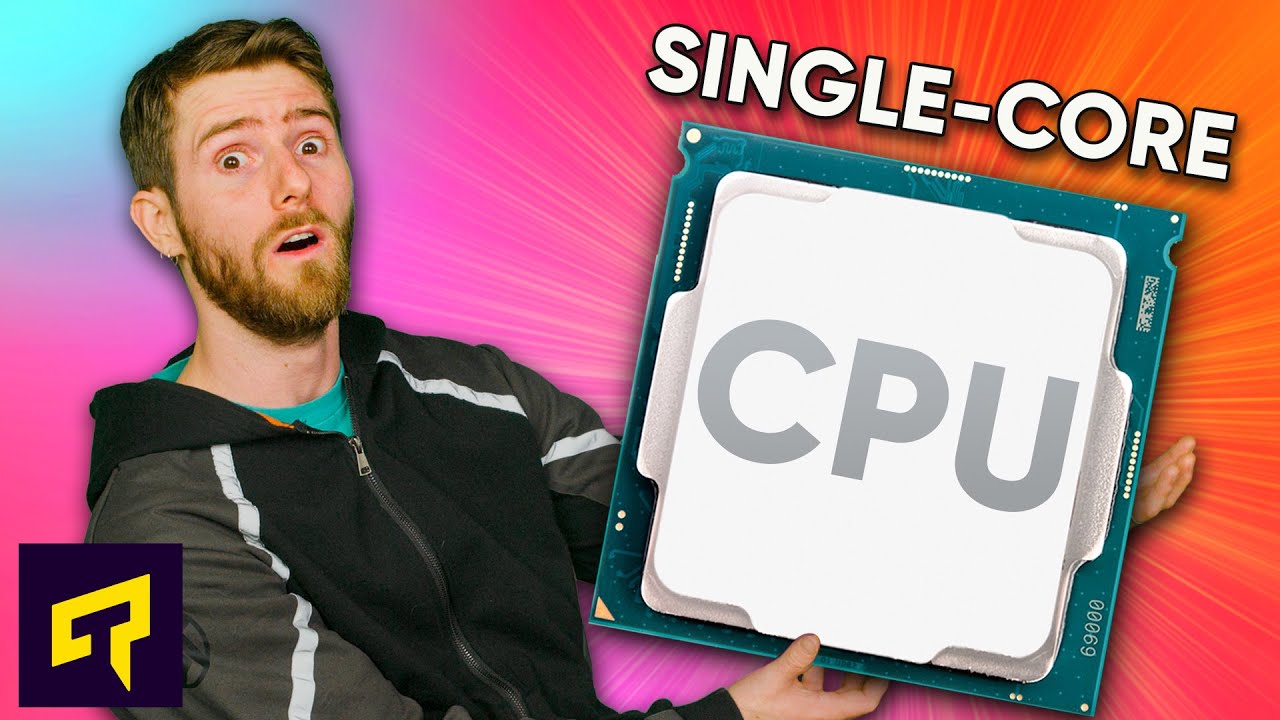
A CPU With One HUGE Core
0 up · 0 down · 0 ratings
Promos
Save 90% on your first 4 months of Freshbooks at freshbooks.com Could we have a processor that has just one really big, really fast core? Leave a reply with your requests for future episodes. ► GET MERCH: lttstore.com ► LTX 2023 TICKETS AVAILABLE NOW: lmg.gg ► GET EXCLUSIVE CONTENT ON FLOATPLANE: lmg.gg ► SPONSORS, AFFILIATES, AND PARTNERS: lmg.gg FOLLOW US ELSEWHERE --------------------------------------------------- Twitter: twitter.com Facebook: @LinusTech Instagram: @linustech TikTok: @linustech Twitch: twitch.tv
The video explores the idea of a CPU built around a single, extremely large and fast core, comparing it to traditional multi-core designs. It begins by framing the question of whether one powerful core could replace multiple smaller cores in a modern PC, drawing an analogy to older parallel interfaces and how they handled data streams. The host explains how scheduling works within a CPU, with billions of clock cycles per second assigned to running programs, and introduces concepts like simultaneous multithreading (SMT), which allows a single physical core to appear as two logical cores to the operating system. The discussion then outlines the limitations of a lone giant core, including the inefficiencies of scheduling, the constraints of instruction throughput per clock, and how SMT helps but cannot fully eliminate bottlenecks. The episode also covers practical considerations such as manufacturing costs, yield, and waste, highlighting that a single huge core would be more vulnerable to defects and harder to connect to memory fabrics as chip fabrics widen. The hosts conclude that, despite advances, multiple cores remain advantageous because operating systems and modern software are designed to exploit parallelism; contemporary programs and games can leverage several cores, making a multi-core approach more flexible and scalable. An optional humorous aside suggests cutting an avocado as a workaround if one truly wants a single colossal core, underscoring the playful nature of the exploration. The video nods to audience engagement by inviting suggestions for future episodes and promotes related products and content from the creators.
Topics · computing · hardware_design · cpu_architecture · technology_explanation
Questions answered
- Why is a single huge core not widely adopted for mainstream PCs?
- Because manufacturing defects would waste whole chips, connecting a large core to memory becomes harder as fabrics widen, and real-world workloads benefit from parallelism across multiple cores for scalability and efficiency.
- What role does SMT play in single-core concepts?
- SMT allows a single physical core to handle multiple instruction threads, making the OS see more than one logical core and mitigating some idle time, but it cannot fully replace the advantages of multiple physical cores.