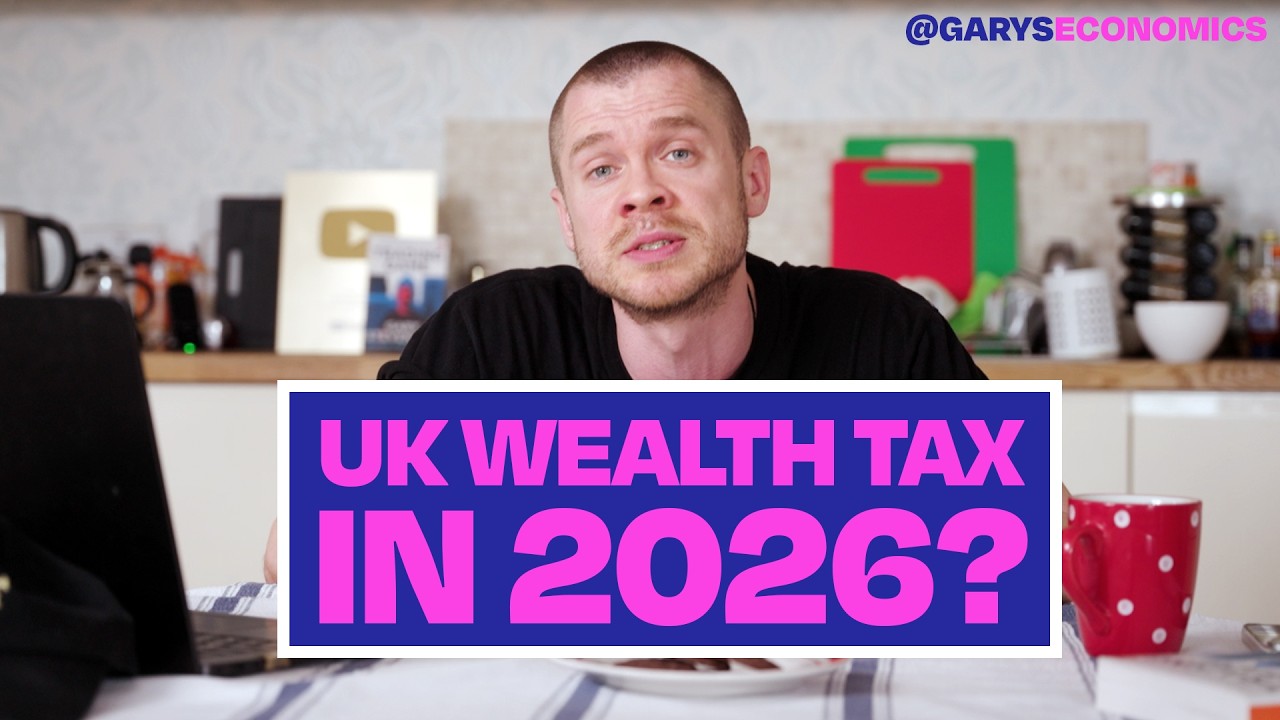
Could we be about to get wealth taxes in the UK?
0 up · 0 down · 0 ratings
Promos
Are we about to get a new Prime Minister in the UK? The change in leadership may be the best chance we've ever had of winning wealth taxes in this country. And it could be a blueprint for other countries around the world. Tax Wealth Not Work baseball cap: shop.garyseconomics.org 00:00 Intro 00:36 UK situation 02:18 Who will be the new Prime Minister in the UK? 03:41 A poisoned chalice? 07:57 Strong position to get wealth taxes 11:13 I will back Labour if they do this 15:45 Adopting our political framing 22:01 Would Andy Burnham really be different? 25:11 The markets refuse to lend the UK anymore 28:09 What happens if we DO get wealth taxes? 31:01 We need to tackle long-term problems 34:13 MY PREDICTIONS 34:57 The progress we’ve made ––––––––––– JOIN OUR PATREON – patreon.com GET MERCH – shop.garyseconomics.org DONATE – buy.stripe.com JOIN GARY'S MAILING LIST – subscribepage.io GET THE TRADING GAME – penguin.co.uk ––––––––––– Follow Gary on other channels: LINKEDIN – linkedin.com SPOTIFY – open.spotify.com INSTAGRAM – @garyseconomics TIKTOK – @garyseconomics BLUESKY – bsky.app X – twitter.com FACEBOOK – @garyseconomics DISCORD – discord.gg WEBSITE – garyseconomics.org
Garys Economics dives into the prospects for wealth taxes in the UK in a context of political volatility and mounting inequality. The video opens with Gary describing his recent intense lobbying efforts and arguing that the UK is closer than ever to wealth taxes, framing this as a historic opportunity tied to the potential leadership change in the Labour party. He outlines the potential successors to Keir Starmer, notably Andy Burnham, Wes Streeting, and others, and explains how by-elections and betting markets shape the timeline for a new prime minister and the political space for wealth taxation. Gary assesses the UK macro situation as of the video date: sustained pressure on living standards, rising prices in energy and food, and high borrowing costs that constrain government options. He argues there is a political incentive for a new leader to deliver a strong economic narrative, which could include wealth taxes as a cornerstone policy. The discussion covers the mechanics of how wealth taxes could be designed, highlighting Gabriel Zucman as a leading economist in this space and stressing the importance of policy design to avoid negative economic side effects. He emphasizes that the wealth tax is not a magic wand, but a practical tool to slow the erosion of living standards if implemented with care and credible planning. A core portion of the video focuses on Labour’s internal dynamics and the shifting public and parliamentary discourse around inequality. Gary notes that some Labour figures, including Wes Streeting, have begun endorsing the framing that inequality is central to the crisis and that taxing wealth could shift the balance away from work. He frames his role as a mediator between political actors and the public, arguing that public support and patience are essential for long-term reform. The host also discusses the strategic tensions of pushing for reforms quickly versus waiting for a well-designed plan, stressing that rushed policies could backfire if not properly thought through. Gary outlines a pragmatic pathway to wealth taxes: build institutional capacity, commission serious analysis with top economists, and engage openly with politicians to ensure a robust design before any policy is enacted. He describes behind-the-scenes efforts to win Labour over by showing seriousness and readiness, including conversations with Gabriel Zucman and think tanks. He explains that the public’s support for wealth taxes is robust, including among right-leaning voters, and argues that public education about inequality has been critical to elevating wealth taxation as a political possibility. The video ends with a candid look at risks, including the possibility that a new prime minister may disappoint by delivering only technocratic rhetoric rather than substantive reform, and Gary’s conditional pledge to back a reformist government if seriousness and credible planning are demonstrated. In closing, Gary presents a nuanced forecast: wealth taxes could be achievable within a couple of years if a new leader is committed to serious reform and if the plan is developed with input from leading economists. He reiterates that the path forward requires political courage, patient publics, and sustained campaigning, warning that the status quo of borrowing and austerity is politically brittle. The message is both aspirational and cautious: progress toward wealth taxes is possible, but it hinges on collaborative design, credible fiscal planning, and the willingness of politicians to commit to long-term structural change. Gary signs off by inviting Labour, Streeting, Burnham, and Keir Starmer to appear on the channel to discuss their economic plans, while reaffirming his readiness to support serious efforts to tackle inequality and strengthen public trust in government.
Topics · economics · politics · public policy · social_issues
Questions answered
- What is the central policy Gary believes could be achieved in the UK soon?
- Wealth taxes, designed to raise revenue and reduce inequality, are argued to be achievable within a couple of years if a new government commits to serious, well-planned implementation.
- Who are the potential leaders discussed as likely to implement wealth taxes?
- Andy Burnham is identified as a likely future Prime Minister candidate; Wes Streeting is also mentioned as influential in shifting Labour’s stance on inequality and taxation.
- What role does Gabriel Zucman play in the plan?
- Gabriel Zucman is presented as a leading economist whose team could design a robust wealth tax; Gary emphasizes involving him and other top economists in the policy design process.
- Why does Gary say wealth taxes are not a magic wand?
- He argues that while wealth taxes are a powerful tool to address inequality and stabilize living standards, they require careful design and credible implementation to avoid negative economic consequences.