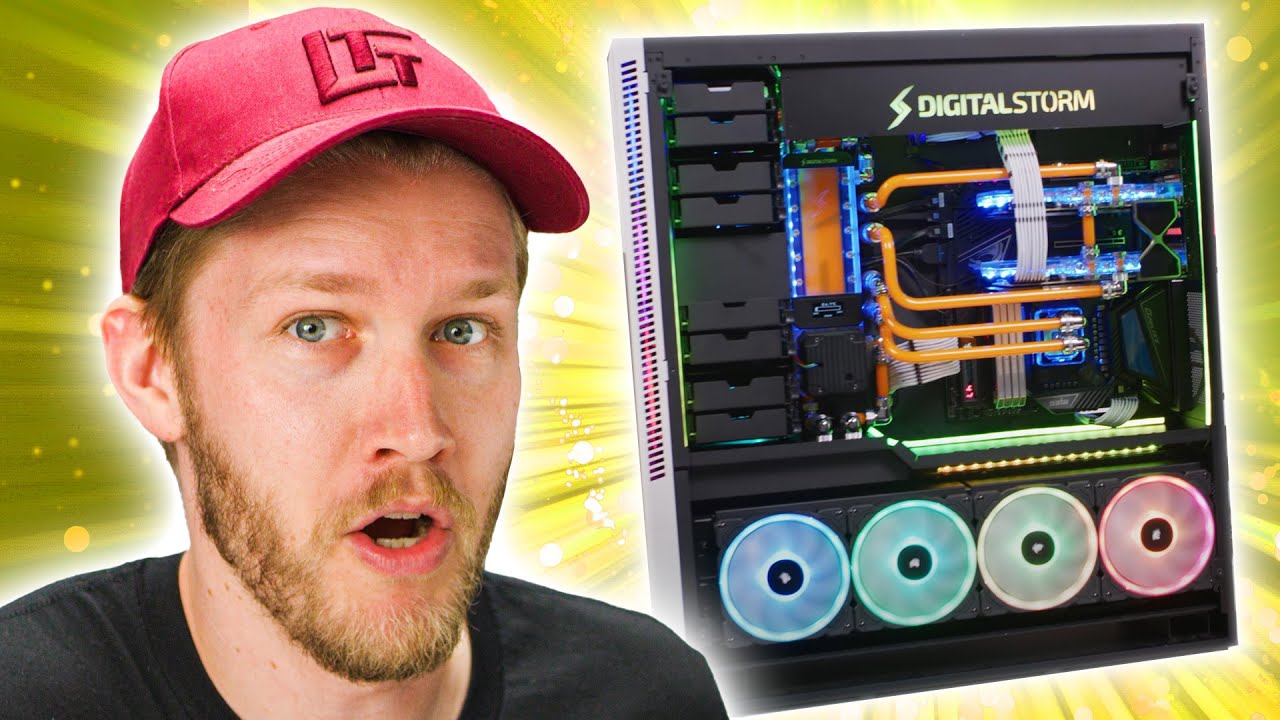
PCs are TOO Powerful… and it’s a problem - CEC Energy Regulations
0 up · 0 down · 0 ratings
Promos
Check out Drop + Marvel Custom Keycap Sets at dro.ps Use code LINUS and get 25% off GlassWire at lmg.gg Who's afraid of the CEC? We did some digging to figure out just who or what will be affected by the new California Energy Commission's regulations and built an energy compliant PC to show you that it's nothing to fear. Or... is it? Buy Intel Core i9-11900K CPU On Amazon (PAID LINK): geni.us On Best Buy (PAID LINK): geni.us On Newegg (PAID LINK): geni.us Buy G.Skill Trident Z Royal Gold 16GB (2x8GB) Kit On Amazon (PAID LINK): geni.us On Newegg (PAID LINK): geni.us Buy GIGABYTE Z490 AORUS Master On Amazon (PAID LINK): geni.us On Best Buy (PAID LINK): geni.us On Newegg (PAID LINK): geni.us Buy ASUS ROG Zenith II Extreme Alpha TRX40 On Amazon (PAID LINK): geni.us On Newegg (PAID LINK): geni.us On B&H (PAID LINK): geni.us Buy MSI MPG CORELIQUID K360 CPU Cooler On Amazon (PAID LINK): geni.us On Best Buy (PAID LINK): geni.us On Newegg (PAID LINK): geni.us Buy ASUS TUF GeForce RTX 3090 OC Edition GPU On Amazon (PAID LINK): geni.us On Best Buy (PAID LINK): geni.us On Newegg (PAID LINK): geni.us Buy CORSAIR AXi AX1600i PSU On Amazon (PAID LINK): geni.us On Newegg (PAID LINK): geni.us Buy CORSAIR TX-M TX750M PSU On Amazon (PAID LINK): geni.us On Newegg (PAID LINK): geni.us Buy Nvidia GeForce GTX 950 GPU On Amazon (PAID LINK): geni.us On Newegg (PAID LINK): geni.us Buy Alienware Aurora R Gaming Desktop On Amazon (PAID LINK): geni.us On Best Buy (PAID LINK): geni.us On Newegg (PAID LINK): geni.us Purchases made through some store links may provide some compensation to Linus Media Group. Discuss on the forum: linustechtips.com ►GET MERCH: lttstore.com ►SUPPORT US ON FLOATPLANE: floatplane.com ►LTX EXPO: ltxexpo.com AFFILIATES & REFERRALS --------------------------------------------------- ►Affiliates, Sponsors & Referrals: lmg.gg ►Check out our podcast gear: kit.co ►Private Internet Access VPN: lmg.gg ►Our Official Charging Partner Anker: lmg.gg ►Secretlabs Gaming Chairs: lmg.gg ►MK Keyboards: lmg.gg ►Nerd or Die Stream Overlays: lmg.gg ►Official Game Store: nexus.gg ►Amazon Prime: lmg.gg ►Audible Free Trial: lmg.gg ►Our Gear on Amazon: geni.us FOLLOW US ELSEWHERE --------------------------------------------------- Twitter: twitter.com Facebook: @LinusTech Instagram: @linustech Twitch: twitch.tv FOLLOW OUR OTHER CHANNELS --------------------------------------------------- Mac Address: lmg.gg Techquickie: lmg.gg TechLinked: lmg.gg ShortCircuit: lmg.gg LMG Clips: lmg.gg Channel Super Fun: lmg.gg Carpool Critics: lmg.gg MUSIC CREDIT --------------------------------------------------- Title: Laszlo - Supernova Video Link: youtube.com iTunes Download Link: itunes.apple.com Artist Link: soundcloud.com Outro Screen Music Credit: Approaching Nirvana - Sugar High youtube.com Intro animation by MBarek Abdelwassaa @mbarek_abdel Monitor And Keyboard by vadimmihalkevich / CC BY 4.0 geni.us Mechanical RGB Keyboard by BigBrotherECE / CC BY 4.0 geni.us Mouse Gamer free Model By Oscar Creativo / CC BY 4.0 geni.us CHAPTERS --------------------------------------------------- 0:00 Intro 1:28 CPU 2:20 Memory 2:50 Motherboard 4:20 GPU 5:05 PSU 6:28 Title 20 Rules 9:07 But Why? 10:15 Conclusion 11:37 Outro
The video opens with a playful warning about a big regulatory boogeyman and immediately frames the California Energy Commission's Title 20 as something that could affect gaming PCs, even a high end RTX 3090 build. The hosts explain that the core idea behind Title 20 is not to limit performance but to reduce energy waste, particularly at idle, by encouraging deep sleep states and careful power management. They then walk through a representative build, using a powerful i9-11900K and a high expandability motherboard, to illustrate how compliance depends on the PC’s energy draw rather than sheer raw power. The discussion makes it clear that DIY builders are largely unaffected, while mid to large manufacturers shipping in six specific states must certify products under the rules. The segment emphasizes that the regulation is about efficiency and downstream power demand, not about banning powerful components, and it teases how the rules could lead to higher upfront costs through third party certification and higher efficiency power supplies. In the middle section the crew introduces the concept of the Expandability Score (ES), a theoretical metric that governs whether a PC falls under Title 20 exemptions. They explain that not just the CPU, but the entire system including memory capacity, number of expansion slots, back panel ports, and even liquid cooling, contribute to the ES. A PC with an ES over 690 can be exempt from the standard energy consumption criteria, with some caveats about meeting a separate energy efficiency standard for network hardware. The hosts demonstrate how a monstrous GPU and a high wattage PSU interact with the ES, showing that even a 1600 watt unit could be compliant if paired with appropriate bandwidth and components. They also discuss the practical implications for Dell, Alienware, and other large OEMs, noting that certification costs and a need for third party testing are real considerations for bringing compliant systems to market in the affected states. Toward the end, the video ties Title 20 to a broader energy and climate context, noting that California aims to reduce both emissions and infrastructure costs by trimming downstream power demand. They provide numbers to illustrate impact: PCs account for a meaningful share of residential and commercial energy use, and Title 20 could save billions of kilowatt-hours annually. The discussion shifts to consumer takeaways, including the fact that Bronze rated PSUs may disappear, pushing buyers toward Gold or higher efficiency units, and that DIY builds remain a viable option for those outside the affected market. The hosts conclude with a forward-looking note on global energy trends, electrification, and the hope that smarter design today will enable sustainable computing tomorrow, ending with a plug for sponsor messages and a nod to ongoing coverage of the topic.
Topics · energy regulation · computer hardware · science & technology · policy & government · sustainability
Questions answered
- What is the main goal of California Title 20 regulations for PCs?
- The main goal is to reduce energy waste and downstream power demand by setting efficiency requirements and certification standards for mid to large manufacturers, while allowing DIY builds and small sellers to operate under different rules.
- Who is primarily affected by Title 20 according to the video?
- Medium to large manufacturers shipping to the six states covered by Title 20 are most affected, while individual consumers and small builders can largely continue to build or buy compliant systems without needing third party certification.
- What factors influence whether a PC is exempt from the standard energy consumption rules?
- The Expandability Score, which includes memory slots, expansion cards, back panel ports, liquid cooling, and overall power draw, determines exemption when it passes a threshold (690+), with other criteria like a separate energy efficiency requirement for networking hardware still applying.