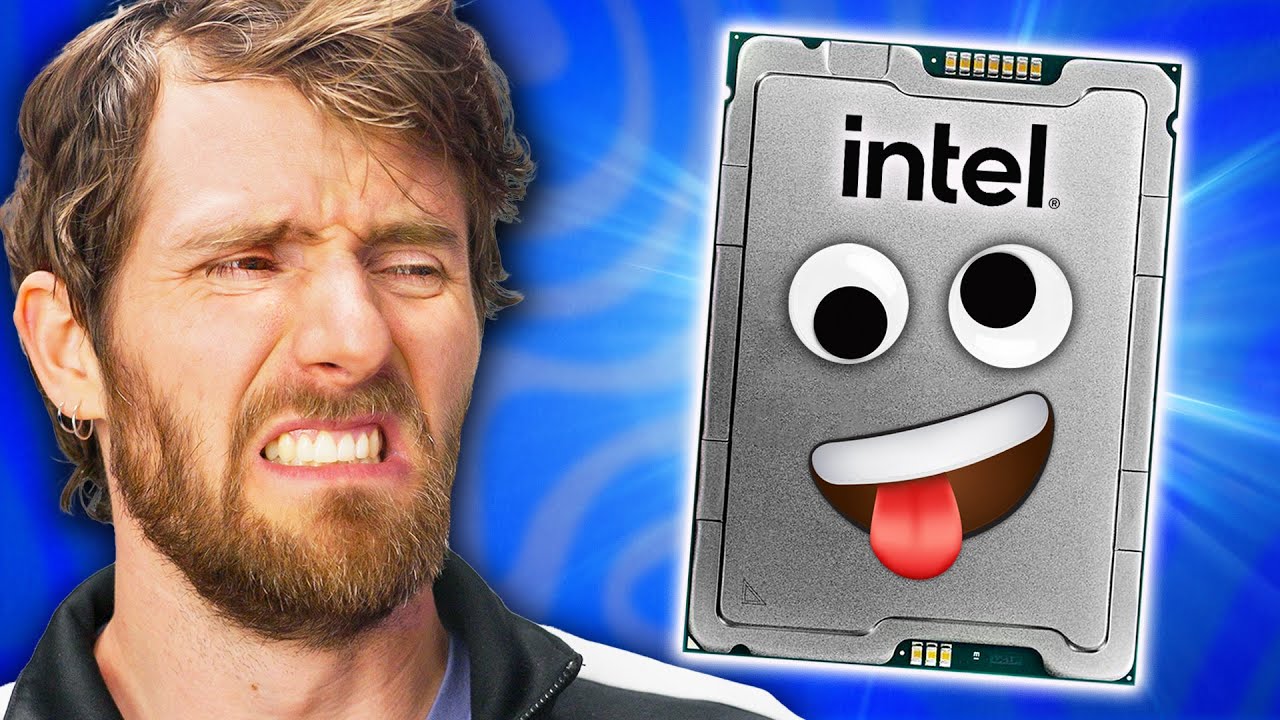
Intel’s New CPUs are Cringe - Intel Sapphire Rapids Xeon Platinum 8468
0 up · 0 down · 0 ratings
Description
Thanks to Pulseway for sponsoring this video! If you want to use Pulseway to manage your devices like we do, you can get an exclusive no commitment free trial at lmg.gg After a long, looooooong development cycle Intel has finally launched their lineup of Sapphire Rapids Xeon Server CPUs. But AMD already has some incredible chips in their Epyc Genoa lineup, which boast up to 96 cores on the highend. How is Intel supposed to compete when they have fewer cores and are running on last gen’s architecture? Accelerators. They hope. Discuss on the forum: linustechtips.com
Check out Intel Xeon Platinum 8468 Processors: lmg.gg
Promos
Check out AMD Epyc 9654 Processors: lmg.gg Purchases made through some store links may provide some compensation to Linus Media Group. ► GET MERCH: lttstore.com ► LTX 2023 TICKETS AVAILABLE NOW: lmg.gg ► GET EXCLUSIVE CONTENT ON FLOATPLANE: lmg.gg ► SPONSORS, AFFILIATES, AND PARTNERS: lmg.gg ► OUR WAN PODCAST GEAR: lmg.gg FOLLOW US --------------------------------------------------- Twitter: twitter.com Facebook: @LinusTech Instagram: @linustech TikTok: @linustech Twitch: twitch.tv MUSIC CREDIT --------------------------------------------------- Intro: Laszlo - Supernova Video Link: youtube.com iTunes Download Link: itunes.apple.com Artist Link: soundcloud.com Outro: Approaching Nirvana - Sugar High Video Link: youtube.com Listen on Spotify: spoti.fi Artist Link: youtube.com Intro animation by MBarek Abdelwassaa @mbarek_abdel Monitor And Keyboard by vadimmihalkevich / CC BY 4.0 geni.us Mechanical RGB Keyboard by BigBrotherECE / CC BY 4.0 geni.us Mouse Gamer free Model By Oscar Creativo / CC BY 4.0 geni.us CHAPTERS --------------------------------------------------- 0:00 Intro 1:30 What's Changed 3:16 Eating Paste 5:39 Memory Support 7:45 But Does it Turn On? 9:32 Versus AMD EPYC 12:13 Intel's AI Future 15:19 Intel's Business Plan 17:48 Final Thoughts
Intel’s Sapphire Rapids launch is framed as a cautionary tale about a tech giant grappling with aging manufacturing, high prices, and a strategy built around accelerators instead of clean, high-value core performance. The video traces Sapphire Rapids’ development as a long and troubled cycle, highlighting how AMD’s EPYC Genoa appears to outpace Intel on core count, price, and overall efficiency in many workloads. Visual demonstrations of the hardware reveal awkward packaging, a novel cooling/installation mechanism, and a rambling path to actually getting the system booted, all underscored by Linus Tech Tips’ characteristic humor and skepticism. The host then juxtaposes Intel’s offerings with AMD’s, illustrating how AMD’s single-socket 96-core approach often delivers more value for money and raw throughput in common server tasks, such as PostgreSQL and Blender renders. Along the way the video digs into Intel’s AI accelerators, the concept of on demand feature unlocking, and the broader implications for data center buyers who must balance long-term procurement with total cost of ownership. The conclusion leans into a pragmatic outlook: Intel is racing toward AI acceleration and future software ecosystems, but today’s Sapphire Rapids faces serious headwinds from competition, cost, and architectural choices that may slow its enterprise adoption. The sponsor segment for Pulseway is integrated as a practical example of how modern management tools can help IT teams monitor and automate large server deployments, tying the hardware discussion to real-world admin workflows and efficiency gains.
Topics · technology · hardware · servers · enterprise · ai · cpus · cloud · data-center
Questions answered
- Why does Intel Sapphire Rapids cost more than competing AMD EPYC processors yet offer similar or worse all-core performance?
- The video attributes the higher price to factors like 52 SKU lineup complexity, accelerators embedded on the CPU, and tower-like packaging choices, but finds that AMD often delivers better price-to-performance in multi-core server workloads.
- What are Intel’s accelerators and do they provide real value for typical server workloads?
- Intel includes several accelerators on the chip for AI, data analytics, encryption, and load balancing. The video argues that while some workloads can benefit, software support is still immature and may not justify the added cost in many scenarios.
- What is Intel On Demand and why is it controversial?
- Intel On Demand unlocks hardware accelerators that are already on the silicon via software, allowing customers to pay later to activate features. Critics call it a broad, potentially exploitative upcharge that complicates procurement and total cost of ownership.
- How does AMD EPYC compare in the same tests shown in the video?
- Across the benchmarks discussed, AMD EPYC generally outperforms Sapphire Rapids in several workloads, including PostgreSQL databases and Blender renders, making EPYC the more attractive option for many enterprise buyers.