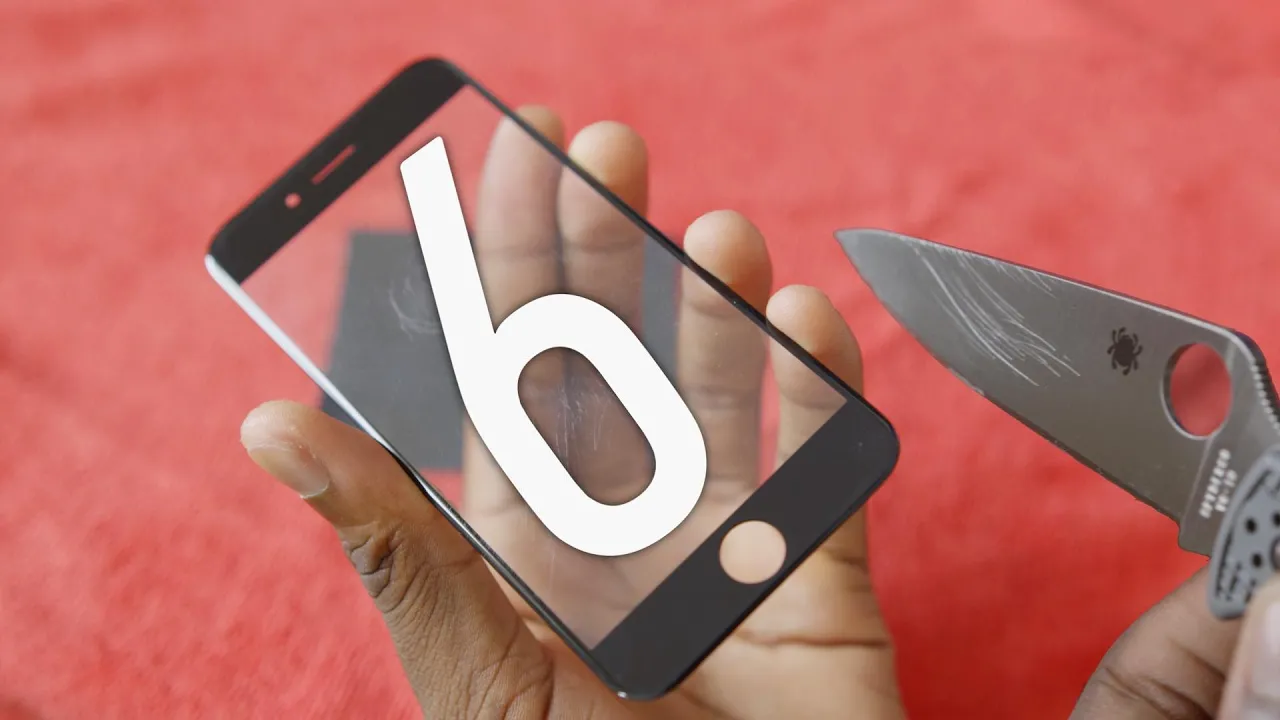
iPhone 6 Sapphire: Explained!
0 up · 0 down · 0 ratings
Channels and socials
iPhone 6 Sapphire display, Part II. Material testing & destruction! Sapphire Video Playlist: youtube.com Apple Sapphire Patent: goo.gl The Mohs Scale: en.wikipedia.org Special thanks to Joe Rogan! joerogan.net Video Gear I use: amzn.com Intro Track: Deadmau5 - Slow Down, Start Over ~ twitter.com google.com @MarquesBrownlee @MKBHD @MKBHD
The video delves into the durability of the iPhone 6 sapphire display by contrasting it with Gorilla Glass and earlier sapphire components. It begins by introducing the Mohs scale, which rates mineral hardness from 1 to 10, and explains how this scale predicts scratch resistance. The narrator notes that Gorilla Glass sits around 6.8 on the scale, while pure sapphire ranks at 9, implying that a steel knife blade should not scratch sapphire but can still scratch materials that are softer. He then introduces two sandpaper materials, garnet and emery, to simulate real world wear. Garnet is softer than pure sapphire but harder than Gorilla Glass, while emery is even harder, providing a more stringent test. The video demonstrates that the iPhone 6 display resists scratches better than the iPhone 5s, yet it is not pure sapphire, as garnet and emery leave marks and produce distinct sounds when interacting with the screen. Despite this, the footage emphasizes that sapphire-like performance exists in the phone’s front glass assembly, while the home button remains a true sapphire element, and that the overall display benefits from a layered approach rather than relying on a single monolithic sapphire sheet. The presenter also touches on a patented fusion process that could combine sapphire with other materials to create a laminate that improves both hardness and strength, hinting at the possibility of a more durable display assembly in future devices while acknowledging that bendability and cost considerations prevent a full sapphire front panel. In conclusion, the iPhone 6 display shows enhanced scratch resistance and bendability compared with prior models, but it is not entirely sapphire; Apple appears to leverage sapphire selectively for critical touch areas and back-end materials, balancing durability, flexibility, and manufacturing practicality.
Topics · technology · durability · consumer electronics · materials science
Questions answered
- Is the iPhone 6 display made entirely of sapphire or is sapphire used only in parts?
- The display is not made of pure sapphire; sapphire-like hardness is shown in parts such as the home button cover, while the rest of the display uses other materials to balance durability with bendability and cost.
- What do the sandpaper tests reveal about sapphire versus Gorilla Glass durability?
- The garnet sandpaper scratches Gorilla Glass and shows that the iPhone 6 display is harder and more scratch-resistant than the iPhone 5s, but garnet and emery can still leave marks, indicating the display is not pure sapphire despite improvements.