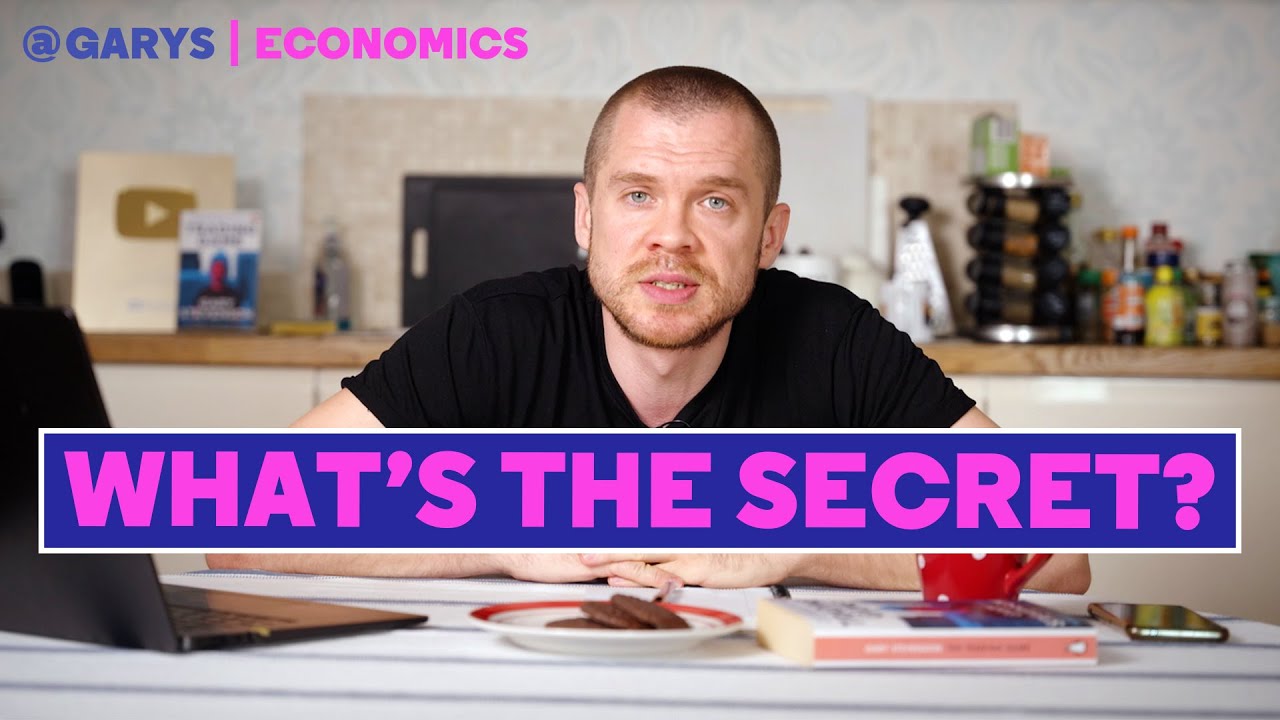
How to be the best trader in the world
0 up · 0 down · 0 ratings
Promos
I'll teach you how to be the best trader in the world... If you help me stop your country collapsing. ––––––––––– 00:00 Intro 03:14 Trading is economic forecasting 09:30 Being right when others are wrong 15:45 Identify 1 thing people are wrong about 17:15 Why I love trading 19:03 What good traders do 21:41 I don’t care about your opinion 23:09 Counter-trend trading 25:17 The downsides of trading 28:28 You can’t change things as a trader 30:35 Trading sucks up all the talent 31:58 Is trading economic analysis? 33:30 The worst economists 36:17 Trading is meritocratic 40:00 Why this matters for politics 42:52 Politicians won’t listen to me 44:05 What can we do? 46:40 What I am hopeful about ––––––––––– MAKE A DONATION TO OUR CAMPAIGN – buy.stripe.com SUPPORT US ON PATREON – patreon.com JOIN GARY'S MAILING LIST – mailchi.mp GET THE TRADING GAME – penguin.co.uk ––––––––––– Follow Gary on other channels: LINKEDIN – linkedin.com SPOTIFY – open.spotify.com INSTAGRAM – @garyseconomics TIKTOK – @garyseconomics BLUESKY – bsky.app X – twitter.com FACEBOOK – @garyseconomics DISCORD – discord.gg WEBSITE – garyseconomics.org
Gary explains that the question of how to be the best trader in the world is best answered by reframing trading as economic forecasting and by understanding what economists consistently miss. He begins by acknowledging the risks of trading and the societal context in which it operates, arguing that the question is as much about influencing policy and public understanding as it is about making money. He describes his own track record at Citibank, including being named the firm’s most profitable trader in 2011, and outlines his belief that trading rewards those who correctly anticipate movements that others overlook, particularly around inequality and wealth distribution. The core idea is that traders win when they identify a big, underappreciated dynamic and bet on it heavily, even when the broader consensus disagrees. This leads to a broader critique of mainstream economics, which he says largely ignores wealth inequality as a macro driver, especially during crises like the 2008 financial collapse and the COVID-19 pandemic. He shares concrete examples from his career, such as betting on low interest rates post-crisis and later capitalizing on rising asset prices during COVID, all framed as outcomes of recognizing distributional dynamics. Gary argues that the beauty and utility of trading lies in incentivizing truth-tellers to surface overlooked truths and in rewarding those who risk their own money on contrarian yet well-founded positions. He concedes the downside of trading, including personal risk and the eventual limited ability to fix societal problems directly as a trader, but he presents a pathway: use trading insight to inform public discourse and policy, leveraging platforms like YouTube to reach a mass audience. He discusses the friction between the world of high-velocity trading and the slower, politically oriented world of policy making, where incentives favor messaging and elections over rigorous correctness. The summary ends with a call to action about growing inequality as the central macro force that can explain major economic shifts, urging viewers to think about the societal implications of trading insights and to consider how to translate market-derived truths into constructive political and social change.
Topics · economy · finance · politics · education · media · inequality
Questions answered
- What is the core skill Gary claims makes a trader successful?
- Identify a major, overlooked economic dynamic that others miss and bet heavily on it with one's own money.
- Why does Gary compare trading to weather forecasting?
- Both involve predicting future movements based on current signals and market beliefs, not just prices themselves.
- What social issue does Gary say economists often ignore but which drives major economic moves?
- Wealth inequality and distribution of wealth.
- What platform does Gary leverage to increase his political and economic influence?
- YouTube, along with his book and appearances, to reach a mass audience.
- What is a major downside of trading that Gary acknowledges?
- Trading cannot directly fix societal problems, even when profitable predictions are made.