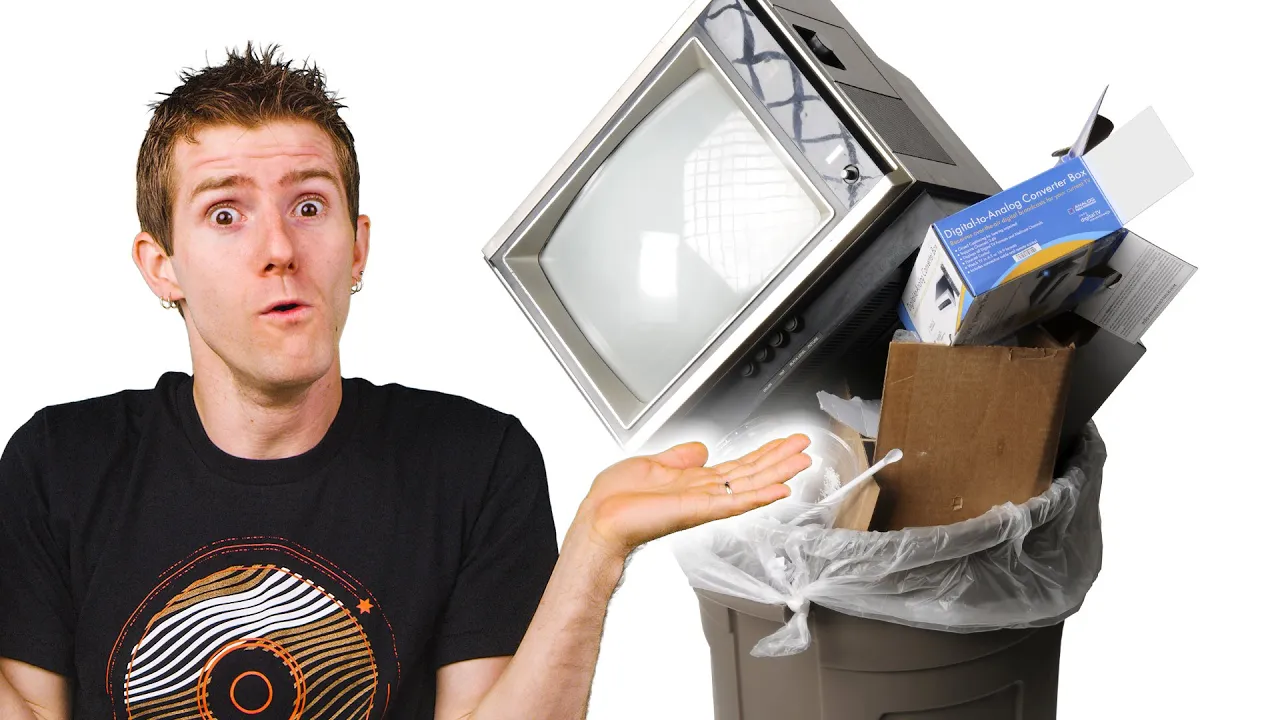
Why Tube TVs DIED
0 up · 0 down · 0 ratings
Promos
The first 200 people who head to brilliant.org will get 20% off their annual premium subscription of Brilliant. What happened to large CRT TVs and monitors? Techquickie Merch Store: lttstore.com Follow: twitter.com Leave a reply with your requests for future episodes, or tweet them here: twitter.com
The video opens with a nostalgic look at CRT televisions, explaining that these heavy, boxy sets were once ubiquitous in homes and even in computer monitors. It details the core CRT mechanism: an electron gun firing at a phosphor-coated screen, with steering coils that aim the beam across the display. The narrator emphasizes how the physical heft of the glass tube and the bulky screen limited size and portability, making CRTs difficult to move and install. The transition to flat panel displays is traced to improvements in LCD manufacturing, cheaper production, and the ability to build much larger, lighter, and more power-efficient screens. The video argues that these practical advantages, alongside the ability to print circuits on LCD substrates and reduce overall mass, caused CRTs to lose market share rapidly. It cites historical data, such as a UK retailer dropping CRT share from over 80 percent in 2004 to under 5 percent by 2006, illustrating how quickly consumer preference shifted. The discussion then shifts to why CRTs still matter in certain niches, noting that classic gamers and AV enthusiasts value CRTs for deep blacks, minimal input lag, and smooth motion. Finally, the video mentions that although CRT production has largely ceased, the technology persists in specialized contexts and that retro gaming still benefits from CRT characteristics even as modern displays become dominant. A brief promotion for Brilliant.org is included, linking mathematical and scientific learning opportunities to the topic of technology history. The host wraps up by inviting viewer feedback for future episodes and encouraging engagement with the channel.
Topics · technology history · consumer electronics · display technology · gaming retro
Questions answered
- Why did CRTs become obsolete so quickly in the 2000s?
- CRTs vanished due to a combination of weight, bulk, and energy requirements, plus the rapid rise of flat panel LCDs that were cheaper to produce, could be made much larger, and offered similar or better image quality with far less bulk.
- Do CRTs still have benefits for gaming or retro content?
- Yes, CRTs are valued by retro gamers for deep blacks, negligible input lag, and smooth motion, which can preserve authentic visuals and gameplay that modern flat panels may struggle to replicate.