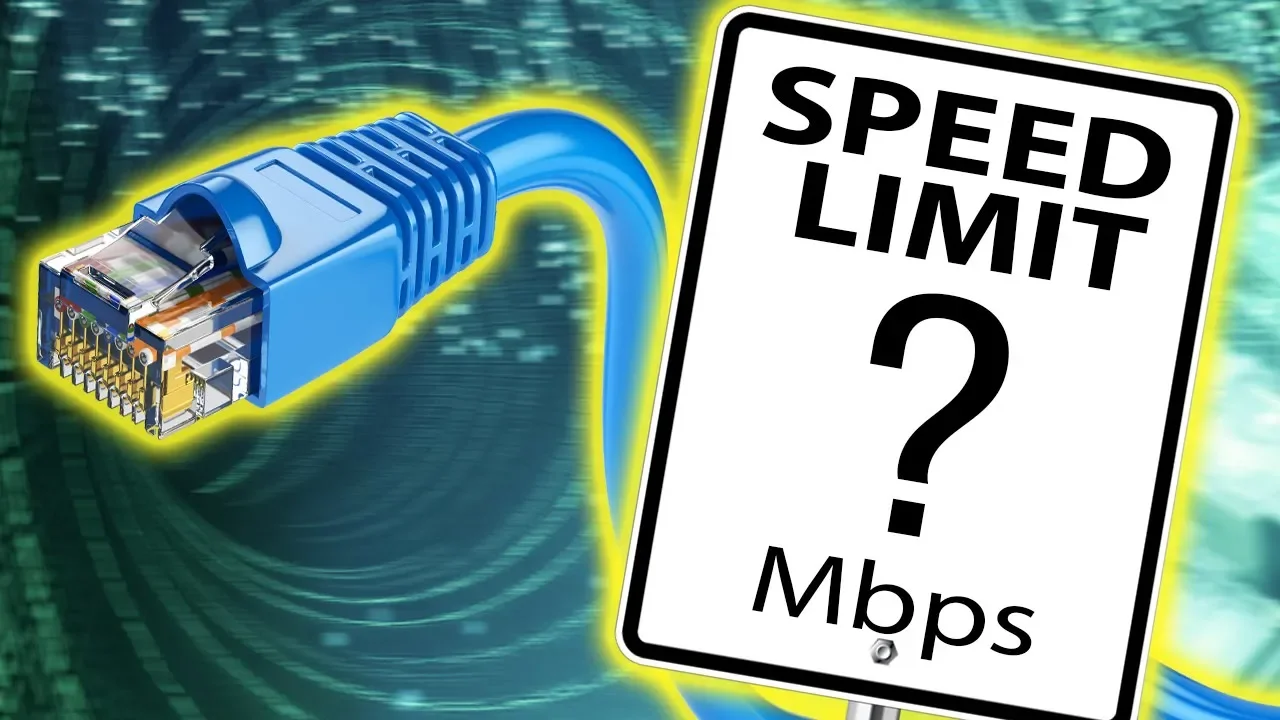
What's the Fastest Possible Internet Speed?
0 up · 0 down · 0 ratings
Promos
Sponsored by World of Warships! Register to receive 250 doubloons, 1,000,000 Credits, HMS Campbeltown premium ship, one port slot and 3 days premium time when you use code PLAYWARSHIPS2018 and click here → wo.ws It seems like internet speeds have grown rapidly in recent years, with gigabit home connections no longer uncommon - but can we go even FASTER? Techquickie Merch Store: designbyhumans.com Techquickie Movie Poster: shop.crowdmade.com Follow: twitter.com Leave a reply with your requests for future episodes, or tweet them here: twitter.com Join the community: linustechtips.com Intro Theme: Showdown by F.O.O.L from Monstercat - Best of 2016 Video Link: youtube.com iTunes Download Link: itunes.apple.com Listen on Spotify: open.spotify.com
The video opens by establishing a framework for discussing internet speeds, noting that everyday things like roads and airplanes have speed limits and asking where the roof on internet speed might be. It then surveys the current state of the internet backbone, highlighting that while home connections of a few gigabits per second exist, the truly massive capacity resides in national and international infrastructure. A key focal point is the undersea cable named MAREA, which connects Virginia Beach to Bilbao and can transfer data at an astonishing rate, the video stating 160 terabytes per second as the speed of that link. The host explains the mechanism behind these vast speeds, including optical fiber, signal attenuation, and the role of optical amplifiers positioned along long cables to refresh the signal. The discussion then broadens to future possibilities, suggesting that by packing more wavelengths into a single fiber and using multiple fibers per cable, petabyte-per-second speeds could be achievable, provided that the rest of the network can process and separate the signals efficiently. The host also notes that infrared is the common carrier frequency today, but higher energy forms such as ultraviolet light could potentially carry more information if transmission challenges can be overcome, while also warning about safety and health considerations. The conclusion emphasizes that while there is no identified upper limit in theory, practical constraints like cost, energy consumption, and safety will shape what is feasible for residential connections relative to what large-scale backbones can support. The video finishes with a promotional note about a sponsored game and encourages viewers to like, subscribe, and explore related content as new rapid-speed topics continue to be explored in future episodes.
Topics · technology · internet_infrastructure · science
Questions answered
- What is the claimed maximum data transfer rate of the MAREA undersea cable as described in the video?
- The video states that the MAREA undersea cable can transfer data at 160 terabytes per second.
- What factors are cited as future ways to achieve higher speeds on single fibers?
- Future increases could come from cramming more wavelengths into a single fiber and using multiple fibers per cable, provided the network can process and separate the signals efficiently and manage costs, energy, and safety.