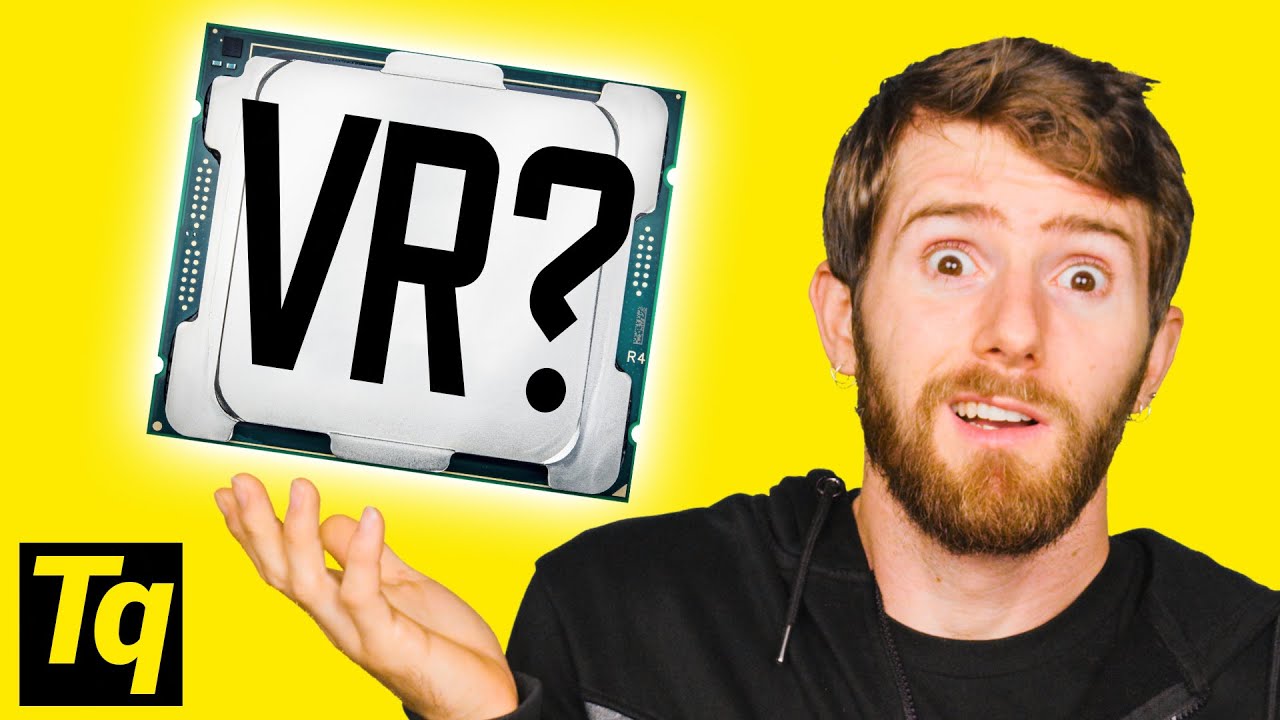
Do You Need A SPECIAL CPU for VR?
0 up · 0 down · 0 ratings
Promos
Thanks to Oculus for sponsoring this video! Learn more about their new Oculus Quest 2 at ocul.us #OculusPartner #OculusQuest2 Is there such a thing as a "VR-ready" processor? Buy AMD Ryzen Threadripper CPU On Newegg (PAID LINK): geni.us On B&H (PAID LINK): geni.us Buy Intel CPU On Amazon (PAID LINK): geni.us On Newegg (PAID LINK): geni.us On B&H (PAID LINK): geni.us Leave a reply with your requests for future episodes, or tweet them here: twitter.com ►GET MERCH: lttstore.com ►SUPPORT US ON FLOATPLANE: floatplane.com ►LTX EXPO: ltxexpo.com AFFILIATES & REFERRALS --------------------------------------------------- ►Affiliates, Sponsors & Referrals: lmg.gg ►Private Internet Access VPN: lmg.gg ►MK Keyboards: lmg.gg ►Nerd or Die Stream Overlays: lmg.gg ►NEEDforSEAT Gaming Chairs: lmg.gg ►Displate Metal Prints: lmg.gg ►Epic Games Store (LINUSMEDIAGROUP): lmg.gg ►Amazon Prime: lmg.gg ►Audible Free Trial: lmg.gg ►Our Gear on Amazon: geni.us FOLLOW US ELSEWHERE --------------------------------------------------- Twitter: twitter.com Facebook: @LinusTech Instagram: @linustech Twitch: twitch.tv FOLLOW OUR OTHER CHANNELS --------------------------------------------------- Linus Tech Tips: lmg.gg TechLinked: lmg.gg ShortCircuit: lmg.gg LMG Clips: lmg.gg Channel Super Fun: lmg.gg Carpool Critics: lmg.gg
The video analyzes whether a special or high-end CPU is necessary for playing virtual reality games, pointing out that while GPU power is often the focus, the CPU remains crucial for VR due to its role in delivering steady frame times and handling tracking data. It begins by advising viewers to check the headset’s recommended specs and notes that Oculus Rift S, for example, lists a 2014 era Core i5 as a baseline, which is not a strong signal that only low-end CPUs will suffice. The presenter emphasizes that VR demands pushing more pixels and maintaining consistent frame timing to avoid immersion-breaking stutter or motion sickness, explaining that CPU scheduling and multi-threaded draw calls can impact performance. He explains that modern APIs like DirectX 12 distribute rendering across multiple cores, making additional CPU cores beneficial, especially when streaming VR content or encoding video streams, as the CPU still handles frame reception and head tracking. The host concludes that for a modern VR setup, an eight-core processor is a good baseline and a ten-core can be advantageous if CPU encoding for streaming is used, and he pivots to highlight Oculus Quest 2 as a PC-free all-in-one alternative when a PC is not desired, while still offering PC VR connectivity via Oculus Link. The segment closes by noting Quest 2’s improvements, including its Snapdragon XR2 platform, higher pixel counts, a lighter headset, updated controllers, IPD adjustment, and compatibility with Quest titles, ending with a sponsor plug and a call to subscribe for future content.
Topics · virtual-reality · hardware · gaming · technology
Questions answered
- Why does VR sometimes require a stronger CPU than traditional PC gaming?
- VR demands higher and more consistent frame times to prevent motion sickness and immersion breaks, and the CPU must manage data flow to the GPU, track head movement, and handle multi-core rendering and streaming tasks.
- What CPU setup is recommended for VR gaming according to the video?
- An eight-core modern CPU is recommended as a baseline, with a ten-core CPU beneficial if streaming or CPU-based encoding is used.
- What alternatives does the video present besides a PC-tethered VR rig?
- The video highlights the Oculus Quest 2 as a standalone all-in-one VR system, with optional PC VR connectivity via Oculus Link for those who want access to PC titles.