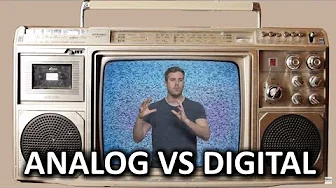
Analog vs. Digital As Fast As Possible
0 up · 0 down · 0 ratings
Channels and socials
What Is the difference between analog and digital, and how do they work together to make modern life possible? Audible message: Thanks to Audible for supporting our channel. Get a free 30 day trial at audible.com Follow: twitter.com Join the community: linustechtips.com License for image used in this video: creativecommons.org
Analog versus digital technology is presented as two fundamental ways to represent information, each with its own strengths and weaknesses. The video explains how analog signals are continuously variable and can reflect gradual changes in sound or image, which makes them susceptible to interference that can degrade quality, such as TV static or degraded VGA signals. It then contrasts this with digital signals, which represent data as discrete ones and zeros, making them far more resilient to interference and easier to copy without degradation. The host details how digital data is stored as finite bit patterns and how copies can be replicated perfectly, unlike analog waves which tend to degrade with each duplication. The discussion extends to practical implications, including the concept of sampling during digital recording, where continuous analog information is captured at specific intervals to create digital representations, and how a digital-to-analog converter (DAC) turns those bits back into sound. The video also emphasizes that although digital technology provides clear advantages, much of our world remains analog in nature, such as how real-world sounds are produced by air vibrations, which then get captured and stored digitally in systems like streaming services. The narrative ties these ideas together by highlighting how the interaction between analog and digital layers enables modern media ecosystems, from tweets to Netflix, to function smoothly, and it briefly touches on consumer experiences like copying music or video and the importance of sampling rates, bitrates, and the fidelity of digital formats. The overall message is that the Brave New World of digital media is made possible by the cooperative relationship between analog origins and digital processing, rather than by a simple replacement of one paradigm with another.
Topics · technology · science · digital-analog · audio
Questions answered
- What is the key difference between analog and digital signals?
- Analog signals vary continuously to represent information, while digital signals represent information with discrete ones and zeros, which makes them more resistant to interference and easier to copy without degradation.
- Why are sampling and DACs important in digital recording?
- Sampling captures moments of an analog signal at intervals to create digital data, and a DAC converts those digital values back into an analog signal that can be heard as sound.
- Can digital formats completely replace analog in everyday life?
- Digital formats offer clear advantages in fidelity and copying, but much of the world remains analog in its natural sources, so the two technologies work best when used together.