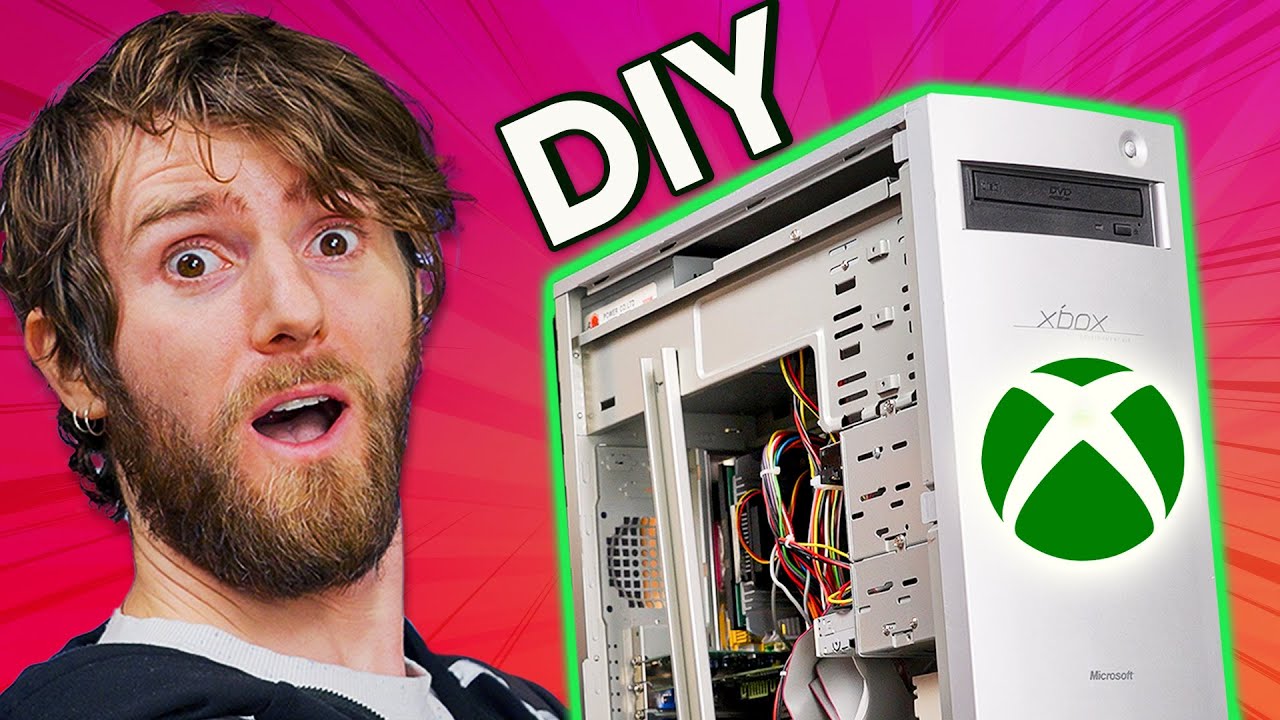
I Used Stolen Software to Make a DIY Xbox - Xbox Alpha I & II Dev Kits
0 up · 0 down · 0 ratings
Promos
Check out Thorum using the link below and get 20% off by using the code LTT at checkout: thorum.com A glimpse into the past of Xbox game development with the Xbox Alpha I development kit. The craziest part? You can build one yourself! (sort of) AND IT CAN EVEN PLAY GAMES (maybe). Oh, and we mistake CES 2001 for E3 2001, but really, who hasn't made that mistake before? Discuss on the forum: linustechtips.com ► GET MERCH: lttstore.com ► SUPPORT US ON FLOATPLANE: floatplane.com ► AFFILIATES, SPONSORS & REFERRALS: lmg.gg ► PODCAST GEAR: lmg.gg FOLLOW US --------------------------------------------------- Twitter: twitter.com Facebook: @LinusTech Instagram: @linustech TikTok: @linustech Twitch: twitch.tv MUSIC CREDIT --------------------------------------------------- Intro: Laszlo - Supernova Video Link: youtube.com iTunes Download Link: itunes.apple.com Artist Link: soundcloud.com Outro: Approaching Nirvana - Sugar High Video Link: youtube.com Listen on Spotify: spoti.fi Artist Link: youtube.com Intro animation by MBarek Abdelwassaa @mbarek_abdel Monitor And Keyboard by vadimmihalkevich / CC BY 4.0 geni.us Mechanical RGB Keyboard by BigBrotherECE / CC BY 4.0 geni.us Mouse Gamer free Model By Oscar Creativo / CC BY 4.0 geni.us CHAPTERS --------------------------------------------------- 0:00 Intro 1:28 Alpha I & Xbox's Origin Story 3:03 Inside the Xbox Alpha I 4:27 The RAM 7:06 GPU & Peripheral Cards 10:06 The hardest parts of DIY 11:12 Geriatric Dashboard 12:02 Demo Software 13:25 Simpsons Road Rage 15:48 Loading a game onto it 17:31 Dark Summit and a disappointing load screen 18:33 Conclusion
This video provides a deep dive into the Xbox Alpha I and Alpha II development kits, showing how early Xbox development hardware was assembled from off-the-shelf PC parts rather than a purpose-built console enclosure. The host begins by introducing the Alpha I unit and explains that it was designed to be affordable and replicable, in contrast to the later, more expensive prototypical metal X consoles showcased at events. He walks through the actual internals, identifying components like the Intel VC820 motherboard, the Pentium III 733 MHz CPU, and the RAM configuration, highlighting how Rambus memory was used and why it was eventually replaced by DDR SDRAM. Throughout the first segment, the video contrasts hardware differences between Alpha I and Alpha II, including memory differences and the presence of a RAID card and an add-on audio/USB controller to mimic Xbox hardware capabilities within a PC-based chassis. The host emphasizes the limitations of these early development kits, noting that loading any Xbox software required carefully matching hardware and software environments, and that many components were tightly bound to Windows 2000 under a highly proprietary Microsoft software stack. The exploration then transitions to practical demos, where the team demonstrates loading and transferring games over a local network using XB Explorer, and they attempt to boot and run games like Simpsons Road Rage and Dark Summit as proofs of concept. Viewers see how developers during the Xbox’s early era experimented with game distribution, network sharing, and debugging workflows, including the quirks of BIOS branding and early Windows-based dev tools. The video closes with reflections on how these rudimentary, off-the-shelf PCs evolved into a mass-market console platform, noting both the ingenuity and rough edges of the process, and then segues into a sponsor segment followed by final thoughts on the historical significance of the Alpha kits and the preservation of this hardware heritage.
Topics · gaming · technology · history · hardware · preservation
Questions answered
- What was the Alpha I development kit built from and why?
- The Alpha I was built from relatively low-cost commodity PC parts to provide an affordable, replicable dev kit as an alternative to pricey, custom metal units.
- Why did the Alpha kits use Rambus memory, and what changed later?
- The Alpha kits used Rambus memory for bandwidth advantages, but DDR SDRAM later supplanted Rambus due to higher costs and latency concerns.
- How could games be loaded onto the Alpha kits in the video?
- Games were transferred over a network using XB Explorer, then loaded onto the dev kit through the dev tools and shared folders.
- What was a major challenge in booting and running software on Alpha I/II?
- Booting and running dev builds required matching hardware configurations and software, with some components missing or nonfunctional, making proper boot and operation tricky.
- What is the historical takeaway from these Alpha kits?
- These Alpha kits show how early Xbox development leveraged commodity hardware and early software stacks to prototype and develop games before the final console hardware matured.