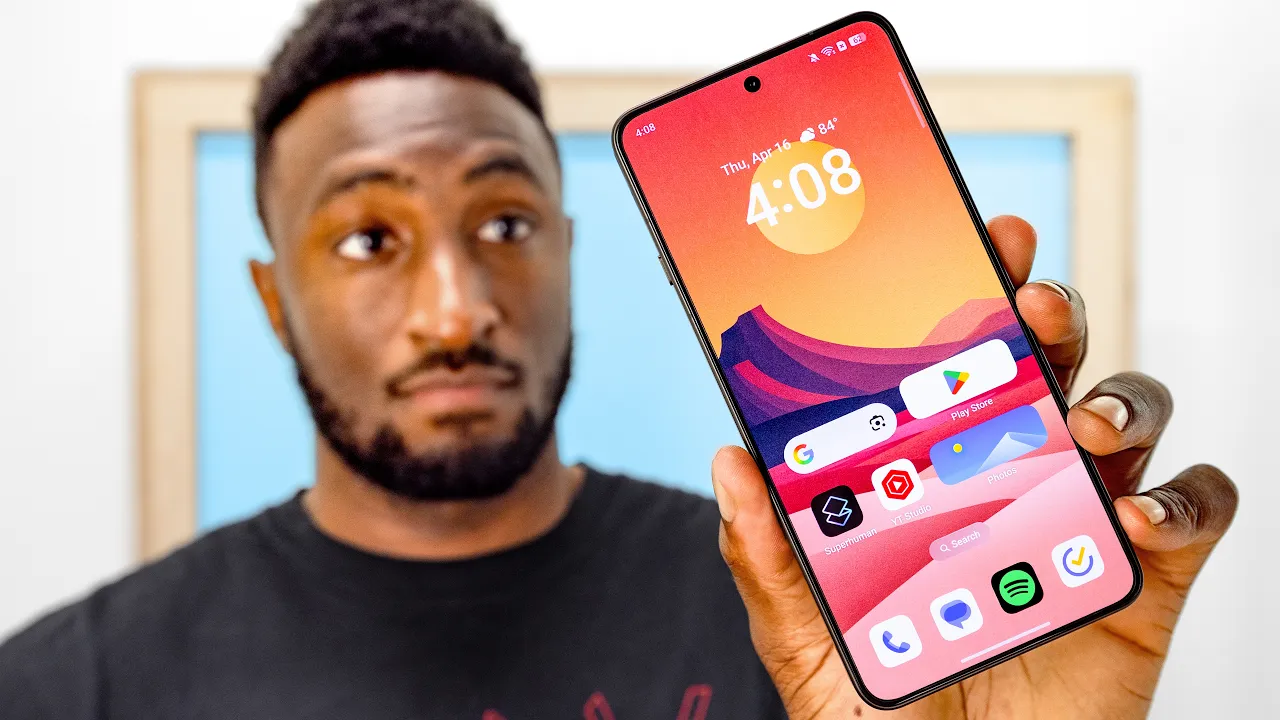
So This is Peak Smartphone
0 up · 0 down · 0 ratings
Promos
Peak slab phone in 2026 looks a lot like a camera attached to a phone Auto Focus shot on Oppo Find X9 Ultra: youtu.be MKBHD Merch: shop.mkbhd.com Playlist of MKBHD Intro music: goo.gl Phone provided by Oppo for review. ~ twitter.com @MKBHD @MKBHD
So this is peak slab phone, or so the video argues, and the host immediately positions the Oppo Find X9 Ultra as the leading edge of flagship smartphones in 2026. He frames the discussion around a five-pillar model for a great phone: display, battery, build, performance, and cameras. The opening segment emphasizes how current flagships have settled into a near-perfect balance in these areas, with the X9 Ultra challenging that balance through its specifications, especially a massive 7,050 mAh battery and a 200-megapixel main camera system. He notes that the pursuit of the ultimate slab phone is a moving target, and while a better slab phone will arrive, the current model has essentially achieved the watermark on most counts, making it difficult to push further in the near term. The host also previews his nuanced take on camera capabilities, arguing that while smartphone cameras have become extraordinarily capable and versatile, they still cannot fully replace dedicated cameras due to fundamental physical limits, even as computational photography helps minimize misses and maximize makes. In the middle section, the discussion pivots to the practical realities of daily use and how Oppo terms their camera system as a cohesive, all-encompassing setup. The X9 Ultra’s camera stack is described in detail, including a 200 MP main sensor, a 200 MP 3x telephoto, a 50 MP 10x sensor with sensor-shift stabilization, and a dedicated color sensor that Prada- Hasselblad branding aims to evoke. The host contrasts the camera-first narrative with the broader smartphone experience, highlighting that although the camera system is spectacular, it is still part of a smartphone designed for everyday tasks like browsing, video watching, and productivity. He also discusses external camera attachments and accessories that push smartphone photography toward professional levels, while noting that even with such tools, the best phone cameras remain fundamentally different from true high-end cameras. In the final portion, the host synthesizes the idea of peak smartphone design by comparing the current smartphone era to other platform shifts, such as turning tablets into laptop substitutes. He argues that improved versatility, notably in photography, video, and everyday multitasking, defines peak slab status; yet the video closes with a balanced takeaway: professional cameras will always have a place, and the best smartphones aim to minimize misses while maximizing the potential of every shot. The X9 Ultra is celebrated for its overall balance, user experience, and the practical reality that phone cameras can deliver outstanding results in most common scenarios, even if they cannot fully replace dedicated imaging systems. The video invites discussion on whether we have truly reached peak slab smartphone in 2026 and what future innovations might still push the benchmark further.
Topics · technology · consumer electronics · mobile devices · camera technology
Questions answered
- What defines a peak slab phone according to the video?
- A peak slab phone is defined by a balanced excellence across five pillars: display, battery, build, performance, and cameras, with the goal of achieving a highly capable, versatile flagship that still fits a slab form factor.
- Why does the host think smartphone cameras cannot fully replace professional cameras?
- Because, despite advances in sensors and computational photography, there are fundamental physics limits and differences in optics and sensor size that keep high-end dedicated cameras superior for certain professional needs.
- What role do camera attachments play in smartphone photography according to the video?
- Camera attachments extend the capability of smartphones, enabling longer reach and additional lens options, and illustrate how smartphones can approach professional imaging when combined with accessories.