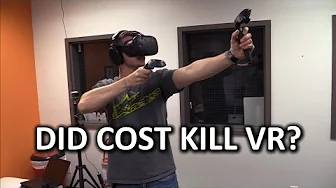
What Killed VR?
0 up · 0 down · 0 ratings
Channels and socials
Has the diminished experience of mobile VR killed its bigger brother on the PC? Is cost the only factor affecting purchasing decisions? The answer may not be so simple... TunnelBear message: TunnelBear is the easy-to-use VPN app for mobile and desktop. Visit tunnelbear.com to try it free and save 10% when you sign up for unlimited TunnelBear data. Freshbooks link: For your unrestricted 30 day free trial, just go to freshbooks.com and enter “Linus Tech Tips” in the "how did you hear about us" section. Buy Gear VR on Amazon: geni.us Discuss on the forum: linustechtips.com Affiliates, referral programs, & sponsors: linustechtips.com Join our community forum: bit.ly twitter.com @LinusTech Intro Screen Music Credit: Title: Laszlo - Supernova Video Link: youtube.com iTunes Download Link: itunes.apple.com Artist Link: soundcloud.com Outro Screen Music Credit: Approaching Nirvana - Sugar High youtube.com Sound effects provided by freesfx.co.uk
What Killed VR? examines why virtual reality has not yet achieved broad mainstream adoption, weighing marketing hurdles, hardware costs, and the relative experiences of different VR platforms. The video lays out data points on entry costs, highlighting that Gear VR can be purchased for as little as a phone-based setup near $470, while high-end desktop VR like the Oculus Rift with a capable PC can exceed $1600. It argues that the barrier isn�t just technology, but affordability and exposure, noting the mismatch between the accessibility of mobile VR and the more demanding, expensive PC-based options. Linus also discusses how the absence of a strong, affordable ecosystem of compelling content and games has hampered adoption, and he frames the discussion around what would need to change for VR to break through to a wider audience. The analysis uses a small, informal test with two participants to illustrate perceptual differences in value between mobile and desktop VR, and it concludes that cost is the primary obstacle rather than capability alone. The video closes with reflections on how the industry can turn things around, emphasizing the potential for future price reductions and better cross-platform experiences, while maintaining a skeptical view of the early first-wave hardware. Overall, the piece blends data, personal testing, and market context to propose that desktop VR isn�t dead yet, but it has had a false start and needs a more compelling price-to-value proposition to gain traction.
Topics · technology · virtual-reality · consumer-electronics · science-and-technology
Questions answered
- Why does the video argue that cost is the main barrier to VR adoption?
- Because the Gear VR can be affordable through a phone-based setup, while desktop VR requires a costly PC and headset, creating a large price gap that limits who can participate, and the lack of affordable, compelling experiences compounds the issue.
- What would make desktop VR more appealing according to the video?
- Lower hardware costs, clearer value through improved, affordable content and experiences, and a simpler, more accessible ecosystem that makes high-end VR practical for a broader audience.