Apple, please! I want THIS - Samsung Display at CES
0 up · 0 down · 0 ratings
Promos
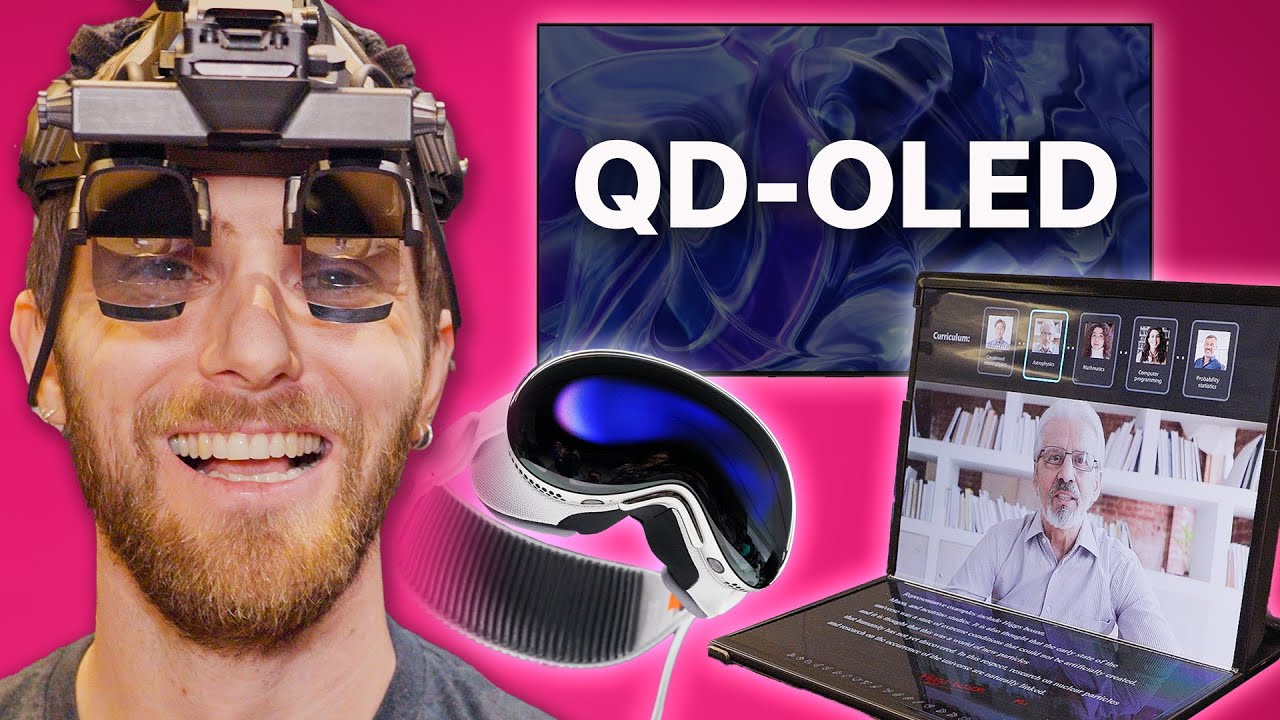
Learn more about be quiet! at: lmg.gg Linus and the team take a look at Samsung Display’s innovations at CES. The highlight? An XR headset that uses printed OLED diodes that are directly placed onto the device’s silicon for reduced weight and increased PPI (3400). Wild. Want us to unbox something? Make a suggestion at lmg.gg ► GET MERCH: lttstore.com ► GET EXCLUSIVE CONTENT ON FLOATPLANE: lmg.gg ► SPONSORS, AFFILIATES, AND PARTNERS: lmg.gg ► PRODUCTS WE USE ON THE SHORTCIRCUIT SET: lmg.gg FOLLOW US ELSEWHERE --------------------------------------------------- Twitter: twitter.com Instagram: @shortcircuityt TikTok: @linustech Facebook: @ShortCircuitYT CHAPTERS --------------------------------------------------- 0:00 Intro 0:20 eMagin WUXGA dPd ULT 1:22 How it's made 2:53 bequiet! 3:25 Samsung Displays 4:45 Displays Continued - Color Technology 5:45 Mother Glass - What Does the Future have in Store? 6:13 Foldable Screens 7:06 QD-OLEDs 8:14 Outro
The video provides a detailed hands-on look at Samsung Display's CES booth innovations, focusing on a micro OLED approach that challenges traditional LCD and OLED manufacturing. Early on, the presenter reveals a micro OLED display with an extraordinary brightness claim of up to 10,000 nits, emphasizing how such brightness would be used in head-mounted displays where lens losses and persistence affect perceived luminance. The discussion then shifts to the manufacturing shift from conventional printed on motherglass OLED to silicon deposition, building subpixels on silicon with a fine mask, enabling extremely high pixel densities and reduced power consumption. The presenter highlights a 3500 PPI density, sub-micron pixel gaps, and the potential for dramatic form-factor improvements in AR/VR headsets, including possible implications for future Apple devices. Throughout, the video compares OLED and LCD color and brightness techniques, introducing intelligent color technologies and edge luminance profiling aimed at saving energy while preserving perceived color richness. The host also notes scale challenges, wafer sizes, and the gap between lab demos and mass production, suggesting that continued scaling could unlock broad adoption across laptops and other displays. The CES showcase is framed as a signal of future possibilities, including smarter color handling, higher peak brightness, and new form factors like foldables and slidable laptops, with a nod to Apple potentially adopting these displays in upcoming devices. The segment closes with encouragement to subscribe for updates should Apple or other manufacturers adopt these technologies, underscoring the broader excitement for higher-density, lower-power displays at mainstream levels.
Topics · technology · display technology · consumer electronics · ces 2024
Questions answered
- What is the key manufacturing method Samsung Display is using for these micro OLEDs, and how does it differ from traditional OLED production?
- They are using a silicon deposition method to build displays subpixel by subpixel on silicon, instead of the traditional printed on motherglass approach used in most OLEDs.
- What brightness level is claimed for the micro OLED display showcased at CES, and what implications does this have for AR/VR headsets?
- The display is claimed to reach up to 10,000 nits peak brightness, which could substantially improve perceived image quality in head-mounted displays by mitigating lens losses and enabling richer visuals.
- What future applications or devices are suggested in relation to this display technology?
- Potential AR/VR headsets and next-generation laptops or other portable devices could adopt these high-density, low-power micro OLEDs, with Apple specifically mentioned as a possible adopter in future Vision Pro-like devices.