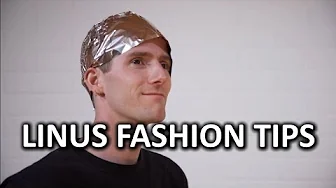
$40 Tinfoil Hat?? - KICKFARTED Ep. 2
0 up · 0 down · 0 ratings
Channels and socials
Can you take your tinfoil hat game to the next level with this stylish and "important" accessory? Intel Skull Canyon NUC pre-roll: linustechtips.com Buy aluminum foil on Amazon: geni.us Buy Shield Headwear: shieldheadwear.com Discuss on the forum: linustechtips.com Affiliates, referral programs, & sponsors: linustechtips.com Join our community forum: bit.ly twitter.com @LinusTech Intro Screen Music Credit: Title: Laszlo - Supernova Video Link: youtube.com iTunes Download Link: itunes.apple.com Artist Link: soundcloud.com Outro Screen Music Credit: Approaching Nirvana - Sugar High youtube.com Sound effects provided by freesfx.co.uk
Kickfarted Ep. 2 dives into the world of RF shielding hats by examining Shield Headwear and their claim that their hats dramatically reduce exposure to wireless radiation. The video sets up a test environment on Vancouver Island with an RF meter and a high pass filter to isolate 2.4 GHz signals, then compares multiple hat wearing configurations against a baseline home router. The host discusses the testing apparatus, notes potential uncertainties in measurement methods, and attempts to reproduce Shield Headwear’s claimed performance. Through this hands-on experimentation, they demonstrate that simpler, improvised shielding can achieve similar reductions in measured RF signals, while also highlighting design trade-offs and practical limitations of real world shielding products. The video ends with a critical takeaway: while shielding may offer some reduction under certain conditions, commercial hats may not reliably deliver the dramatic protection advertised, and users should approach such products with skepticism. The episode also features commentary on the broader discourse around RF radiation, the ethics of product testing, and the costs involved in producing investigative content. The host uses a mix of practical demonstrations, caveats about measurement accuracy, and humorous aside to keep the discussion accessible. They compare a homemade aluminum foil approach to Shield Headwear’s product and conclude that the homemade option can be as effective in certain setups, though comfort and aesthetics differ. Throughout, the video emphasizes the importance of understanding measurement context, device placement, and the difference between near-field and far-field radiation effects when interpreting test results. In closing, the video invites viewers to consider verified, physics-grounded explanations rather than sensational marketing claims, and it points to additional links and merch as part of the broader channel ecosystem.
Topics · science and technology · consumer electronics · testing and reviews · skepticism
Questions answered
- What did the test reveal about Shield Headwear's claimed RF shielding performance?
- The test showed that while different hat wearing configurations can reduce measured RF signals in a simple setup, the results depend heavily on measurement conditions and may not replicate the dramatic protection claimed by Shield Headwear in all real-world scenarios.
- Is homemade shielding as effective as the commercial hat according to the video?
- In the demonstrated test conditions, a homemade aluminum foil arrangement can achieve comparable reductions to the commercial hat, though it is less practical and comfortable as everyday wear.