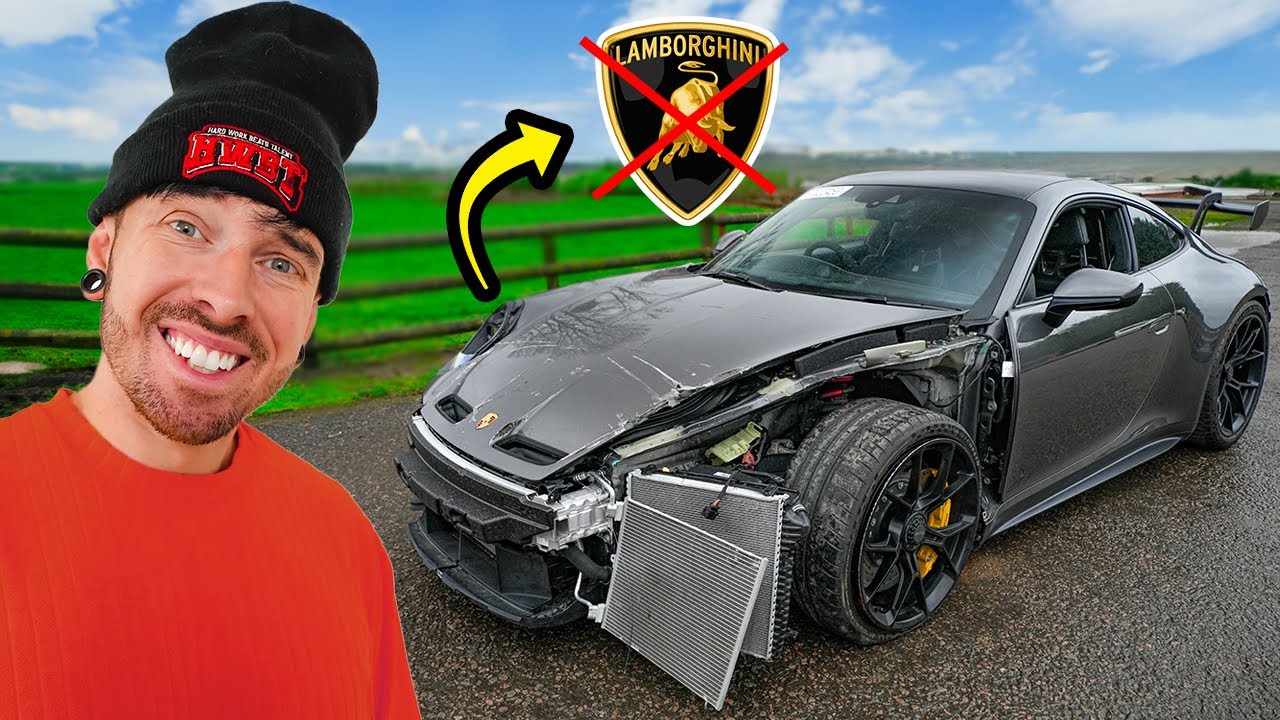
REBUILDING A PORSCHE 911 GT3 TO BE FASTER THAN A LAMBORGHINI
0 up · 0 down · 0 ratings
Description
TO GET A REMAP QUOTE HERE
Promos
Check if your car was damaged with Car Vertical - 10% off here carvertical.com I bought a cheap Porsche 911 992 GT3 and attempted to rebuild it in 24 hours. Unfortunately i didnt quiet complete it. But today i plan to rebuild the full car and then modify it to beat a Lamborghnini Huracan Performante
ALL MA MERCHANDISE
Channels and socials
shop.mallory-performance.com Thanks @Phil-Cooper for tuning the car Thanks to Ben with the lamborghini - @RoadToSuccessOfficialPodcast Watch my podcast with ben here - youtube.com
FOR MORE CONTENT
CHECK OUT MY SECOND CHANNEL
Follow Me Here Aswell
Notes
The video opens with a bold ambition: to push a Porsche 911 GT3 beyond the speed of a Lamborghini Huracan Performante. The host explains that the GT3 started life damaged and was rebuilt, with a plan to tune the car through its ECU access point located at the back of the engine. The early portion focuses on gaining access to the ECU, dealing with potential manufacturer lockdowns, and confirming with the tuner Phil at Mallory Performance that the ECU can indeed be adjusted. After confirming access, the plan shifts toward necessary repairs and preparation to run the car up to temperature, checking for air locks in the cooling system, and ensuring proper coolant flow before making performance changes. The host emphasizes that the car’s cooling system must be bled correctly to prevent overheating, describing the process of vacuum filling and verifying that the system holds vacuum before continuing. The tone is collaborative, with safety and process details conveyed clearly as the team works to make the GT3 ready for tuning while also addressing niggling issues like radiator placement and air flow within the mid mounted engine layout. By the midsection, the focus moves to exhaust and intake modifications. The crew discusses removing the stock exhaust components to install a full titanium JCR exhaust and a valve delete kit to eliminate the restrictive factory valve behavior while maintaining the car’s safe limp modes. They also inspect and modify the intake plumbing and the rear end, including removing OPF/PPF filters for improved exhaust flow in line with emissions considerations. The video captures the moment of removing a rusty back box, addressing seals, and installing the lighter, freer-flowing exhaust system to extract more power and a more aggressive sound. The team notes the tradeoffs between keeping OEM emissions controls and achieving a more aggressive sound and performance, aiming to maximize flow without compromising reliability. A dyno session is teased, with expectations of increased power once air flow is improved and tuning is complete, setting the stage for real-world testing. The testing phase begins with temperature and sound checks, followed by the first dyno pull to establish baseline power before tuning. The GT3 initially shows lower horsepower than expected due to air flow issues, likely caused by the rear-mounted engine drawing air from the front. The technician explains the challenge of balancing air intake for a mid-engined car and the importance of proper ram air and ducting around the top of the car to feed the filters. After identifying the air flow constraint, the tuner Phil works on optimizing the tune, introducing more aggressive intake flow and adjusting the ECU mapping to push power higher. The video captures the tension of a live tune, with power figures increasing from a disappointing first run to a projected peak, and the team smiling as the car approaches significantly higher horsepower than stock, emphasizing the complexity of tuning a naturally aspirated GT3 versus turbocharged rivals. The progress culminates in the crew preparing the car for road testing and a later track comparison against a Huracan Performante. As the build nears completion, the GT3 goes from project to contender on the track. The exterior and aero are tidied up, with front grills, under trays, and a satin black wing wrap to complete the exterior and improve aerodynamics and cooling airflow. The team debates whether the full MANTA kit is necessary, ultimately wrapping the wing to achieve the look while keeping costs in check. After reinstating the bumper and tail lights, they perform a fault scan and clear a host of issues flagged by the dash, including transmission and ABS faults, ensuring the car is ready for a proper test drive. The moment of truth arrives: the GT3 hits the road for its first drive since the tune and exhaust changes, the sound is described as “nuts,” and the driver notes several recalls and a car history check that shows the car has accident records but remains a strong project. The video closes with a race setup at a track, a head-to-head comparison against the Huracan Performante driven by a guest racer, and a candid post-race conclusion about the GT3’s performance under wet conditions, acknowledging that the Lamborghini maintains a speed advantage in damp track conditions while posing questions about how the GT3 would fare in dry conditions. Overall, the video weaves a narrative of ambition, methodical mechanical work, careful tuning, and a spirited race assessment. It balances hands-on build details, from ECU access to exhaust plumbing, with the excitement of a track duel against a much more powerful rival. The host’s drive to prove that perseverance and innovation can yield a faster GT3 is underscored by real-world testing and a transparent account of limits and constraints. Viewers are invited to enjoy the progression from a risk-filled rebuild to a data-driven, track-tested performance journey, with ongoing commentary about sound, power, and handling. The result is a detailed, technically grounded, entertaining exploration of pushing a modern naturally aspirated GT3 toward supercar territory while acknowledging the realities of engineering, legality, and track dynamics.
Topics · Autos & Vehicles · Car Tuning · Performance Engineering · Motorsports · Car Restoration
Questions answered
- What is the main objective of rebuilding the Porsche 911 GT3 in this video?
- To modify and tune the GT3 so it can outperform the Lamborghini Huracan Performante on a track.
- How do they access the engine control unit (ECU) for tuning?
- They remove parts to access the ECU located at the back of the engine, then work with an external tuner to unlock and modify it.
- What changes are made to the exhaust system?
- They install a full titanium JCR exhaust with a valve delete kit to increase flow and noise, removing restrictive valves while maintaining limp mode safety.
- What issue did they face with the cooling system, and how was it addressed?
- Air locks in the cooling system prevented proper coolant circulation; they bled the system using vacuum filling to remove air and ensure proper circulation.
- What was the outcome of the dyno session after tuning?
- Power increased from a disappointing initial run to a higher figure after improved air flow and ECU tuning, with a projection of exceeding stock power on the road.