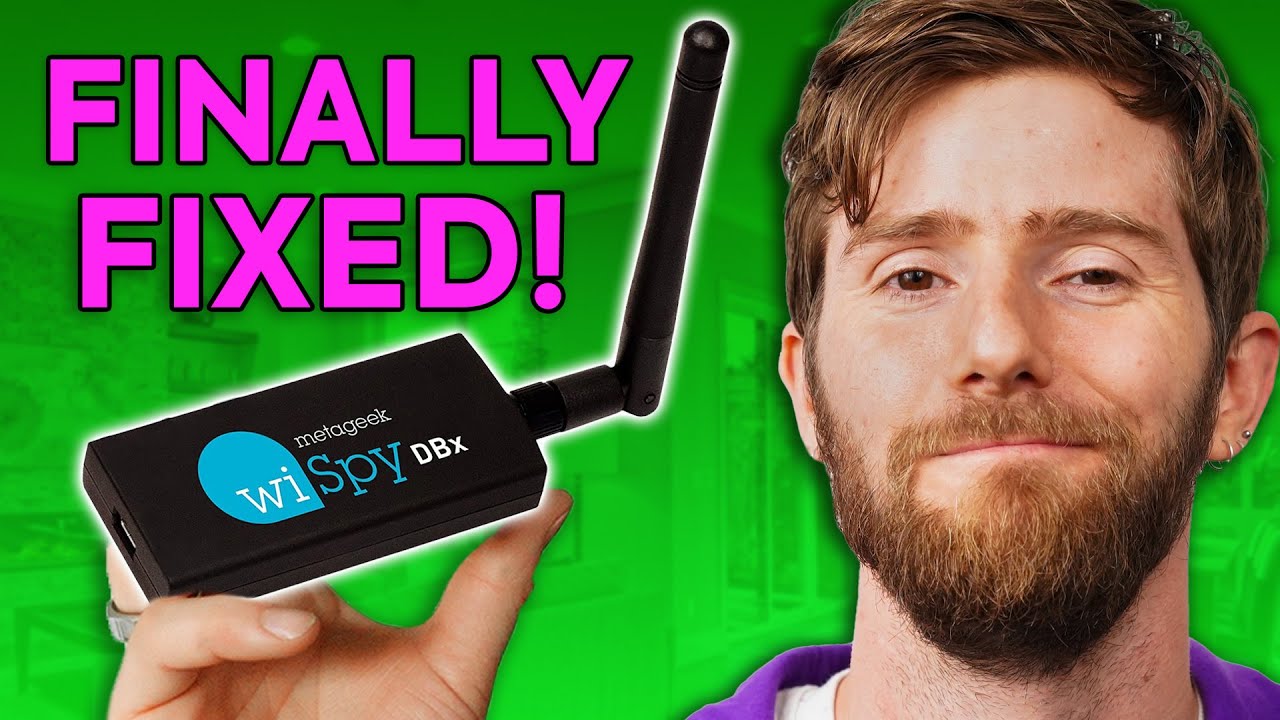
It Took MONTHS to Solve This WiFi Problem but I DID! (maybe... check pinned comment)
0 up · 0 down · 0 ratings
Description
Try FreshBooks free, for 30 days, no credit card required at freshbooks.com Learn more about Seasonic Power Supplies at seasonic.com My family has been hounding me to figure out an audio issue that's ruining our movie nights. Problem is, it's really a Wi-Fi issue, and diagnosing it - even with cool Wi-Spy tools from MetaGeek - could be quite the rabbithole... Educational Materials: digikey.ca Discuss on the forum: linustechtips.com
Promos
Check out MetaGeek products: metageek.com Purchases made through some store links may provide some compensation to Linus Media Group. ► GET MERCH: lttstore.com ► SUPPORT US ON FLOATPLANE: floatplane.com ► AFFILIATES, SPONSORS & REFERRALS: lmg.gg ► PODCAST GEAR: lmg.gg FOLLOW US --------------------------------------------------- Twitter: twitter.com Facebook: @LinusTech Instagram: @linustech TikTok: @linustech Twitch: twitch.tv MUSIC CREDIT --------------------------------------------------- Intro: Laszlo - Supernova Video Link: youtube.com iTunes Download Link: itunes.apple.com Artist Link: soundcloud.com Outro: Approaching Nirvana - Sugar High Video Link: youtube.com Listen on Spotify: spoti.fi Artist Link: youtube.com Intro animation by MBarek Abdelwassaa @mbarek_abdel Monitor And Keyboard by vadimmihalkevich / CC BY 4.0 geni.us Mechanical RGB Keyboard by BigBrotherECE / CC BY 4.0 geni.us Mouse Gamer free Model By Oscar Creativo / CC BY 4.0 geni.us CHAPTERS --------------------------------------------------- 0:00 Intro 1:40 My theory 3:02 It's not that easy 5:35 Secret Weapon 7:47 It gets worse 8:57 Ghost Hunting 12:25 PROBLEM FOUND 15:05 Outro
The video opens with Linus describing a common household tech frustration: persistent WiFi problems that disrupt family movie nights, video calls, and gaming. He explains early on that wireless audio devices in the living room share spectrum with WiFi, making them susceptible to interference. The initial approach is to map the WiFi environment using a smartphone analyzer and to identify an unknown SSID possibly emanating from a Sony wireless audio transmitter. Linus then experiments with channel clearing, manually assigning channels, and acknowledges the limitations of automatic channel hopping by wireless devices. This sets the stage for a more involved diagnostic toolkit, including a Wi-Spy spectrum analyzer and MetaGeek software to visualize traffic and interference in both 2.4 and 5 GHz bands. The narrative emphasizes that interference patterns can shift over time as devices reselect channels, complicating a stable solution. The team then shifts to a more targeted tactic, wrapping the antenna to create a directional focus and using a device finder feature to pinpoint problematic spikes. Throughout, Linus compares results from professional tooling with consumer apps to triangulate the interference sources and to determine whether the problem lies with the 2.4 GHz band, the 5 GHz band, or a non-WiFi device, such as Z-Wave or smart lights. The discovery gradually narrows to a surprising culprit: Z-Wave devices and other household electronics that ripple into the wireless spectrum, even when not immediately adjacent to the audio setup. In the end, the video acknowledges that while the immediate problem is identified, a long-term solution may involve upgrading or reconfiguring Z-Wave devices or network infrastructure, and even contemplates a future hardware change. The sponsor segment introduces FreshBooks as a tool to ease accounting for creators, tying the technical journey back to practical day-to-day business management. Finally, Linus notes that six gigahertz Wi-Fi could alleviate congestion but may introduce new interference patterns, leaving viewers with a balanced view of advancing wireless standards and the complexity of maintaining reliable home networks. The video ends with a reflective tease about revisiting the topic in a deeper dive and a nod to future hardware considerations for a quieter networked home.
Topics · technology · science_and_tech · home_networking · telecommunication · consumer_electronics
Questions answered
- What was the initial hypothesis about the WiFi problem and how did Linus test it?
- The initial hypothesis was that the wireless audio devices were interfered with by the same WiFi spectrum, particularly on the 5 GHz band. Linus tested this by analyzing the WiFi environment with a phone app and then using a spectrum analyzer to observe channel usage, signal strength, and traffic patterns across 2.4 GHz and 5 GHz bands.
- What ultimately caused the interference in the home network?
- The interference was traced to multiple sources, including hidden SSIDs and a congested 5 GHz environment, but the turning point came when Z-Wave devices and smart home equipment generated spikes that disrupted the wireless audio. The accumulation of devices and their non-ideal routing caused persistent interference that affected audio streaming.
- What solutions were attempted to mitigate the issue?
- Solutions included clearing channels on the WiFi router, attempting to manually set preferred channels, and using a directional antenna to locate interference sources. The video also discusses potentially upgrading or reconfiguring Z-Wave devices and considering new hardware so the interference can be reduced or eliminated.
- What long-term considerations does Linus mention for avoiding similar problems?
- Linus suggests a combination of possibly wiring higher bandwidth devices, upgrading to newer switches or six GHz WiFi when available, and rethinking the home network topology to minimize interference. The focus is on reducing reliance on wireless for critical devices and planning for future wireless standards.
- Was the issue fully resolved in the video?
- A full, permanent resolution is not claimed. The video demonstrates a significant reduction in interference and identifies the likely sources, but acknowledges that a long-term solution may require hardware changes or reconfiguration of smart devices, implying that the issue could recur until a more robust setup is implemented.