How Does Thermal Paste Work?
0 up · 0 down · 0 ratings
Description
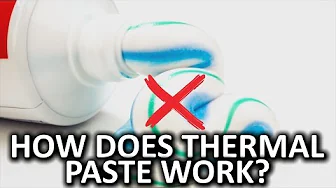
Thermal paste is a messy but crucial component of your PC - without it, your poor CPU would cook to death! How does it work, what materials does it contain to aid heat transfer, and can you REALLY use toothpaste in a pinch? Dollar Shave Club link: dollarshaveclub.com Follow: twitter.com Join the community: linustechtips.com
Thermal paste is essential in PC cooling because contact between a CPU and its heatsink is imperfect. The video explains that many heatsinks do not sit perfectly flat on the CPU and can be convex or concave, leaving air pockets that impede heat transfer. Air is a poor conductor of heat, so the paste fills these gaps to improve thermal conductivity and allow heat to move from the CPU into the heatsink more efficiently. The host describes different paste compositions, noting that metal-based pastes conduct heat well but can be electrically conductive, so users must apply them carefully and keep them away from metal traces. To reduce risk, higher-quality pastes like Arctic Silver 5 are designed to be non-conductive, though some still have mild capacitive properties, so avoid direct contact with circuitry. Ceramic-based pastes are a safer alternative and often cheaper, offering solid performance, especially for exotic cooling or subzero setups. For those who want a mess-free option, thermal pads exist, but they do not perform as well as paste because they do not fill micro-crevices. The video also briefly warns against thermal adhesives, which permanently bond components together, and it ends with a light plug for a product promotion unrelated to the topic. Overall, the key takeaway is that proper thermal paste selection and application balance heat transfer efficiency, safety, and practicality for different cooling scenarios.
Topics · science · technology · computing · hardware
Questions answered
- What is the main purpose of thermal paste between the CPU and heatsink?
- Thermal paste fills air gaps between the CPU and heatsink to improve thermal conductivity, allowing heat to transfer more efficiently from the CPU to the heatsink.