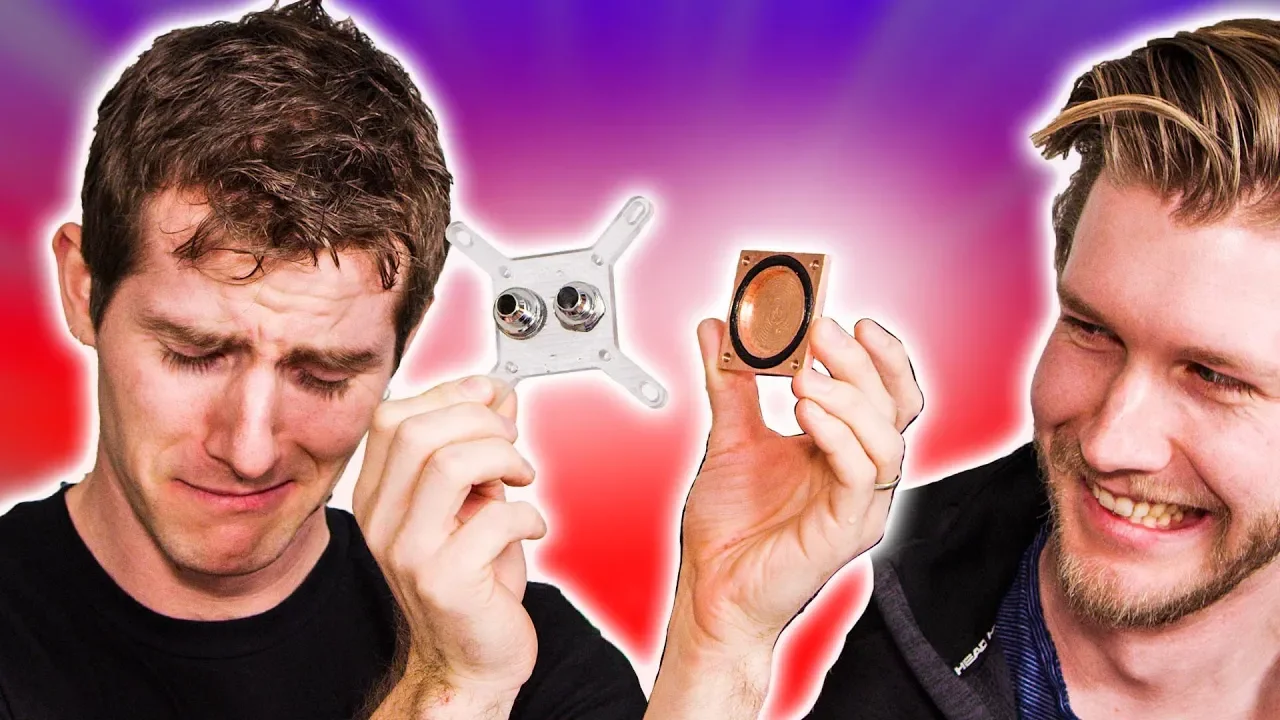
We Built a CPU Water Cooler!
0 up · 0 down · 0 ratings
Promos
Enter below for your chance to win! LG gram YouTube: geni.us LG gram Instagram: geni.us LG gram Trick Photo Contest: geni.us Mack Weldon: Use offer code TECHTIPS20 to get 20% off your next Mack Weldon order at lmg.gg How hard can making your own water block be? Actually not too hard if you have a CNC Router... Also really hard when you have a Linus... CAD: lmg.gg Buy Single Flute Bit. On Amazon: geni.us Buy CPU Water Block On Amazon: geni.us On Newegg: geni.us Discuss on the forum: linustechtips.com Our Affiliates, Referral Programs, and Sponsors: linustechtips.com Get Private Internet Access today at geni.us Linus Tech Tips merchandise at lttstore.com Linus Tech Tips posters at crowdmade.com Our Test Benches on Amazon: amazon.com Our production gear: geni.us Twitter - twitter.com Facebook - @LinusTech Instagram - @linustech Twitch - twitch.tv Intro Screen Music Credit: Title: Laszlo - Supernova Video Link: youtube.com iTunes Download Link: itunes.apple.com Artist Link: soundcloud.com Outro Screen Music Credit: Approaching Nirvana - Sugar High youtube.com
The video documents Linus Tech Tips attempting to build a CPU water block from scratch, starting with the concept and the simplest possible design. The team explores a basic acrylic water block idea that uses six holes and two G1/4 threads, highlighting how inexpensive materials can still function as a working block. They compare this basic design to a more advanced copper block that includes a metal mid plate for rigidity and multiple features to improve flow and heat transfer, noting the challenge of machining copper and achieving tight tolerances for an effective o-ring seal. The hosts walk through the process of machining, tapping threads, and assembling components, including a live demonstration of threading, sealing, and testing the block for leaks. They perform both a dry fit and a water-fill test to check for leaks, discussing the importance of proper tolerances and the placement of o-rings to prevent leaks in a high-value system. The video ends on a positive note, with the team reporting that the block does not leak after testing and outlining plans for future iterations, such as creating blocks for other hardware and escalating to more complex projects like a network switch. Throughout, they emphasize learning through doing, documenting mistakes, and iterating on designs rather than relying on pre-made parts. The content blends practical machining steps, design reasoning, and playful banter, underscoring the DIY ethos of pushing capabilities while acknowledging the engineering challenges involved in making a reliable water cooling solution. Viewers are invited to follow along for ongoing projects and related sponsorships and community activities. Overall, the video frames a successful initial foray into custom water blocks as a stepping stone toward more ambitious experiments in cooling high-performance hardware.
Topics · DIY · Computer Hardware · Technology Education · Engineering · Machining · DIY Electronics · Science & Technology · Maker Culture
Questions answered
- What was the initial design approach for the water block and why did the team start with acrylic?
- The team started with a simple acrylic design because it is cheap and easy to machine, allowing quick prototyping with basic features like six holes and an o-ring groove. This served as a learning step before attempting the more challenging copper block, which requires tighter tolerances and more advanced machining.
- What were the main challenges encountered when transitioning from acrylic to copper for the water block?
- The main challenges included achieving precise tolerances for the o-ring groove, machining copper without causing tool wear or damage, and designing a mid plate and fin structure that can withstand mounting stresses while guiding fluid flow for better heat transfer.
- How did the team test the block for leaks and what was the outcome?
- The team performed a leak test by filling the assembled block with water and watching for air ingress and water leakage. The result indicated no leaks in the tested configuration, validating the concept and the basic assembly approach, though they noted ongoing considerations for future refinements.