Something is Living in my Pool-Cooled Gaming PC
0 up · 0 down · 0 ratings
Promos
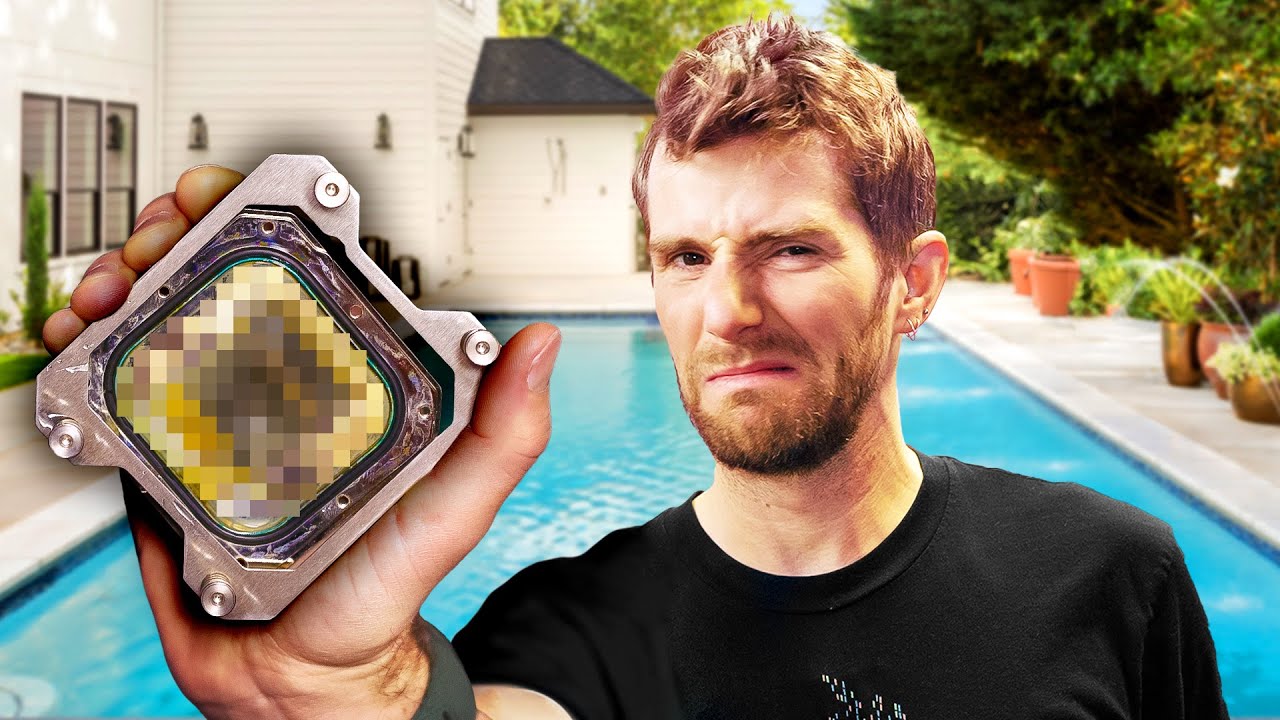
Visit squarespace.com and use offer code LTT for 10% off A cloud that’s cheaper than your coffee! Use code LTT25 and get US$ / € 20 off on your Hetzner Cloud! htznr.li It's starting to seem like cooling a bunch of Gaming PCs with your swimming pool might be a little high-maintenance. The corrosion problem is solved, but now something smells pretty funky in the pool-based PC cooling system. It's all hands on deck as we pull apart the LAN Center PCs and try to eliminate whatever is growing in the cooling loops once and for all. Discuss on the forum: linustechtips.com
Check out our Channel Partners: Secretlab - Buy a Titan EVO ergonomic gaming chair: lmg.gg PIA - Get the VPN of our choice: piavpn.com dbrand - Buy a "Circuit" series skin for your device: dbrand.com ► GET OUR MERCH: lttstore.com ► GET EXCLUSIVE CONTENT ON FLOATPLANE: lmg.gg ► SPONSORS, AFFILIATES, AND PARTNERS: lmg.gg Purchases made through some store links may provide some compensation to Linus Media Group. Affiliate links powered in part by affilimate.com Linus Sebastian is an investor in Framework Computer, Inc CHAPTERS --------------------------------------------------- 0:00 Intro 2:07 Assemble! 2:22 Several ounces of prevention. 4:28 What's going on in there? 11:52 Bring on the Death Ray! 15:02 Uh oh 17:17 Did it work? 18:26 No, really.. did it work? 21:42 Credits
Something is Living in my Pool-Cooled Gaming PC chronicles a bold and increasingly messy experiment in cooling a home server rack and gaming PCs using a swimming pool as a radiator. The video opens with a whimsical premise that quickly pivots to real issues of corrosion, leaks, and mysterious organic growth in the cooling loops. The host and team methodically assemble a maintenance plan, inspect both indoor and outdoor loops, and identify multiple points of failure across several GPU and CPU blocks. Throughout, they juggle practical troubleshooting with lighthearted banter, all while explaining the risks of different coolant chemistries and the importance of proper filtration. The team introduces a silver ion approach previously used and debates its antimicrobial efficacy, then tests a new set of filters and UV-based cleaning solutions in a bid to revive performance. The narrative moves from diagnosis to remediation as they drain loops, swap filters, and reassemble with careful attention to flow direction and pressure, all while documenting the evolving state of the cooling system. By the end, they report mixed results, acknowledge the limits of a home setup, and pivot to a sponsored segment that promotes Squarespace, tying the project back to a broader DIY creator ethos. The overall arc blends hands-on hardware work with iterative problem solving, culminating in a cautious optimism about whether the pool-cooled approach can achieve reliable, ongoing cooling for high-performance PCs.
Topics · technology · DIY · hardware · science · content-creation
Questions answered
- What caused the initial problem in the pool cooled PC setup?
- The setup experienced corrosion and a loud noise with water on the floor, indicating a leak and contamination in the cooling loops.
- What strategies are the team trying to implement to fix the loops?
- They plan to drain the systems, clean the GPU and CPU blocks, install new filters, test antimicrobial additives, and explore UV based disinfection while monitoring flow and orientation.
- Why do they experiment with silver ions and UV light?
- Silver ions are tested for antimicrobial properties, while UV light is explored to disrupt microorganisms in the coolant, aiming to prevent future growth.
- What is the role of filtration in the remediation plan?
- New 10 micron filters are added to both inner and outer loops to catch gunk, improve flow, and reduce contamination in the coolant.
- What cautions are given about home pool cooling systems?
- The host explicitly notes that this configuration is not recommended for home use due to safety, maintenance complexity, and potential damage to components.