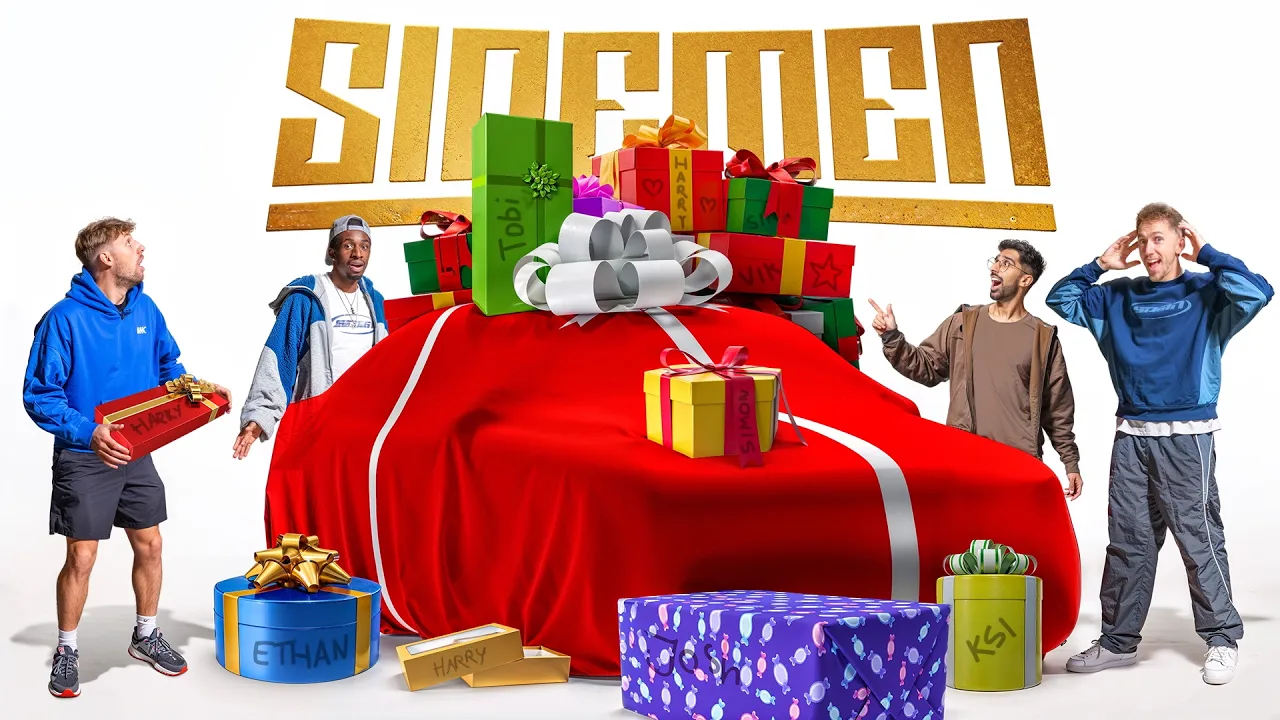
Sidemen Spend $100,000 on Each Other: FORFEIT EDITION
0 up · 0 down · 0 ratings
Description
Channels and socials
SDMN Birmingham Store Now Open! Ground Floor, Bullring Shopping Centre, Birmingham B5 4BU Vikkstar & Retrovision - Have It All : Order food NOW at: eatsides.com : Access exclusive content at: sideplus.com : XIX Vodka: xixvodka.com : Hit Send: hit-send.com : Subscribe to our Reacts Channel: youtube.com
: Sidemen Clothing: sidemenclothing.com Subscribe to our 2nd Channel: youtube.com : Sidemen Instagram: @Sidemen : Sidemen Twitter: twitter.com : SUBMIT A #SidemenSunday IDEA HERE forms.gle ----------------------------------------------------------------------------------------------------------------------- SIDEMEN JOSH (Zerkaa)
● @Zerkaa
● @KSI
Sidemen Spend $100,000 on Each Other: FORFEIT EDITION is a multi-round gift exchange built around a fixed budget and a creative forfeit mechanic. The video opens by laying out the premise: each Sidemen member has £11,000 to spend on someone else, with the goal of assembling a curated set of gifts that balance thoughtfulness and novelty. The absence of strict spending rules means players strategize around personal connections, tastes, and the potential to influence the final standing. The early banter focuses on who might produce the best or worst gifts, and who can more successfully anticipate each other’s interests. Across the opening segment, the organizers emphasize that the order and ranking of gifts will determine not only who is the best gift-giver but also who faces the forfeit and what they might lose or gain through the round. When the first gifts are opened, the crew discusses potential favorites and worst-case picks. A central thread is the difficulty of buying for Vik and JJ, both described as high-value targets with eclectic tastes. A structured approach is used: Josh maps out interests via a spreadsheet to guide gift selection, while others rely on instinct and perceived personality. The dialogue highlights competing strategies, with some players prioritizing practicality (for example a fitness-related device) and others pursuing bold, personal statements (such as saluting a shared memory or hobby). The dynamic is reinforced by the group’s banter about which gifts feel expensive versus meaningful, and how misfires would reflect on the giver’s care and knowledge of the recipient. As the gifts accumulate, the first wave of items reveals a blend of tech, memorabilia, and humorous curios. A 4K laser projector and a ProForm fitness mirror illustrate the range of purchases, while a sealed blue Eyes White Dragon box from Yu-Gi-Oh signals a deep cut into niche tastes. A running joke emerges around the “sausage monster” and a snail sculpture, both of which spark astonishment and laughter as the recipients react to the scale and oddity of the items. The presenters debate the value of high-ticket items versus sentimental or utility-focused gifts, situating each gift within the broader ranking system tied to forfeit and end-of-game rewards. The forfeit mechanics begin to reshape the competition as the sixth-ranked gift triggers a consequence. The first notable forfeit involves a henna tattoo promoting a Sidemen product, a playful yet public punishment that nods to marketing and self-promotion in the group. The first rounds also introduce a mini-dramatic arc around who earns which position, with commentary about who is exceeding expectations and who is merely “showing up” to the challenge. Throughout, contestants weigh the risk of getting outshined by a more extravagant or personal gift against the risk of disappointing a friend with a generic or ill-fitting item. The tension builds as the group negotiates who will steal from whom and how much of the budget remains allocated to future surprises. Mid-video, the scope expands with a mix of surprising and highly sentimental picks. A Gumball 3000 limited edition skateboard deck and a signed Goku drawing bring a pop-culture energy, while a high-end microphone and a Wayne Rooney memorabilia item add a sports-nerd and music-enthusiast flavor to the lineup. The reveals underscore a running theme: gifts that reflect a recipient’s hobbies or public persona tend to win favor, while more outlandish items invite humor, skepticism, or outright disbelief. The group’s reactions pivot on the balance of utility, prestige, and personal meaning, demonstrating how a well-placed present can dominate a round even when it arrives wrapped in whimsy. As the rounds proceed, the team tunes into a social-media-friendly strategy: some players lean into notable public figures or iconic brands, while others double down on deeply personal tokens meant to signal friendship or shared experiences. A luxury Prada jacket, a travel kit, and a cat tree illustrate the spectrum of purchases from fashion-forward to practical to comedic. The reactions to each item reveal a mix of admiration, mock outrage, and affectionate teasing, which in turn feeds into the comparison framework that decides the final order and who must suffer a forfeit. The session also shows how the group’s inside jokes and history with each other color every reveal, reinforcing the sense that this is more than a straightforward shopping challenge. The entertainment escalates as the forfeit rounds introduce increasingly bold punishments and playful consequences. A giant chicken costume, a goat in a ceremonial role, and a spicy sequence of dares push the participants to embrace performance as part of the game. The narrative builds toward dramatic moments of “steal or be stolen” where players assert their last-ditch strategy to recover or protect a gift. A recurring thread is the tension between generosity and mischief, with players debating whether a steal is a selfless gesture or a prank at a friend’s expense. The goats and other prop-forfeits serve as visual humor that keeps the energy high while still anchoring the stakes around gifts and budgets. The emotional and competitive peak arrives as the most coveted items surface and the forfeit calculus shifts. A signed championship memorabilia piece and a high-end gaming setup become viral moments that testers describe as memorable and meaningful. Viewers witness a mix of heartwarming gratitude (notably the donation element) and comic chaos (such as the goat and the cat tree being fought over or misused). The final stages weave together the threads of strategy, friendship, and showmanship that define Sidemen Sundays, delivering a long-form, sketched portrait of how the group negotiates money, taste, and affection under a time-limited, high-stakes framework. The closing segments provide a reflective capstone as the last rounds lock in the rankings and the remaining reveals unfold. The Snail gift, a controversial personal choice, becomes a focal point for discussion about what makes a gift truly meaningful, with commentary about recipient preferences and the giver’s intent. The episode culminates in the ceremonial reveal and a spontaneous debrief on who deserved the top spot, who stole the show, and what each participant learned about gift-giving under pressure. The video ends with gratitude for the audience, a tease for exclusive content on Sidemen Plus, and a reminder of the community-centric ethos that drives these collaborative spectacles. Overall, FORFEIT EDITION blends generosity, humor, spectacle, and friendship into a cohesive, high-energy celebration of Sidemen camaraderie and entertainment value.
Topics · entertainment · reality_show · comedy · people_and_brelationships · live_events · brand_partnerships · sports_and_games
Questions answered
- What is the core premise of the video
- Each Sideman has £11,000 to spend on others, gifts are ranked, and the sixth gift incurs a forfeit.
- Which gift caused a major reaction
- The snail gift drew a lot of attention and debate about who bought it and its value.
- What charitable element is included
- A donation of £3,333 from Harry was made to the Teenage Cancer Trust.
- Who is praised for generosity
- Vik is frequently praised for his thoughtful gifts and for spending a large portion of the budget on others.