How Apple Silicon Compares... - Part 1
0 up · 0 down · 0 ratings
Promos
Visit squarespace.com and use code macaddress to get 10% off Now that there are games running natively on Metal and Apple Silicon, we can finally see how Apple Silicon Macs game at their full potential. And so Jonathan asked LTT Labs to help him test that, only to get more than he bargained for. Buy an Apple 16" M3 Max MacBook Pro: geni.us Buy an Apple M2 Mac Mini: geni.us Buy an AMD Ryzen 7 5800X3D CPU: lmg.gg (Canada: lmg.gg ) Buy an AMD Ryzen 7 5800X CPU: geni.us Buy an AMD Ryzen 7 5700X CPU: geni.us Buy an AMD Ryzen 5 5600G CPU: geni.us Purchases made through some store links may provide some compensation to Linus Media Group. Purchases made through some store links may provide some compensation to Linus Media Group. ► GET MERCH: lttstore.com ► GET EXCLUSIVE CONTENT ON FLOATPLANE: lmg.gg ► SPONSORS, AFFILIATES, AND PARTNERS: lmg.gg FOLLOW US ELSEWHERE --------------------------------------------------- Twitter: twitter.com Instagram: @macaddressyt Facebook: @MacAddressChannel
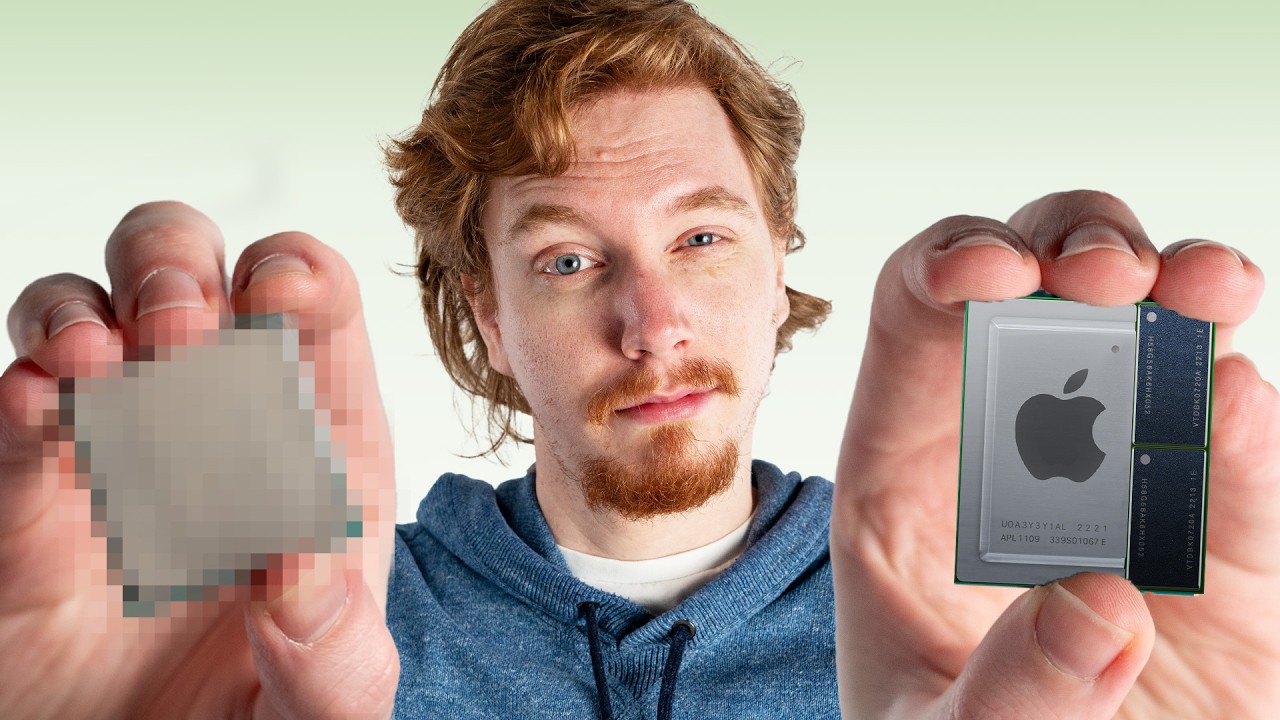
The video begins with an acknowledgment of the long-standing challenge in comparing Apple Silicon to PC hardware, particularly for gaming, due to distinct architectures and a lack of native cross-platform titles. The host explains that Boulder's Gate 3 now runs natively on Apple Silicon, signaling that the landscape has shifted enough to start meaningful comparisons with PC GPUs and CPUs. With the help of LTT Labs, the team outlines a plan to build test benches and measure Apple Silicon against desktop CPUs and GPUs, while intentionally avoiding translation layers like Rosetta to minimize variables. The discussion then shifts to the scope of testing, including the constraints of selecting CPUs that can fairly match Apple Silicon, and the decision to focus on desktop components with AM4 as the base platform for AMD comparisons. The video also introduces the seven tests chosen from the Fonic test framework, designed to cover compression, encoding, and pure computation, and explains that results will be presented in Part 1 along with the test setup, while Part 2 will extend the comparison to GPUs from Nvidia and AMD. Overall, the narrative emphasizes a methodical, data-driven approach to understand how Apple Silicon stacks up in gaming-centric workloads, with the results framed as a learning journey rather than definitive conclusions. The narrative then delves into the test setup and the people behind it. Nicholas Harris, LTT Lab software developer, and test technician John Duran are introduced as the minds crafting the testing strategy to run on both Apple Silicon and PC hardware. The goal is to identify benchmarks that can run natively on both platforms, thereby isolating CPU performance as much as possible. The team discusses the logistical challenges of CPU selection, noting that there are roughly 150 desktop CPUs available and that matching to Apple Silicon across generations is not straightforward. They explain their rationale for keeping AM4 as the AMD platform and briefly mention exploring Intel alternatives but ultimately prioritizing apples-to-apples comparisons where possible. A candid aside reveals the reality of experimentation: the process is iterative, with tests being added or dropped based on compatibility and relevance to the goals. The video then shifts to the actual testing flow and some early observations. Cinebench is used as a standard CPU benchmark due to its native support across Apple Silicon and Windows. The single-core results highlight the strength of the latest Apple cores, while multi-core performance shows the M2 Ultra leading the field when all cores are in play. A separate flac encoding test demonstrates how Apple Silicon generally leads in certain workloads, though some compression tests show variability depending on the specific algorithm. The team shares that testing is like assembling a puzzle, with each result helping to reveal the larger picture of how these architectures compare under realistic gaming-oriented loads. The discussion also covers Blender, Cay, LibRaw, and Prime CV tests, noting how mid-range AMDs can offer a transition between M2/M3 series performance and older architectures, while highlighting that single-core performance remains a strong suit for Apple silicon. In closing, the host reflects on the journey and the lessons learned, acknowledging that the process is ongoing and that there is always more to test. The upcoming phase will bring GPU comparisons to see how Nvidia and AMD GPUs align with the Apple Silicon results. The video ends with a personal note about the practical impact of the project, including the host’s experience using a MacBook Air during the process and a tease to check out other related content. The overall tone is exploratory and methodical, with a clear emphasis on building a robust, apples-to-apples benchmarking framework to understand where Apple Silicon stands in the broader hardware landscape.
Topics · technology · hardware_comparison · gaming_performance · apple_silicon
Questions answered
- Do Apple Silicon Macs run games natively, and how does that affect benchmarking relevance?
- Yes, the video demonstrates native gaming on Apple Silicon, such as Boulder's Gate 3, which supports native Apple Silicon and Metal, enabling more apples-to-apples comparisons with PC hardware.
- What benchmarks and tests are used in Part 1, and why were they chosen?
- The tests include Cinebench for CPU performance, flac encoding, XZ and LZ4 compression, Blender rendering, Cay, LibRaw, and Prime CV. They were selected for cross-platform native compatibility and to cover a range of compute, encoding, and rendering workloads relevant to gaming-oriented performance.