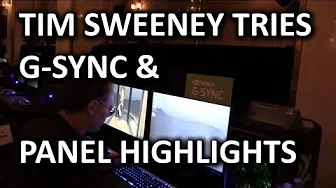
NVIDIA Conference Vlog Part 2.2 -The Way It's Meant To Be Played 2013
0 up · 0 down · 0 ratings
Channels and socials
Link to part 1: youtu.be This video contains some one-on-one time with John Carmack (ID Software & Oculus) and Tim Sweeney (EPIC & Unreal Engine), as well as what I would consider to be the highlights of the panel segment Pricing & availability: NONE YET! Join our community forum: bit.ly twitter.com @LinusTech Intro Screen Music Credit: Adhesive Wombat -
Check out his channel here: youtube.com Outtro Screen Music Credit: Approaching Nirvana - Sugar High youtube.com
NVIDIA Conference Vlog Part 2.2 explores the practical and experiential impact of G-Sync and high refresh technologies through the lenses of LinusTechTips, John Carmack, and Tim Sweeney. The video opens by laying out the core idea behind G-Sync: removing fixed time slices and tearing by aligning the display's refresh with the GPU’s frame output. The discussion delves into how this technology preserves smoothness across a wide range of frame rates, from 20 to 80 fps, turning near misses into imperceptible delays. Viewers are walked through the visual consequences of persistence on LCDs, and how low persistence modes can dramatically improve perceived clarity in scrolling text and fast-paced scenes. The conversation also touches on the historical differences between CRT persistence and modern displays, and how adaptive illumination can minimize motion blur while preserving image fidelity. As the dialogue shifts to broader adoption, the panel imagines G-Sync-like benefits across handheld devices, televisions, and VR ecosystems, emphasizing the potential for Oculus and other platforms to benefit from high, consistent frame rates. The interview with Tim Sweeney highlights the trade-offs developers face between visual detail and stable frame rates, explaining how G-Sync enables more aggressive visuals without sacrificing smoothness. The participants also discuss industry-wide adoption, hardware coupling, and the future of cross-vendor collaboration to bring low persistence and variable refresh technologies to a wider audience. The vlog wraps with reflections on the practicality of wiring in such features, a candid acknowledgment of the evolving display landscape, and a sense of optimism that the coming years could see widespread improvements in both PC monitors and consumer electronics. Overall, the video blends technical depth with candid demo moments, offering a tangible sense of how high-end display tech translates into everyday gaming experiences and future possibilities.
Topics · technology · gaming · hardware · virtual_reality
Questions answered
- What is the core benefit of G-Sync as explained in the video?
- G-Sync aligns the display refresh rate with the GPU output to remove tearing and minimize stutter, delivering smoothness across a wide range of frame rates.
- Why is low persistence important for readability and motion clarity?
- Low persistence reduces the time a pixel remains illuminated, decreasing motion blur and improving readability during fast pans or scrolling.
- How does G-Sync interact with different target frame rates in games?
- G-Sync provides imperceptible delays when frames are missed and can maintain smooth playback from low to high frame rates, improving perceived fluidity.
- What challenges or future expectations are discussed for wider adoption?
- The panel anticipates adoption across monitors, TVs, handhelds, and VR, with collaboration between GPU manufacturers and display vendors to integrate the technology broadly.
- What are the potential benefits for developers and games according to the interview?
- Developers can push for higher visual fidelity without strictly targeting a fixed frame rate, enabling smoother experiences even as frame times vary.