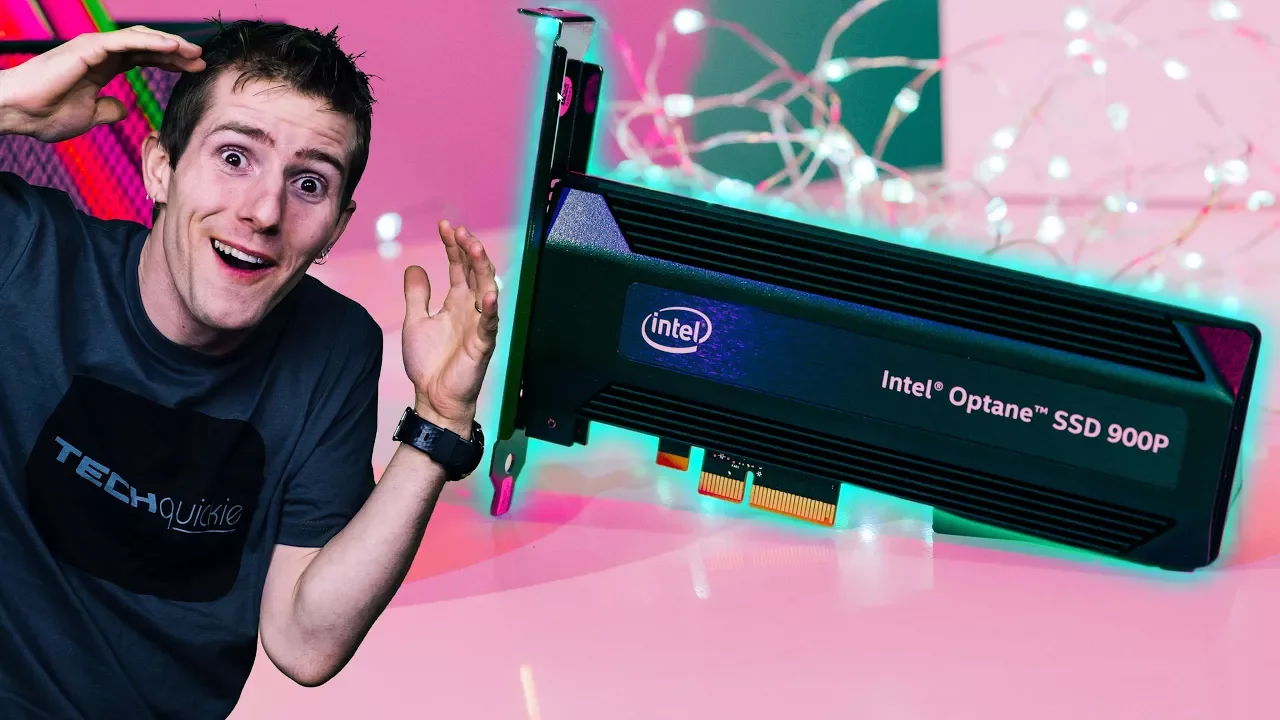
The fastest SSD for gaming, and one big problem..
0 up · 0 down · 0 ratings
Description
Intel Optane promises theoretical latencies up to 1,000x lower than NAND. Could it possibly live up to such a lofty claim? Try Tunnelbear for free, no credit card required, at tunnelbear.com
Promos
Check out bequiet's Dark Base 700: geni.us Buy an Optane 900p on Amazon: geni.us (280GB) geni.us (480GB) Buy an Optane 900p on Newegg: geni.us (280GB) geni.us (480GB) Discuss on the forum: linustechtips.com Our Affiliates, Referral Programs, and Sponsors: linustechtips.com Linus Tech Tips merchandise at designbyhumans.com Linus Tech Tips posters at crowdmade.com Our production gear: geni.us Twitter - twitter.com Facebook - @LinusTech Instagram - @linustech Twitch - twitch.tv Intro Screen Music Credit: Title: Laszlo - Supernova Video Link: youtube.com iTunes Download Link: itunes.apple.com Artist Link: soundcloud.com Outro Screen Music Credit: Approaching Nirvana - Sugar High youtube.com Sound effects provided by freesfx.co.uk Special Music Tracks Credit: Warner Chappell's 2017 library disco edition
The video investigates Intel Optane, focusing on its real world performance versus traditional NAND NAND-based SSDs. The host explains Optane's architecture, including its four-lane PCIe 3.0 card design and purpose-built heatsink and onboard processor, emphasizing that this storage solution is engineered for ultra low latency and high endurance, which are marketed as transformative advantages over conventional NAND flash. The analysis then moves into hands-on testing on a dedicated X299 platform, using CrystalDiskMark and real-world workloads to compare Optane with other drives. While Optane demonstrates notably lower latency and stronger 4K random performance, the overall gaming and content creation tests reveal that the practical, perceptible benefits for typical users are modest, especially when considering price and capacity constraints. The reviewer ultimately concludes that for the average gamer or casual user the performance delta may not justify the cost, while highlighting scenarios where Optane’s capabilities could shine, such as virtualization, large RAM overflows, and professional workloads that demand sustained low latency and high endurance. The video closes with pragmatic guidance: invest in Optane only if you have workloads that will truly benefit from its unique strengths, otherwise a fast traditional NVMe SSD is likely the better value choice. The host also touches on potential software optimization and the broader context of why Optane has not become a universal standard, including market and ecosystem considerations. The overall takeaway is nuanced: Optane offers remarkable technical capabilities, but for most users the practical gains are limited relative to cost, except in specialized use cases where its advantages can be leveraged.
Topics · science and technology · hardware
Questions answered
- How does Optane's latency compare to NAND flash in practical terms?
- Optane aims for latency up to a thousand times lower than traditional NAND flash, translating to faster responsiveness in certain workloads.
- Is Optane worth the extra cost for a typical gamer or general user?
- For most users, especially gamers, the cost is not justified since the perceptible gains over a fast NVMe SSD are limited; only niche workloads may benefit meaningfully.
- What scenarios show potential benefits of Optane beyond gaming?
- Heavy multi-VM environments, large RAM overflows, and professional workloads that require sustained low latency and high endurance can leverage Optane’s strengths.