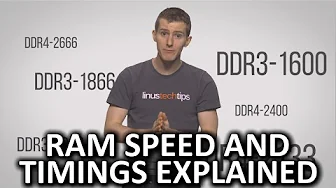
RAM Speed and Timings As Fast As Possible
0 up · 0 down · 0 ratings
Description
How do you interpret the speed and timing specs on RAM kits, and how much does it matter for your PC? TunnelBear message: TunnelBear is the easy-to-use VPN app for mobile and desktop. Visit tunnelbear.com to try it free and save 10% when you sign up for unlimited TunnelBear data. Follow: twitter.com Join the community: linustechtips.com
RAM speed and timings are often misunderstood, and this video breaks down the basics by comparing clock speed and latency. It explains that RAM has both a clock rate and timings, usually shown as a set of numbers like 999 24, which denote latency in clock cycles and how long the memory takes to respond to requests. The presenter notes that shorter timings generally mean faster performance, but real-world gains from faster RAM are often small because modern systems and software can already saturate available memory bandwidth. He also covers practical advice such as overclocking RAM, voltage considerations, and when faster memory actually makes a noticeable difference. The discussion then moves to real-world scenarios, like how RAM affects integrated graphics on APUs and virtualization workloads where large memory bandwidth can significantly help. A key takeaway is that for most users, spending on high-end RAM beyond a reasonable speed commonly yields diminishing returns, and other components or quality memory with a solid warranty might be a smarter choice. The video closes with practical tips on avoiding flaky memory and emphasizes focusing on reliability and compatibility, rather than chasing the fastest possible timings. Finally, the host briefly plugs TunnelBear as a lightweight ad segment and encourages trying it for free, a reminder of the channel’s typical balance between ad content and technical discussion.
Topics · technology · computer-hardware · memory
Questions answered
- What do the RAM timing values (for example 999 24) actually represent?
- The numbers represent latency measured in clock cycles, indicating how many cycles it takes for RAM to respond to a request. Shorter timings mean lower latency and potentially faster memory access, though real-world gains depend on the overall system and workload.
- Is faster RAM always worth the money for gaming or everyday tasks?
- Not necessarily. In most cases, higher RAM speed yields only small performance gains for typical software and games. The primary benefits show up in specialized scenarios like virtualization or certain workloads where memory bandwidth is heavily utilized.