Tech of the Year: Tablets!
0 up · 0 down · 0 ratings
Channels and socials
Pixel C. iPad Pro. Surface Pro 4. What do these 3 have in common? Other Tech of the Year: bit.ly Ars Technica on Pixel C: goo.gl Video Gear I use: amzn.com Intro Track: Jolly Holiday (Instrumental) by Marmoset ~ twitter.com google.com @MarquesBrownlee @MKBHD @MKBHD
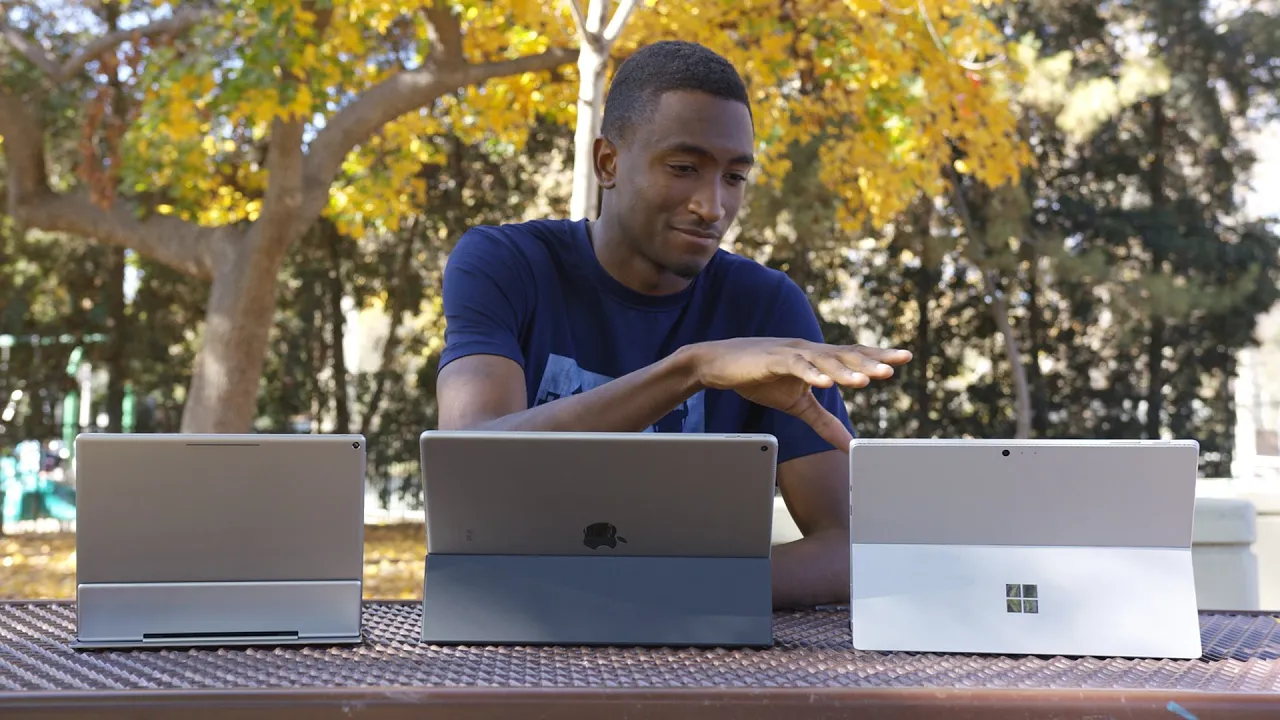
Tech of the Year: Tablets! examines three high-profile tablets from 2015 that all want to be laptops. The video begins by setting up the central question: what do Google's Pixel C, Apple's iPad Pro, and Microsoft's Surface Pro 4 have in common, and where do they diverge in approaching laptop functionality? Marques Brownlee highlights how each device pairs a tablet form factor with a keyboard accessory, and he notes the design emphasis on premium build quality, strong speaker performance, and high-resolution displays. The Pixel C is praised for its solid unibody metal build, 10-inch 2560 by 1800 display, and loud stereo speakers, but it is criticized for an awkward keyboard dock and the perception that Android apps on a tablet are not yet fully optimized for desktop-like use. Brownlee also discusses the unique magnetic keyboard attachment of the Pixel C, including the additional battery in the keyboard that wires charges the tablet, while pointing out the absence of Android-centric shortcut keys and the reliance on Google search. Transitioning to the iPad Pro, the reviewer emphasizes its large 12.9-inch 2.7K display, exceptional performance with the A9X, and the strong ecosystem of iPad-specific apps. The Apple Pencil is recognized as a strong accessory for drawing and note-taking, but the keyboard dock is again a compromise in terms of physical laptop-like travel and the overall computer experience. Finally, the Surface Pro 4 is presented as the closest to a traditional laptop, featuring a 12.3-inch high-resolution display, a full Windows 10 environment, and a keyboard with a trackpad and backlit keys. The inclusion of a powerful keyboard/trackpad combination makes it excellent for productivity tasks, while its tablet experience falls short in terms of touch-centric usability. In closing, Brownlee reiterates that all three devices are attempting to innovate beyond pure tablets, but none fully replaces a laptop yet, highlighting the ongoing tension between portability and the full desktop experience. The video wraps with a nod to related Tech of the Year roundups and credits other hosts who contribute to the broader series.
Topics · technology · gadgets · tablets · laptops · consumer_electronics · software · hardware
Questions answered
- Which tablet is presented as closest to a traditional laptop, and why?
- The Surface Pro 4 is presented as closest to a traditional laptop because it offers a full Windows 10 environment, a powerful keyboard with a trackpad, backlit keys, and the ability to run desktop applications, making it feel like a complete laptop when docked with its keyboard.
- What are the main drawbacks of the Pixel C according to the video?
- The Pixel C has a strong build and good display but suffers from an awkward keyboard attachment, lack of Android-specific shortcuts, and the sense that Android on tablets still lacks full desktop-like app maturity.
- What is highlighted as a major advantage of the iPad Pro, apart from its display and performance?
- Apart from its display and performance, the iPad Pro is noted for its strong ecosystem of iPad-optimized apps and the Apple Pencil, which is considered a high-quality stylus option for drawing and note-taking.