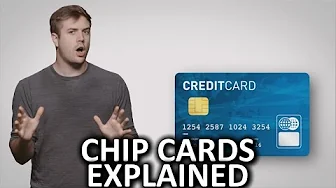
How do Chip Cards Work?
0 up · 0 down · 0 ratings
Promos
EMV chip cards are touted as being safer than old-school magnetic stripe cards - but are they really? And how do they work, anyway? Squarespace link: Visit squarespace.com and use offer code TECHQUICKIE to save 10% off your first order. Follow: twitter.com Join the community: linustechtips.com License for image used: creativecommons.org
The video explains why magnetic stripe cards are being phased out in favor of EMV chip technology and what makes EMV cards more secure. It begins by contrasting magnetic stripes, which store unencrypted data such as card numbers and expiration dates, with the chip approach that adds a layer of cryptographic protection. The presenter describes how card skimming at ATMs or gas stations can steal data from mag stripes, leading to fraud and even large-scale breaches like the Target incident. He then details how EMV works in practice: when a chip card is inserted, the reader and terminal generate and exchange cryptographically protected data, with a one-time transaction code that authorizes payments even if the reader cannot contact the card issuer. A PIN requirement is highlighted as an additional barrier, turning a potential cloning risk into a more controlled verification process. The host acknowledges that EMV is not foolproof and discusses issues such as backward compatibility with mag stripes and the ongoing arms race between security improvements and criminals. The segment concludes with practical guidance on staying safe, recognizing the benefits of EMV over mag stripes, and noting future possibilities like biometric solutions while maintaining vigilance at suspicious merchants. Overall, the video frames EMV as a meaningful improvement for consumer security, while also underscoring that single technologies cannot completely eliminate fraud. It blends technical explanations with humorous asides and real-world examples to make the topic approachable for a general audience, positioning EMV as part of a broader evolution in payment security rather than a cure-all.
Topics · technology · cybersecurity · finance · payments · cryptography · consumer_electronics
Questions answered
- What makes EMV chip cards more secure than magnetic stripe cards?
- EMV chip cards generate a unique, one-time transaction code for each payment, which can be decrypted and verified by the terminal, and often require a PIN for authorization, making it harder for attackers to reuse stolen data or clone cards.
- Can magnetic stripes still be used after EMV adoption, and why?
- Yes, many cards retain a magnetic stripe for backward compatibility, but those stripes remain vulnerable to traditional skimming and data theft, so the chip with dynamic data offers better protection even if the mag stripe is present.