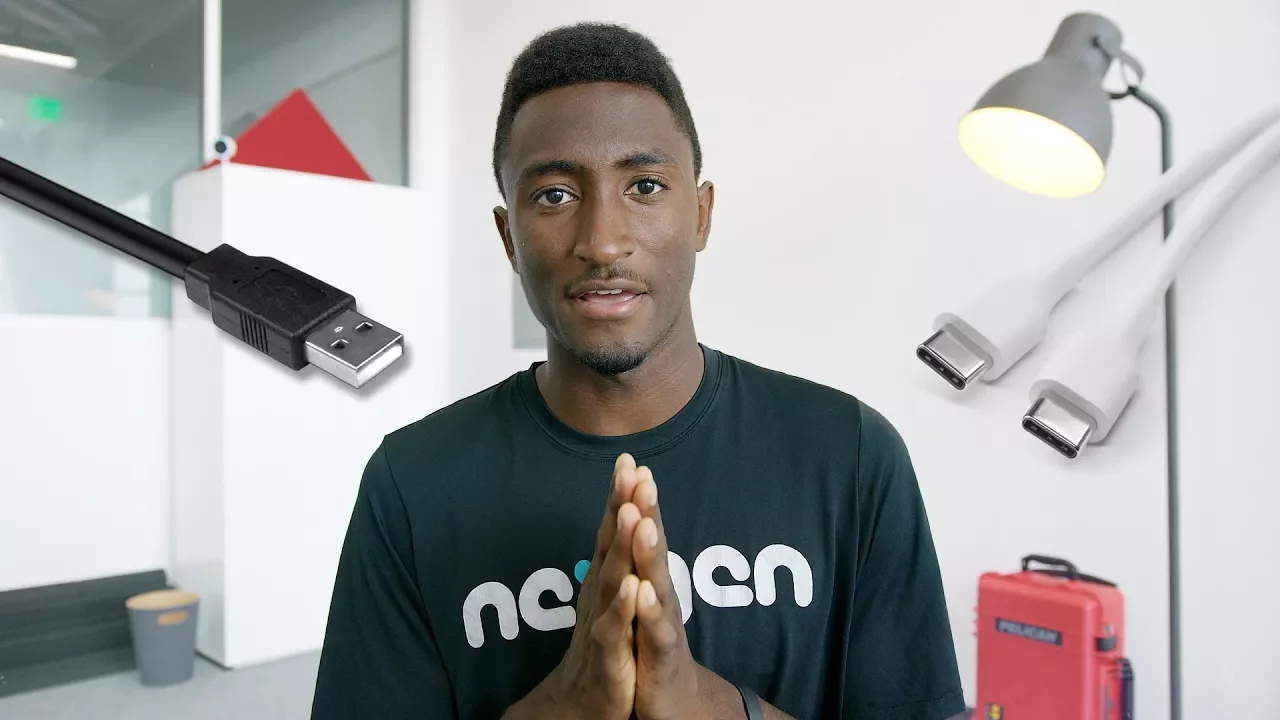
USB-C All The Things! (Pt 2)
0 up · 0 down · 0 ratings
Channels and socials
Dear manufacturers: We can't USB-C all the things without your help. Part 1: youtu.be Logitech MX Master 2S: amzn.to Samsung T5 SSD: amzn.to Video Gear I use: kit.com ~ twitter.com snapchat.com google.com @MKBHD @MKBHD
USB-C All The Things! Part 2 continues the conversation from part one by directing the message at electronics manufacturers. The host argues that 2017 is the tipping point to aggressively adopt USB-C across products to minimize user confusion and compatibility headaches. He highlights Apple as an example, noting that replacing all full-size USB A ports with USB-C on new MacBooks dramatically reduces the mental hurdle of why a new port exists. Samsung smartphones are another example, having shifted to USB-C across their lineup and illustrating how competition drives faster adoption. The discussion also points to accessory and peripheral updates, such as portable SSDs like the Samsung T5 that ship with both USB-C to USB-C cables and USB-C to USB-A cables to bridge current and future ecosystems. Throughout, the speaker emphasizes that USB-C and USB 3.1 offer tangible benefits for speed, future-proofing, and a streamlined user experience, especially for devices like mice, cameras, keyboards, and similar peripherals. The overall tone is a call to action for manufacturers to push forward with USB-C now, while noting that the market will still include older ports for a transitional period but should trend toward universal USB-C support as quickly as possible.
Topics · technology · hardware · usb-c · gadgets
Questions answered
- Why should manufacturers aggressively adopt USB-C across devices and accessories?
- Adopting USB-C reduces user confusion by standardizing ports and capabilities, enables future-proofing with faster data transfer and charging (USB 3.1 and Power Delivery), and simplifies ecosystems for users who want a single cable to charge and connect multiple devices.
- Which real-world examples demonstrate progress toward USB-C dominance?
- Apple has moved to USB-C across newer MacBooks, Samsung has standardized USB-C across smartphones, and portable SSDs like the Samsung T5 provide USB-C to USB-C and USB-C to USB-A cables to bridge current and future devices.
- What is a practical approach for charging compatibility when moving to USB-C?
- Ensure charging works over USB-C with USB Power Delivery across multiple devices and chargers, avoid ports that only provide charging, and provide or support cables and adapters that maintain compatibility with existing chargers and devices.