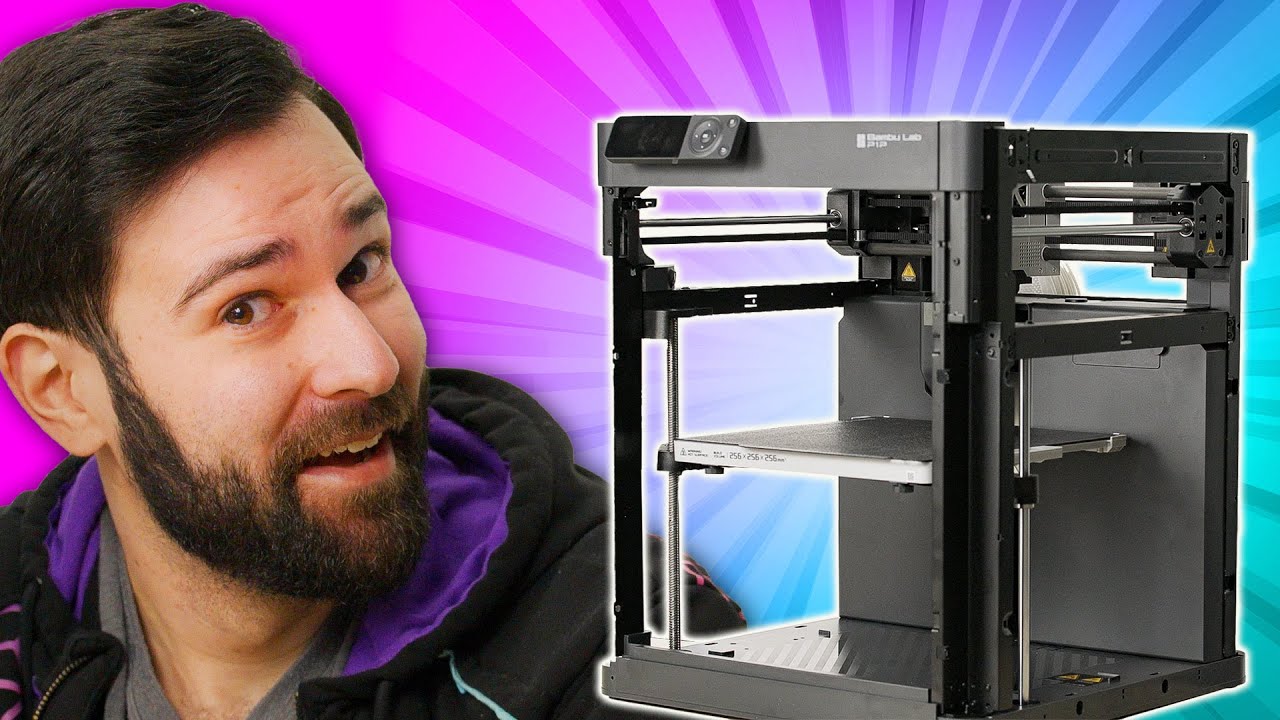
I wish this wasn't sponsored (because it's so good) - Bambu Lab P1P
0 up · 0 down · 0 ratings
Description
Thanks to Bambu Lab for sponsoring this video!
Promos
Check out their P1P printer at lmg.gg 3D printing can seem complicated, but Bambu Lab's new P1P printer seems to take the extra frills and complications out of the P1P while keeping the raw power needed to get work done. Dan is here to take a look at the P1P to see if it lives up to the hype or if you're better off with something like the X1-Carbon. Want us to unbox something? Make a suggestion at lmg.gg ► GET MERCH: lttstore.com ► LTX 2023 TICKETS AVAILABLE NOW: lmg.gg ► GET EXCLUSIVE CONTENT ON FLOATPLANE: lmg.gg ► SPONSORS, AFFILIATES, AND PARTNERS: lmg.gg ► PRODUCTS WE USE ON THE SHORTCIRCUIT SET: lmg.gg FOLLOW US ELSEWHERE --------------------------------------------------- Twitter: twitter.com Instagram: @shortcircuityt TikTok: @linustech Facebook: @ShortCircuitYT CHAPTERS --------------------------------------------------- 0:00 So fancy 0:18 Unboxing and printer tour 3:15 Set up and calibration 7:43 Prepping software to print 10:26 Extra goodies/features 12:29 Pre-print process 13:38 Printing! 17:37 Checking our print 18:36 Overall thoughts 19:29 Outro
The video opens with an introduction to a new consumer 3D printer, the Bambu Lab P1P, positioned as a stripped down, more affordable variant of the X1 series. The host walks through what arrives in the box, highlighting the lack of side panels and the skeletonized design that keeps costs down while maintaining core performance. He emphasizes the included spare parts, a non-touch screen, and the modular nature that lets users upgrade panels and accessories later. The unboxing segues into a tour of the printer’s motion system, belt-driven XY gantry, and the proprietary hot end, noting both the openness of many components in the software and the proprietary nature of some hardware elements. He also discusses the initial setup hurdles, including app setup, account binding, and a quick homing and vibration calibration sequence that demonstrates the printer’s recovery from the first power-on hiccups. The host explains the vibration compensation features, bed leveling logic, and the camera/LED upgrades that come with the pre-release package, setting expectations for performance and potential firmware tweaks. He then moves into the software ecosystem, comparing Bambu Studio to PrusaSlicer, showing how G-code and start scripts can be customized, and detailing the printer’s high-speed capabilities and the practical limits set by filament melt rate, not just mechanical speed. Finally, the host performs a full-speed test print, comments on print quality versus speed, and closes with a candid note on sponsorship, integrity, and the potential impact of this product on the broader 3D printing market. Throughout the long-form evaluation, the video balances detailed, step-by-step demonstrations with critical commentary. Concrete demonstrations cover bed preparation, material handling with the AMS, RFID-tagged spools, and the automatic filament cutter that keeps prints clean. The host assesses the machine’s ability to print at high speeds, the effect of various modes including sport and Ludacris, and how the printer manages heat, vibration, and layer consistency during rapid moves. Real-world measurements, such as the 19-minute print estimate with the default configuration and the comparison against high-end competitors, ground the discussion in practicality. The closing thoughts reflect a strong positive stance on the P1P’s potential to reshape expectations in the space, tempered by notes on areas for software and firmware refinement that could further enhance usability. The sponsor disclosure is handled transparently, with the host acknowledging the sponsorship while asserting the product’s genuine strengths, making a case for how this unit could become a baseline reference in future 3D printer development. The second half of the video delves into nuanced performance aspects, including the impact of hot-end design on print continuity, the practicalities of reseating and re-leveling, and the open-source elements surrounding Bambu Studio while recognizing the proprietary spool-tag ecosystem for the AMS. The host notes that even with sponsorship, the P1P’s combination of speed, stability, and automation stands out in its price bracket, and he articulates potential improvements like extended hot ends and more granular speed control. The final takeaway reinforces the idea that the P1P, with its advanced motion system and thoughtful accessories, represents a significant milestone for the brand and a strong challenge to other manufacturers in the consumer 3D printing space.
Topics · technology · 3d printing · product review
Questions answered
- What makes the Bambu Lab P1P different from the X1 Carbon in terms of design and price?
- The P1P is a stripped down version with no side panels, similar core motion platform to the X1 Carbon, but at about half the price, focusing on essential features while leaving room for future panel and accessory upgrades.
- How is the setup and calibration experience described for new users?
- The video describes a quick initial setup with app pairing, automatic belt tension considerations, and an automatic vibration compensation and bed leveling sequence designed to minimize manual tuning.
- Can the P1P be upgraded or modified by the user?
- Yes, the printer supports interchangeable panels, aftermarket accessories, custom start scripts, and G-code customization, and there is flexibility to modify slicer workflows and startup routines.
- What is the overall verdict on the P1P given its sponsorship?
- The host conveys a strong positive impression, highlighting speed, print quality, and system openness, while acknowledging that some aspects could improve via software/firmware tweaks, and maintains transparency about the sponsorship.