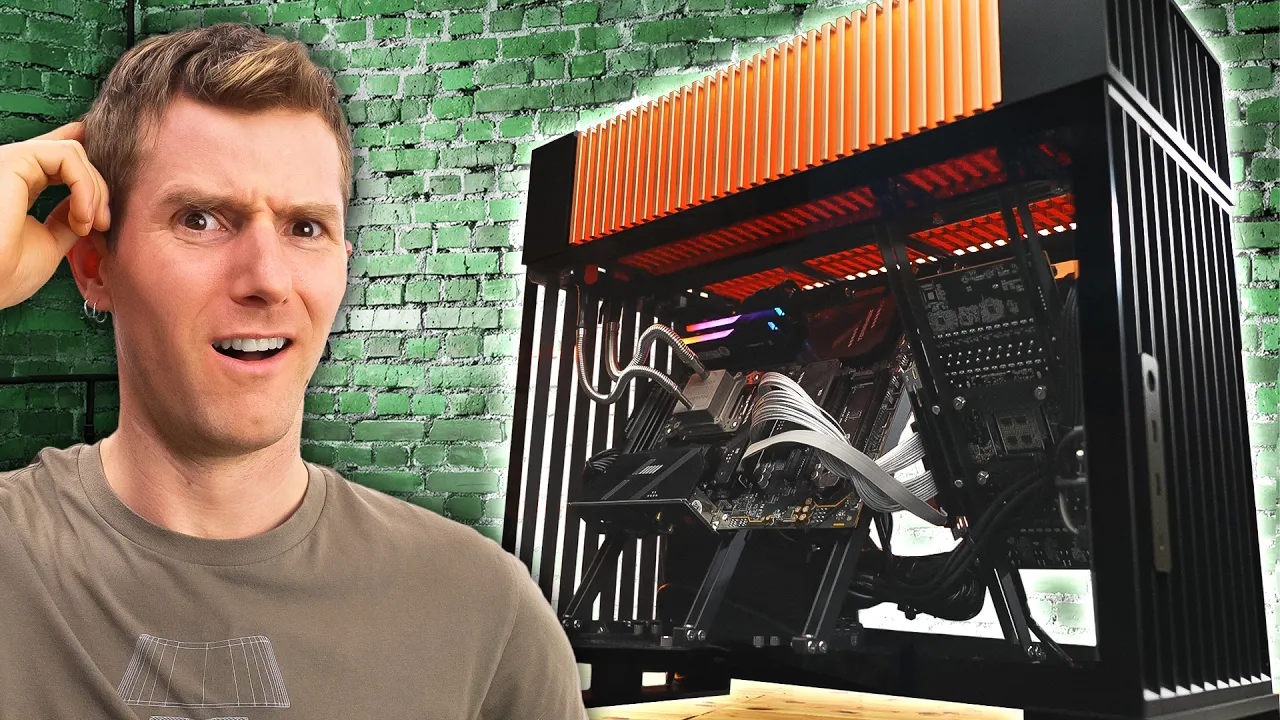
I bought this scam PC case... And it actually arrived
0 up · 0 down · 0 ratings
Description
Check out the Streacom SG10 Fanless PC Case lmg.gg
Promos
Get 20% off DeleteMe US consumer plans when you go to joindeleteme.com and use promo code LTT20 at checkout. DeleteMe International Plans: international.joindeleteme.com Eight years ago we looked at a super cool prototype case… now after everyone involved got scammed they’ve finally delivered the first cases to consumers. Does the Streacom SG10 live up to its hefty price tag? Let's find out! Discuss on the forum: linustechtips.com
Check out the parts from the build: Cooler Master X Silent Edge Platinum 850 Fanless: geni.us Zotac RTX 4090 GPU: geni.us MSI MAG X670E TOMAHAWK WIFI AM5 Motherboard: geni.us AMD Ryzen 9 9900X 12-Core 4.4 GHz CPU: geni.us G.SKILL Trident Z5 Neo 48GB DDR5 8000 RAM: geni.us Thermal Grizzly Kryonaut Thermal Paste: geni.us ► GET OUR MERCH: lttstore.com ► GET EXCLUSIVE CONTENT ON FLOATPLANE: lmg.gg ► GET A VPN: piavpn.com ► SPONSORS, AFFILIATES, AND PARTNERS: lmg.gg Purchases made through some store links may provide some compensation to Linus Media Group. CHAPTERS --------------------------------------------------- 0:00 - Intro 1:40 - Sponsor: DeleteMe 2:02 - What is this thing? 4:30 - Starting the build: quirks and complications 6:50 - Motherboard and CPU cooler mounting 8:50 - GPU cooler mounting 11:02 - Everything is installed! 11:38 - First boot and early impressions 12:50 - Thermal performance and gaming test 14:30 - Demonstrating convection cooling 15:15 - Breaking out the thermal camera 17:19 - Heat soak results 18:00 - Conclusion and price tag 18:45 - Sponsor: DeleteMe 19:44 - Credits
The video opens with a retrospective nod to a Kickstarter prototype from eight years earlier and a candid note about the long wait and the controversy surrounding the project partners Calios and Streacom. The host emphasizes that this is a fanless, completely passive cooling PC case powered by a loop heat pipe and a large copper heat exchanger, with no moving parts and no fans or pumps inside the enclosure. He then immediately acknowledges the case’s weight and the premium price, especially for the copper edition, while also highlighting the ethics concerns that have shadowed the collaboration. The build journey begins with unboxing, mounting a motherboard, and selecting a CPU cooler, revealing the case’s quirks, such as tight tolerances, unusual mounting angles, and the need for careful alignment to avoid interference. As the project progresses, the team tackles mounting a GPU cooler, a process described as exceptionally intricate and highly dependent on the exact GPU model, with a GPU cooler upgrade voucher included for later compatibility. The system is powered with a 850 watt PSU positioned for convection cooling, and while there are obvious challenges, the crew demonstrates that the setup can function with the unconventional cooling approach. The first boot produces RGB lighting and a surprisingly quiet operation, prompting further exploration with a thermal camera to observe how heat is distributed across the CPU, GPU, and memory. Over hours of testing, heat soak behavior is documented, with GPU temps remaining manageable while some components run hotter, but the overall performance remains impressive for a passive cooling design. The discussion turns to long-term viability, cost, and value, with the copper version priced at about $2,000 and the standard version around $1,000, concluding that while the engineering achievement is striking and visually striking, the decision to purchase hinges on whether the user values aesthetics and novelty as much as raw performance. The video ends with a nod to the sponsor and a reminder about privacy and data protection, tying together the spectacle of an ultra-premium, highly specialized PC case with the broader themes of consumer expectations and delayed delivery of Kickstarter-era hardware.
Topics · Technology · Computing · Product reviews · DIY PC builds · Hardware engineering
Questions answered
- What cooling method does the Streacom SG10 use and how does it work without fans?
- It uses a loop heat pipe with a large copper heat exchanger to transfer heat from the CPU and GPU to a passive radiator, relying on convection and phase-change cooling without any fans inside the case.
- How heavy is the copper edition and what is the price range?
- The copper edition weighs about 31 kilograms, and the copper version is around $2,000, while the standard version is about $1,000.
- What were the main build challenges shown in the video?
- Key challenges include carefully mounting the motherboard and CPU cooler at a 45-degree angle for better fluid circulation, mounting a GPU cooler that is highly model-specific, and dealing with the mixed hardware tolerances and the need for multiple tools during assembly.
- Did the system actually run and how did the thermals look during testing?
- Yes, the system powered on with RGB and ran under load. Initial temps showed the GPU staying relatively cooler while some components ran hotter, but overall the temps were workable for a passive cooling design, with heat soak behavior observed over several hours.