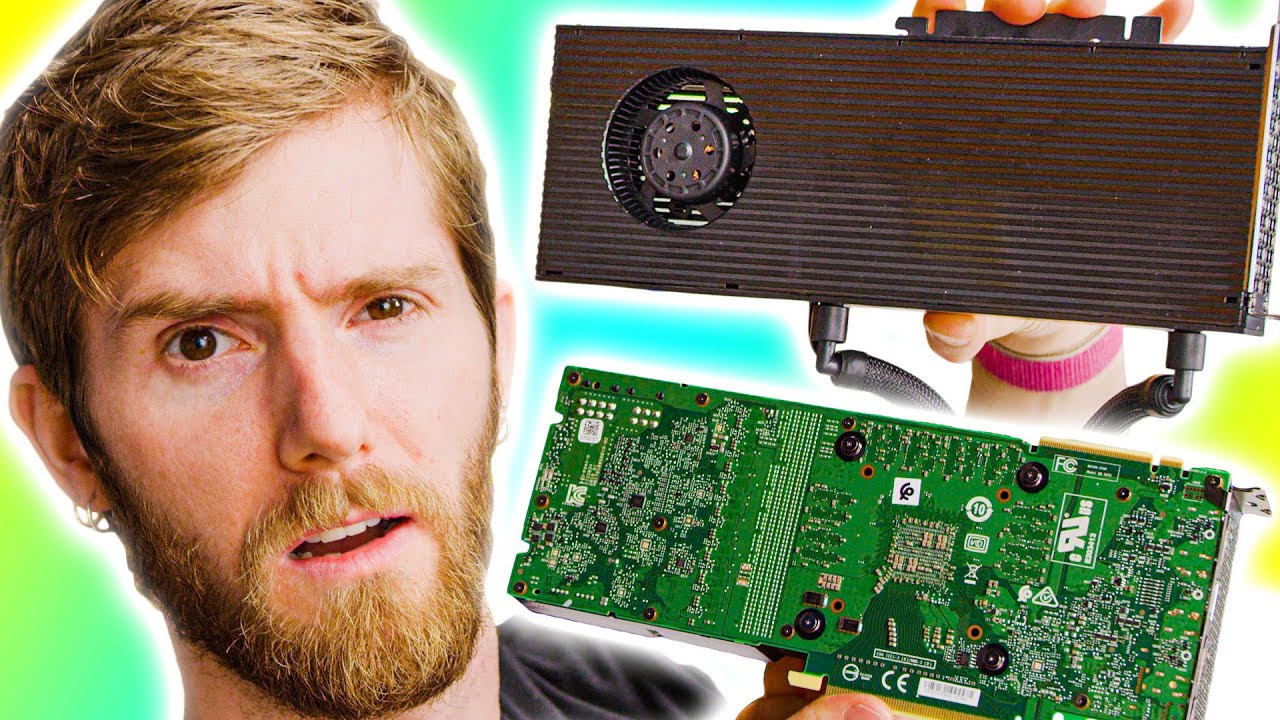
I've Never Seen Anything Like This - Asetek Rad Card
0 up · 0 down · 0 ratings
Description
In the new Alienware Aurora R11 is a GPU cooler like we've never seen before....
Check out the Rad Card: asetek.com
Promos
Check out the Alienware Aurora R11 - geni.us Buy the Alienware Aurora R11 On Amazon (PAID LINK): geni.us On Newegg (PAID LINK): geni.us Purchases made through some store links may provide some compensation to Linus Media Group. Discuss on the forum: linustechtips.com GET MERCH: lttstore.com SUPPORT US ON FLOATPLANE: floatplane.com LTX EXPO: ltxexpo.com AFFILIATES & REFERRALS --------------------------------------------------- Affiliates, Sponsors & Referrals: lmg.gg Get Private Internet Access VPN at lmg.gg Get a Mech Keyboard: geni.us Nerd or Die Stream Overlays & Templates: geni.us NEEDforSEAT Gaming Chairs: geni.us Get a Displate Metal Print at lmg.gg Use code LINUSMEDIAGROUP on Epic Games Store: lmg.gg Get a 30-day free trial of Amazon Prime at lmg.gg Our Gear on Amazon: geni.us FOLLOW US ELSEWHERE --------------------------------------------------- Twitter: twitter.com Facebook: @LinusTech Instagram: @linustech Twitch: twitch.tv FOLLOW OUR OTHER CHANNELS --------------------------------------------------- Techquickie: lmg.gg TechLinked: lmg.gg ShortCircuit: lmg.gg LMG Clips: lmg.gg Channel Super Fun: lmg.gg Carpool Critics: lmg.gg MUSIC CREDIT --------------------------------------------------- Title: Laszlo - Supernova Video Link: youtube.com iTunes Download Link: itunes.apple.com Artist Link: soundcloud.com Outro Screen Music Credit: Approaching Nirvana - Sugar High youtube.com Monitor And Keyboard by vadimmihalkevich / CC BY 4.0 lmg.gg Mechanical RGB Keyboard by BigBrotherECE / CC BY 4.0 lmg.gg Mouse Gamer free Model By Oscar Creativo / CC BY 4.0 lmg.gg
The video kicks off with Linus introducing the Alienware Aurora R11 and its unusual GPU cooling solution, the Asetek Rad Card, highlighting promises of significantly lower noise. We get an initial look at unboxing and exterior design, noting the turbine-like front intake and the large chassis air paths that hint at a compact, cooling-focused build. Linus questions the casing quality and the decision to use a large, modular power supply while teasing the radical GPU cooler inside. The host then begins disassembly to reveal how the Rad Card is integrated, calling attention to the six tiny heat exchangers arranged in series and the unusual internal airflow design intended to keep the hottest air away from the most critical components. Throughout this segment, there is emphasis on the design philosophy: achieve quiet operation and cooling efficiency in a slim Alienware chassis, even if it means unconventional engineering decisions and niche use cases. In the middle portion, the Rad Card is examined in detail, with Linus explaining how Asetek’s concept leverages multiple small exchangers in series and places the radiator outlet at the bottom to prevent trapped air from stalling the pump. The discussion covers the tradeoffs of series cooling, the need for fresh air access at the back, and how this approach fares against traditional radiators in a compact system. He compares the Rad Card’s cooling potential to standard PCIe GPU coolers, noting that while performance may not exceed a traditional radiator in absolute terms, the real advantage lies in enabling effective cooling in restricted spaces where ordinary radiators would struggle. The video also notes the audible differences, suggesting the Rad Card is quieter than typical blower-based GPU coolers, though not completely silent in all scenarios. Viewers are guided through the rationale for adopting this design, framed as a solution tailored to small form factor builds where airflow is a limiting factor. Towards the end, the testing results are presented to quantify the Rad Card’s effectiveness. Linus reports gaming performance at 4K with high frame rates and shares temperature metrics showing a maximum GPU temperature around 69 to 80 degrees depending on test conditions, with clock speeds maintaining solid headroom. The comparison with a traditional air-cooled RTX 2080 Super showcases that the Rad Card can deliver similar performance while keeping temperatures and noise in a more favorable balance for compact cases. They also discuss room temperature sensitivity, noting that performance impact grows as ambient conditions rise, and speculate on scenarios where a blower-based or traditional radiator might still be preferable. The video finishes with price speculation for the Rad Card as an add-on and a nod to prior Linus Tech Tips testing content, inviting viewers to consider whether this niche cooling approach is worth the investment for their build goals.
Topics · technology · hardware · pc_hardware · cooling · gaming_pc · computer_components · review
Questions answered
- What is the Asetek Rad Card and what problem does it solve in compact gaming PCs?
- The Asetek Rad Card is a PCIe GPU cooler designed for small form factor systems. It uses a compact radiator assembly with multiple small heat exchangers to provide effective cooling in tight spaces where traditional GPU radiators struggle, aiming for quiet operation and improved airflow efficiency.
- How does the Rad Card's cooling design manage air bubbles and pump noise?
- The Rad Card places the radiator outlet at the bottom and arranges the internals to trap air away from the pump, reducing bubble-related noise and maintaining pump performance, which helps keep the cooling system stable and quiet.
- How did the Rad Card perform in the benchmark compared to a standard RTX 2080 Super cooling solution?
- In tests, the Rad Card achieved similar gaming performance to the standard cooled RTX 2080 Super, with GPU temperatures around 69 degrees Celsius under load and a stable clock, while offering lower noise levels in some scenarios, particularly in compact cases.