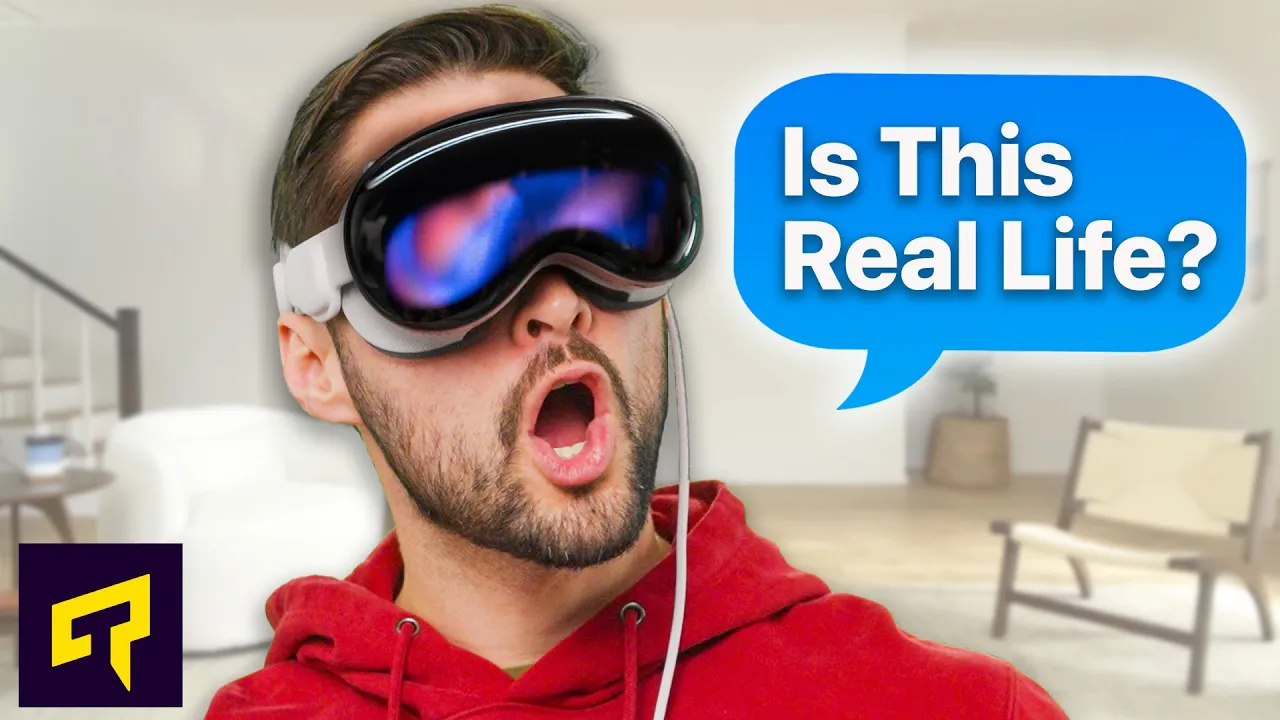
Why The Apple Vision Pro Feels REAL
0 up · 0 down · 0 ratings
Promos
Check out Paperlike at: paperlike.com Thanks to Wendell of Level1Techs for his assistance with this video! Learn about how real-time operating systems help products like the Apple Vision Pro operate with very little perceptible latency. Leave a reply with your requests for future episodes. ► GET MERCH: lttstore.com ► GET EXCLUSIVE CONTENT ON FLOATPLANE: lmg.gg ► SPONSORS, AFFILIATES, AND PARTNERS: lmg.gg FOLLOW US ELSEWHERE --------------------------------------------------- Twitter: twitter.com Facebook: @LinusTech Instagram: @linustech TikTok: @linustech Twitch: twitch.tv
The video explains why the Apple Vision Pro feels incredibly real by focusing on low latency and the specialized hardware and software that make this possible. It starts by highlighting how the headset uses cameras and displays in concert with an unusually low latency, claimed by Apple to be around 12 milliseconds, so the user perceives minimal lag between real-world movement and what is rendered. The host then introduces Apple’s R1 chip and Vision OS, describing Vision OS as a real-time operating system that prioritizes timely processing for depth sensing, eye tracking, and head tracking while letting non-critical tasks run on the general purpose M2 chip. This architectural split is explained as a design choice to guarantee crucial latency-sensitive tasks stay reliable even if other parts of the system encounter issues. The video goes into detail about how an RTOS enforces fixed time constraints, making tasks deterministic so the same inputs yield consistent outputs, which is essential for immersive passthrough and spatial awareness. It also notes the R1’s impressive data handling capabilities, processing input from multiple cameras, microphones, and sensors simultaneously, which underpins the headset’s responsive experience. Finally, the host ties these technical aspects to practical value, suggesting that the hardware and software combination reduces the risk of latency-related interruptions and supports a more convincing mixed-reality experience for users who pay a premium for the Vision Pro.
Topics · technology · science · consumer_electronics · augmented_reality · wearable_tech · hardware · computing
Questions answered
- What makes the Vision Pro feel so real according to the video?
- The real-time performance of the R1 chip and Vision OS, which enforce low latency and deterministic processing for depth, eye, and head tracking, while keeping other tasks on the M2 chip, creating a seamless passthrough experience.