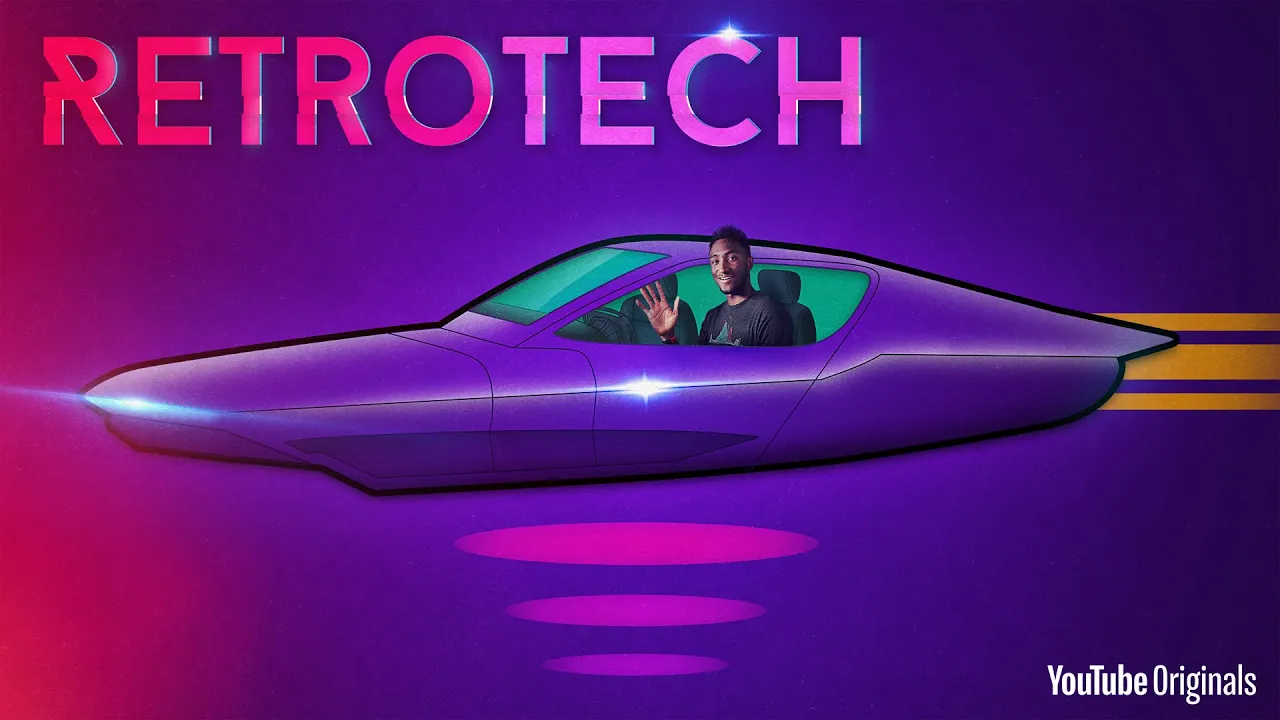
Retro Tech: Flying Cars
0 up · 0 down · 0 ratings
Description
No matter what year, the idea of flying vehicles helps cement our sense of when the future begins. I’m taking a look at everything flying – from cars to skateboards – and seeing where the tech currently stands. I also look at some classic old toys with comedian Michael Ian Black. 0:00 Intro 0:40 Unboxing The Segway 3:09 Talking Flying Cars 5:32 Hyperchange’s Galli Russell 8:29 The Hoverboard 11:14 Dope Or Nope 16:10 Omni Hoverboards 18:44 Wrap Up
Retro Tech: Flying Cars explores how the dream of personal flight has shaped culture, technology, and entertainment. Marques Brownlee looks back at historical attempts to make cars fly, from the Aerocar of the 1940s to modern hovercraft and hoverboards, tying in sci fi influences and real-world physics. The narrative balances enthusiastic curiosity with critical examination of feasibility, energy requirements, and the practical limits of propulsion, power, and aerodynamics. Throughout, the host pairs with guests like Gali Russell to dissect powertrains, lift, and the tradeoffs between mobility and safety, illustrating why flying cars remain a distant goal despite persistent imagination. The video also delves into the Segway’s cultural impact, the appeal and risks of early personal flight devices, and the ongoing shift toward software-driven, ground-based autonomy as a stepping stone to future transportation. By the end, the segment shifts from celebratory hype to a tempered optimism about recreational flight while acknowledging that a practical world of flying cars is not imminent, yet the pursuit continues to drive innovation in related technologies. The show opens with the iconic Segway unboxing and a playful costume of experimentation, using the device as a gateway to broader mobility discussions. Marques humorously adopts “the expert” persona, tries on the swag, and reflects on the Segway’s misalignment with the original futuristic promise, laying groundwork for how public perception interacts with actual capability. The conversation then expands to the Aerocar, highlighting its dual identity as car and aircraft and its historical near-implementation before the idea faded due to safety, regulation, and cost. The segment about science fiction emphasizes how films and TV shaped expectations, from The Jetsons to Back to the Future, and how fantasy often outpaced engineering truth. Finally, the piece turns toward current hoverboard efforts, including the Omni Hoverboards project, explaining how multi-rotor propulsion and lift differ from classic car-based flying concepts and what it would take to achieve practical, stable flight. From the discussion with HyperChange and experts, the show distills core physics hurdles, such as generating sufficient lift with manageable energy and safely transferring air under a vehicle. The segment emphasizes that even seemingly straightforward ideas like using a car as a flying platform face enormous power and weight constraints, like the 1.6 megawatt requirement to hover a nearly five-thousand-pound car. The analysis then contrasts this with software-first electric vehicles, arguing that the current frontier is not necessarily flight but smarter, autonomous mobility on the ground, which could eventually enable more complex forms of transit. The closing reflections acknowledge the romance of flying cars while celebrating incremental advances in hover technology and personal mobility that keep the dream alive in a more grounded form. The overall takeaway is a nuanced appreciation of invention, the limits imposed by physics, and the future potential of aerial personal transportation as a long-term, iterative process.
Topics · technology · transportation · entertainment · science-fiction
Questions answered
- What is the Aerocar and why is it significant in the history of flying cars?
- The Aerocar was an early 1940s concept that combined a car with wings to become a functional airplane; it demonstrated a plausible path to roadable flight but ultimately did not advance due to safety, regulatory, and practical constraints.
- How does the Omni Hoverboard achieve vertical lift and how is it controlled?
- The Omni Hoverboard uses ten miniature propellers powered by batteries, with a handheld throttle to control height, allowing the rider to hover and maneuver by shifting weight and direction.
- Why do flying cars remain impractical despite long-standing fascination, according to the video?
- Feasibility is hampered by physics and energy demands for lift, large weight and space requirements for propulsion and safety systems, and the need for regulatory frameworks, which together keep true road-to-air vehicles out of everyday use for now.