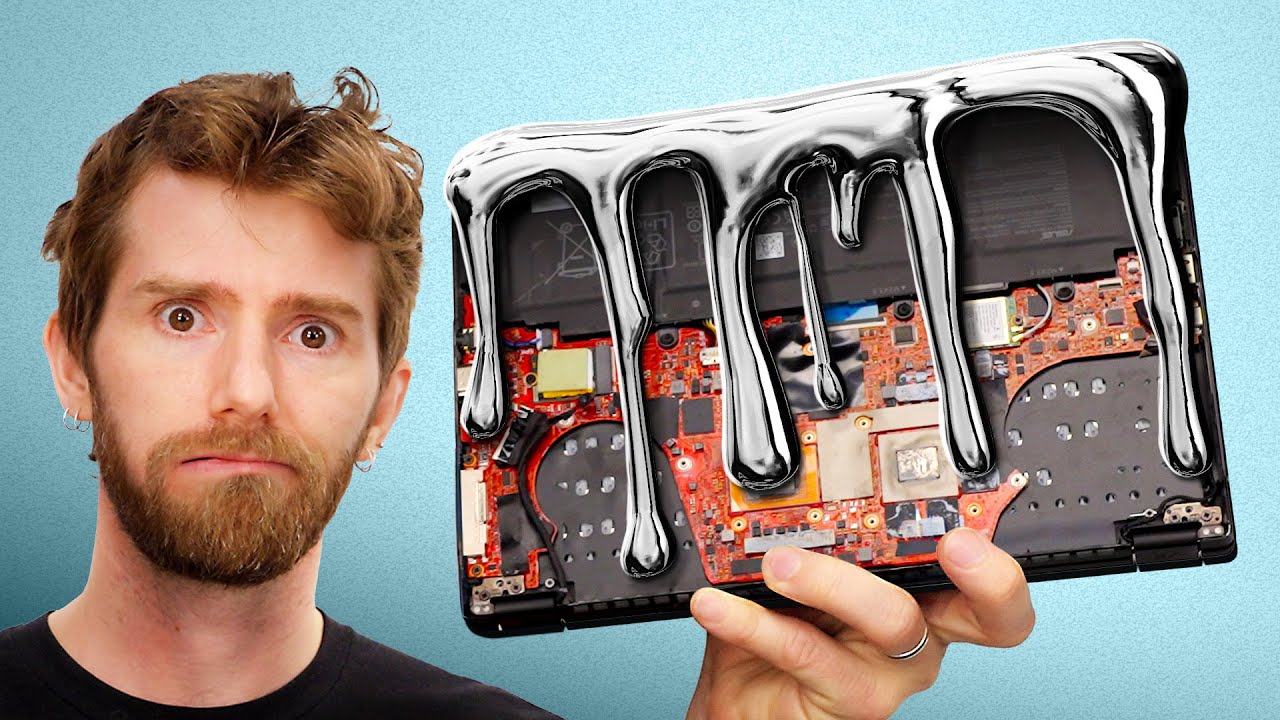
Liquid Metal Killed my Laptop… Now What?
0 up · 0 down · 0 ratings
Promos
Use our code below to get a 20% OFF discount directly on PLAUD products in the links below. This is the largest discount of the year—enjoy your Black Friday Cyber Monday (BFCM) savings in advance! Plaud NotePin (20%OFF with code TechTips): bit.ly Plaud NotePin Amazon (20%OFF with code LINUSYTB): amzn.to Shop now at LTTStore to enter the Holiday Loot Drop: lmg.gg Did liquid metal kill this ASUS ROG Flow X13 gaming laptop? Watch as Linus attempts a risky DIY repair on his dead laptop. Can he clean up the conductive liquid metal spill and bring it back to life? We're diving into the internal hardware, discussing thermal performance, and replacing the dangerous liquid metal with PTM7950 to see if this ASUS ROG machine is salvageable. PC repair and tech teardown drama! Discuss on the forum: linustechtips.com
Check out our Channel Partners: Secretlab - Buy a Titan EVO ergonomic gaming chair: lmg.gg PIA - Get the VPN of our choice: piavpn.com dbrand - Buy a "Circuit" series skin for your device: dbrand.com ► GET OUR MERCH: lttstore.com ► GET EXCLUSIVE CONTENT ON FLOATPLANE: lmg.gg ► SPONSORS, AFFILIATES, AND PARTNERS: lmg.gg Purchases made through some store links may provide some compensation to Linus Media Group. Affiliate links powered in part by affilimate.com Linus Sebastian is an investor in Framework Computer, Inc CHAPTERSs --------------------------------------------------- 0:00 Intro 1:17 Sponsor Spot 1:59 What Happened? 5:55 The cleaning begins 8:10 Disaster Strikes 10:49 Can we fix it? 14:23 Did we succeed? 15:31 Is liquid metal even worth it?
The video opens by framing a bold premise: liquid metal, used as a thermal interface in some modern laptops, leaked from an ASUS ROG Flow X13, threatening the device’s electronics and reliability. The host walks through the initial observations, noting how the spill spread from under the cooler across the heat spreader, PCB, and even a distant screw, highlighting the risk of short circuits from conductive fluids. He acknowledges a mix of caution and curiosity, admitting a reasonable optimism that the machine might be salvageable, but grounding that hope in the reality of how risky liquid metal can be when not sealed properly. The narrative then pivots to a careful teardown and cleaning phase, where the team uses organic solvents and a spatula to remove as much liquid metal as possible before attempting any reassembly. Throughout this segment, the host contrasts liquid metal with conventional non-conductive pastes, explaining why mounting pressure and containment matter for safe, effective use of conductive alloys. By the time they finish the cleaning, the machine remains uncertain, with components potentially damaged and a chassis that has seen better days, setting up a high-stakes test of whether the laptop can be brought back to life. The following act documents the risky reassembly, including delicate handling of sensitive pads, caps, and connectors, with live commentary that mixes humor and genuine concern about making things worse. The team experiments with PTM7950 as a non-conductive alternative and performs careful reattachments, testing power delivery and boot behavior as they go. In a lab setting, they compare thermal performance under load, revealing that the non-conductive pad can rival or even exceed liquid metal under certain conditions, challenging the expectation that liquid metal always wins on performance. The video closes with a pragmatic verdict: while liquid metal can offer benefits in specific, non-portable scenarios, for a portable gaming laptop the risk often outweighs the reward, and the PTM7950 solution proves to be a solid alternative for real-world use. Viewers are left with a nuanced takeaway about cooling choices in laptops and a reminder that design, sealing, and use-case matter as much as the material itself.
Topics · computer_hardware · teardown · repair · laptop_maintenance · thermal_management · consumer_electronics · diy_projects
Questions answered
- Is liquid metal safe to use in portable laptops, and what are the main risks when it leaks?
- Liquid metal is highly conductive and can short or corrode nearby circuitry if it escapes its containment. Proper seals, mounting pressure, and controlled application are essential; leaks can damage the PCB, components, and battery, making the device dangerous or unusable.
- Did swapping liquid metal for PTM7950 improve cooling performance in the tested laptop?
- In their lab comparisons, PTM7950 performed about the same or slightly better under heavy CPU loads, and in some cases did not underperform liquid metal, suggesting that the liquid metal did not provide a clear advantage for that specific configuration.
- Was the ASUS ROG Flow X13 repairable after the LM spill, according to the video?
- The team could not fully repair the original laptop in the on-camera attempt, but they documented the process and used a backup machine to compare performance, ultimately illustrating that salvage is possible in theory but not guaranteed for every unit.