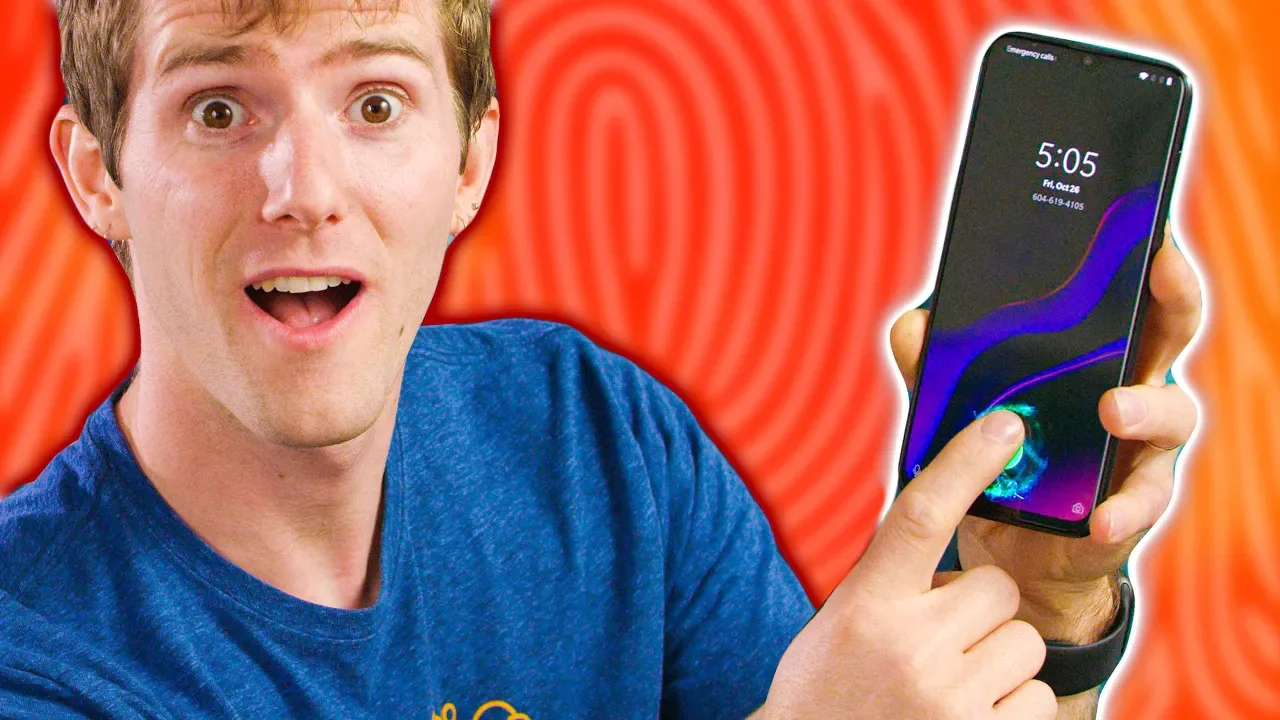
How does Fingerprint Under Display work?? – OnePlus 6T
0 up · 0 down · 0 ratings
Promos
Thanks to OnePlus for sponsoring this video! Learn more about the 6T at geni.us Fingerprint on Screen (FoD) lets you unlock your phone using a fingerprint reader that’s hidden behind the smartphone’s glass. You can find this biometric technology on the OnePlus 6T. Buy OnePlus on Amazon: geni.us Discuss on the forum: linustechtips.com Our Affiliates, Referral Programs, and Sponsors: linustechtips.com Get Private Internet Access today at geni.us Linus Tech Tips merchandise at designbyhumans.com Linus Tech Tips posters at crowdmade.com Our Test Benches on Amazon: amazon.com Our production gear: geni.us Twitter - twitter.com Facebook - @LinusTech Instagram - @linustech Twitch - twitch.tv Intro Screen Music Credit: Title: Laszlo - Supernova Video Link: youtube.com iTunes Download Link: itunes.apple.com Artist Link: soundcloud.com Outro Screen Music Credit: Approaching Nirvana - Sugar High youtube.com Sound effects provided by freesfx.co.uk
Paragraph 1: The video introduces Fingerprint on Display (FoD) and frames it as a significant step beyond the era of bezels and notch designs. It clarifies the terminology, distinguishing under screen fingerprint readers from the idealized in screen scanners that would be fully integrated into the display. The host explains that the OnePlus 6T uses a modern optical in‑display sensor from Goodix, positioned beneath the glass and AMOLED panel, which reads a fingerprint by shining light through the screen and capturing a minutiae map of ridges and valleys. The explanation covers how the scanned fingerprint image is compared to a stored model in a secure enclave similar to the iPhone’s Secure Enclave, enabling fast unlocks. The segment also touches on historical context, noting early attempts and why OnePlus delayed adoption, including hardware size, repair complexity, and initial speed concerns. The overall takeaway is that FoD represents a practical, market‑ready realization of fingerprint sensing that combines a glass front with a hidden sensor for a seamless user experience. Paragraph 2: The host then dives into practical questions and rapid fire Q&A to address durability and real‑world usage. He covers durability claims, such as a quotient of around 300,000 unlocks, and explains that screen protectors do not affect the sensor while noting that significant cracks may require retraining the recognition model. The dialogue also contrastingly acknowledges the value of front‑facing fingerprint scanners for everyday tasks, especially when the phone sits on a desk or is picked up with one hand, resulting in quicker access and improved usability. The recap emphasizes that the 6T’s optical under‑display solution seeks a balance between reliability, speed, and repair considerations, rather than pursuing a theoretical future where the entire screen reads fingerprints continuously. The host closes by tying the technology back to a tangible user experience improvement, praising the front‑facing sensor as a meaningful upgrade over traditional rear‑mounted or side readers. The sponsorship highlight is acknowledged, but the content remains focused on explaining how FoD works and what it means for everyday unlocking behavior.
Topics · technology · mobile-technology · consumer-electronics · product-review
Questions answered
- What is Fingerprint on Display and how does it differ from traditional in‑screen readers?
- Fingerprint on Display uses an optical sensor placed beneath the glass and display to capture a fingerprint image by shining light through the screen. An image of the fingerprint minutiae is compared to a stored model in a secure enclave to unlock the device.
- Why did OnePlus skip implementing FoD earlier and what changed for the OnePlus 6T?
- Early prototypes were larger and more costly, requiring a bonded module and raising repair complexity. By the 6T generation, a smaller, faster Gooodix module enabled a reliable unlock in about 0.36 seconds, making FoD practical for shipping.