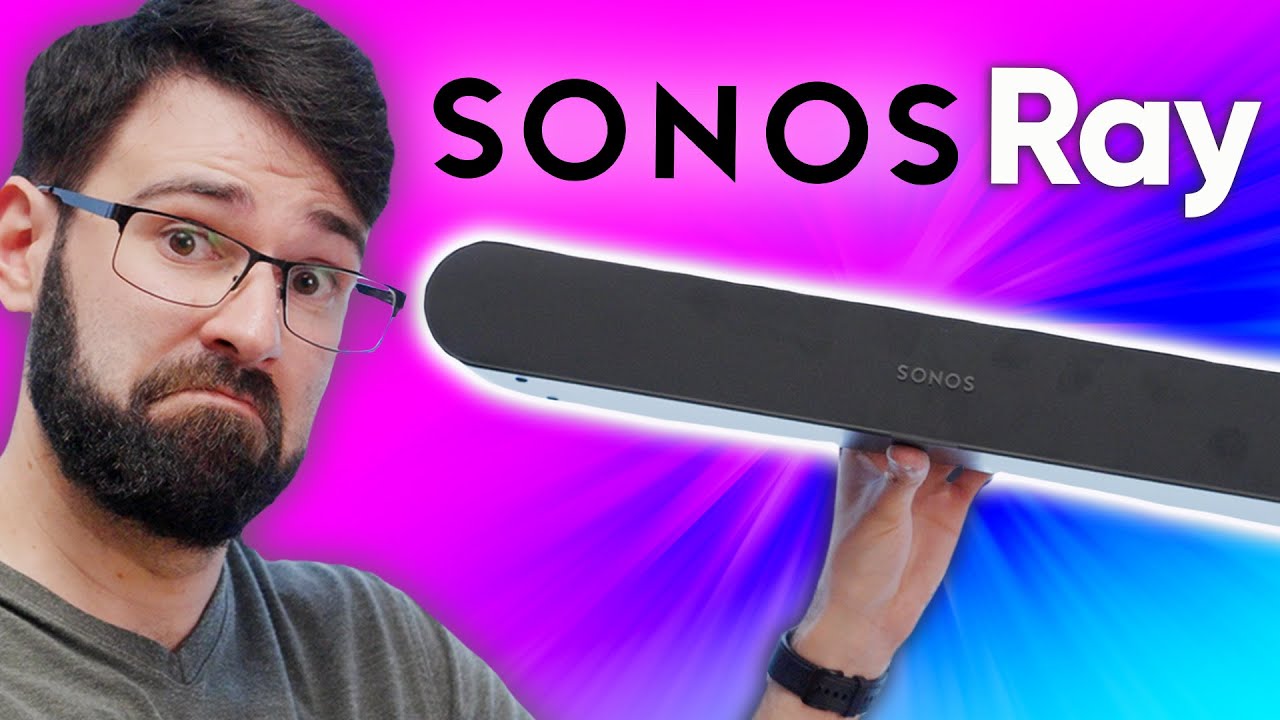
Does this fix your terrible TV speakers? - Sonos Ray
0 up · 0 down · 0 ratings
Promos
Thanks to Secret Lab for sponsoring today's video! Check them out at lmg.gg Dan takes a look at the new Sonos ray to see if it can fix your terrible TV speakers, but he uses an Android phone... can he make it work? Buy a Sonos Ray: geni.us Purchases made through some store links may provide some compensation to Linus Media Group. Want us to unbox something specifically for a video? Make a suggestion at lmg.gg ► GET MERCH: lttstore.com ► AFFILIATES, SPONSORS & REFERRALS: lmg.gg ► PODCAST GEAR: lmg.gg ► SUPPORT US ON FLOATPLANE: floatplane.com FOLLOW US ELSEWHERE --------------------------------------------------- Twitter: twitter.com Instagram: @shortcircuityt TikTok: @linustech Facebook: @ShortCircuitYT CHAPTERS --------------------------------------------------- 0:00 Up next on SC! 0:12 Unboxing 0:49 The problem with mandatory apps 1:25 Ports and buttons 2:06 Sponsor - SecretLabs 2:28 What's "TossLink"? 3:10 First setup attempt 3:53 It lives! 4:12 Audio test - Crab Rave 5:43 Playing with EQ settings 6:17 Audio test - Not Crab Rave 6:50 What could make it better? 7:48 Audio test - Frequency testing 9:33 Audio test - Dolby Atmos test 10:34 Conclusion 11:11 Outro
The video opens with a humorous, self-deprecating setup about upgrading from a tiny built-in TV speaker to a dedicated soundbar, specifically the Sonos Ray. The host rápidaLy walks through the unboxing and first impressions, noting the minimal packaging and the limited physical connectivity: TosLink, Ethernet, power, and nothing more new or flashy like HDMI ARC. He contrasts this entry-level Sonos with higher-end models and emphasizes the potential for an ecosystem play, where the Ray can be a stepping stone toward a full multi-speaker setup, while acknowledging the practical risk of relying on app-based features for future updates. The early portion also frames the concern about compatibility with Android versus iPhone, highlighting the iPhone app’s advanced room-sensing features that aren’t available on Android, and setting up the first real test of getting audio from the Ray with an Android device. As the setup progresses, the host tests the Ray with various media scenarios, starting with a straightforward optical connection and basic playback. He notes the lack of HDMI, the absence of an ARC port, and the implication that this is a budget entry point rather than a premium center channel solution. The on-screen and on-audio testing sequences begin, with discussion of the Ray’s reflex ports, midrange drivers, and the general expectation that a small center channel can handle dialog well but may struggle with full-spectrum music when paired with bass-heavy content. Throughout, there is a running evaluation of how the Ray integrates with a TV in a typical living room, including reflections on room acoustics and the trade-offs of an inexpensive soundbar within a broader home theater plan. In the final stretch, the host presents a nuanced verdict: the Ray can perform well for speech and dialog, delivering crisp mids and intelligible dialogue in a center-channel role, but it is not a drop-in replacement for a full surround setup. When music and action scenes introduce substantial bass, the Ray can become boomy and dynamic range can suffer, especially at higher volumes. The discussion pivots to practical recommendations, such as pairing the Ray with satellites or a subwoofer for a more balanced experience, and considering the user’s device ecosystem and space constraints. The video closes with measured conclusions: the Ray is a decent entry point for smaller spaces or iPhone users who want a simple upgrade, but for true home theater fidelity or immersive audio, a more capable system may be required. The host invites viewers to explore other, similarly unconventional audio products for comparison, ending with a candid reminder that the Ray excels at dialog but may fall short on music and cinematic bass without additional components.
Topics · audio equipment · home theater · technology
Questions answered
- What is the intended role of the Sonos Ray in a home theater setup?
- The Ray is presented as an affordable center-channel-like option that can improve dialog clarity in a TV setup, and as an entry point into Sonos ecosystem that can be expanded with satellites or a subwoofer for a fuller multi-channel experience.
- Can the Ray operate effectively without the app or in Android ecosystems?
- Yes, it can function without the app to some extent, but some advanced calibration and room-sensing features are limited or iPhone-exclusive, which can affect setup and optimization for Android users.
- What are the main drawbacks when using the Ray for music or action content?
- The Ray can become boomy and dynamic range can suffer when bass-heavy content is played at higher volumes, indicating it is less suitable as a standalone music speaker or for heavy cinematic usage without additional components.