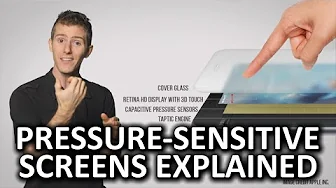
Pressure-Sensitive Screens As Fast As Possible
0 up · 0 down · 0 ratings
Description
We're starting to see screens that can tell how hard you're pressing appear in mobile devices. How do they work, and will they be a game-changer? Head over to ifixit.com for all your electronics repair needs. Follow: twitter.com Join the community: linustechtips.com
Pressure-Sensitive Screens As Fast As Possible delves into how modern touchscreens can detect the force behind a user’s press and what that could mean for everyday device interaction. The video explains that several manufacturers are racing to implement pressure sensing, with Apple’s approach using a grid of capacitive sensors and strain gauges behind the screen’s backlight to measure minute distance changes. It clarifies that 3D touch can read multiple pressure levels, enabling richer interface options beyond a simple tap, such as shortcuts and peek-and-preview gestures that streamline navigation on smartphones like the iPhone 6s. The presenter contrasts 3D touch with force touch, noting that the latter may be limited to single-level pressure detection and better suited to devices with tighter space or thinner hardware. He then discusses possible future uses and the potential for both hardware and software to unlock new kinds of interactions, including shortcuts that reduce navigation friction and new game control ideas. The video also mentions Android’s projected direction with Synaptics’ Clear Force and the broader implication for app developers to create pressure-aware experiences. Throughout, it balances the excitement of new interaction paradigms against concerns about accidental input in less stable or bumpy contexts. The host wraps up with a light plug for iFixit’s repair guides and tools, emphasizing practical resources for exploring and repairing devices, while inviting viewers to imagine how pressure sensitivity could change mobile gaming and text input in the future.
Topics · Science & Technology · Mobile Technology · Human-Computer Interaction
Questions answered
- What is 3D touch and how does it differ from force touch?
- 3D touch can detect multiple levels of pressure, enabling richer interactions and precise gestures, whereas force touch is typically limited to a single pressure level and may be suited for simpler devices.
- How do Apple devices detect pressure on the screen?
- Apple uses a grid of capacitive sensors and strain gauges behind the screen and backlight to measure microscopic changes in distance between the cover glass and backlight when pressed.